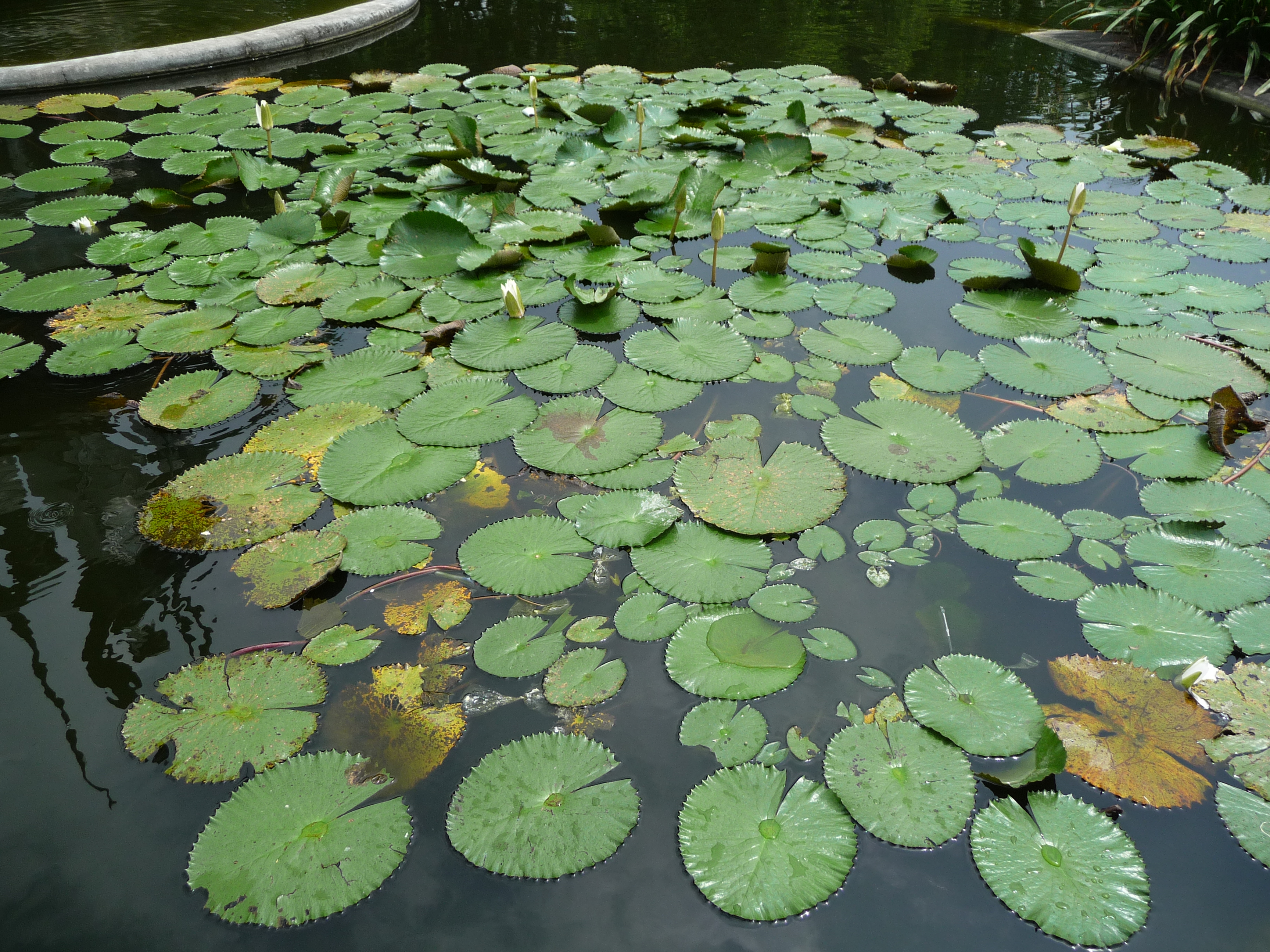
The young woman watching her toddler poking a stick into the pond of water lilies in the muggy heat of a Balinese morning contrasted dramatically with the statue behind them. A family of three bare chested figures wearing white sarongs and waving traditional kris, looked towards us with a frozen, fanatical stare.
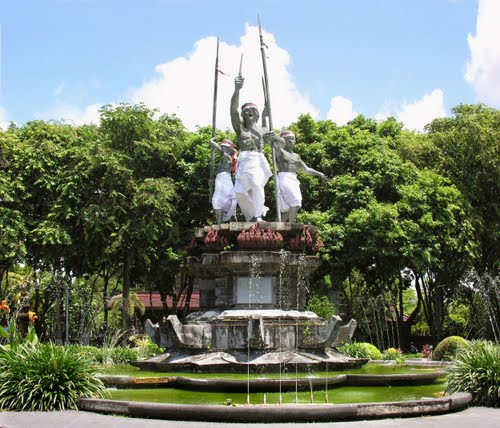
Puputan monument, Puputan Square
Our walk from the footpath to the statue was across the grassy park of Puputan Square, a haven of green and relative quiet among the hectic chaos that is Denpasar. The taxi driver had looked confused when we’d asked him to bring us here, pointing out the Kerobokan prison en route, probably thinking this was what tourists really wanted to see. But we were keen to view aspects of Bali’s colonial past, not its infamous present.
Puputan Square was the site of the royal palace of Badung, (today’s Denpasar) and the statute commemorates the tragic event which led to the Dutch acquisition of the Badung kingdom.
Dutch influence in Indonesia began in the late 16th century but until 1906 three Balinese kingdoms remained independent, including Badung. That September a large Dutch fleet anchored near Badung and on the morning of 14th September as the Dutch advanced the Badung palace doors opened. Borne aloft by four bearers, the Rajah led out hundreds of men, women and children dressed in white and each bearing their kris (ritual weapon). On a signal the Rajah was stabbed through the heart by one of his men and the Balinese ran towards the Dutch guns and were mown down. The survivors turned their weapons on themselves in an orgy of suicide or puputan (a ritual fight to the death) during which over 400 died. In 1908 Bali was wholly incorporated into the Dutch East Indies.
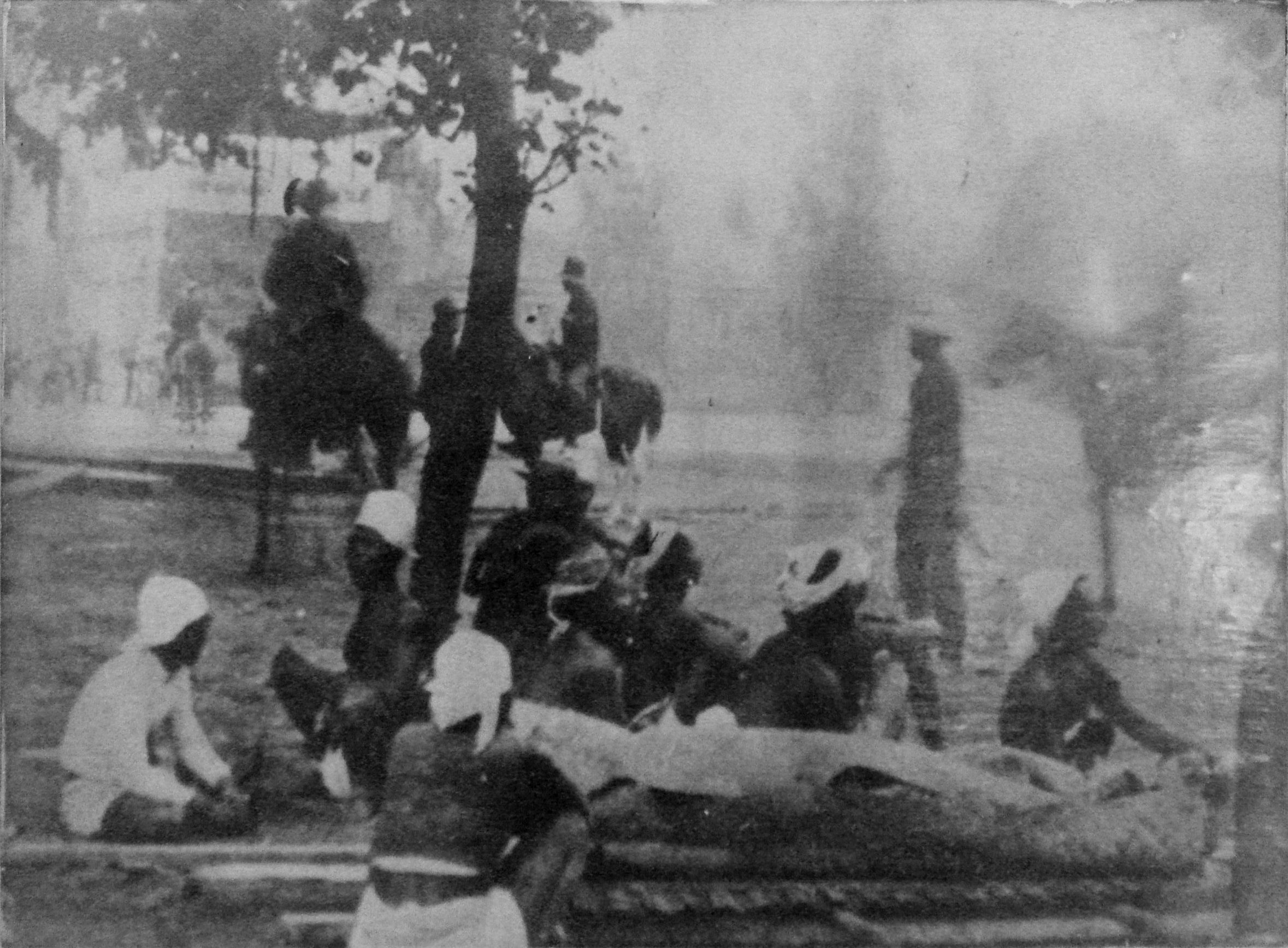
Body of the Rajah, Denpasar, 1906
The statue commemorating the puputan shows a family ready to fight and die. The people of Badung left the palace wearing their finest jewellery and the mother has jewels in her hand to fling at the Dutch to taunt them. The child is ready to die with his parents.
Sobered by our visit to Puputan Square we opted for the liveliness of the large Badung market next. The smell of dried fish heaped for sale in the food and flower market was overwhelming but we stayed long enough to look at the stalls selling the flowers – orange marigolds, pink blooms and leaf baskets – used in the daily offerings to the Hindu gods which we’d seen everywhere we’d been in Bali.
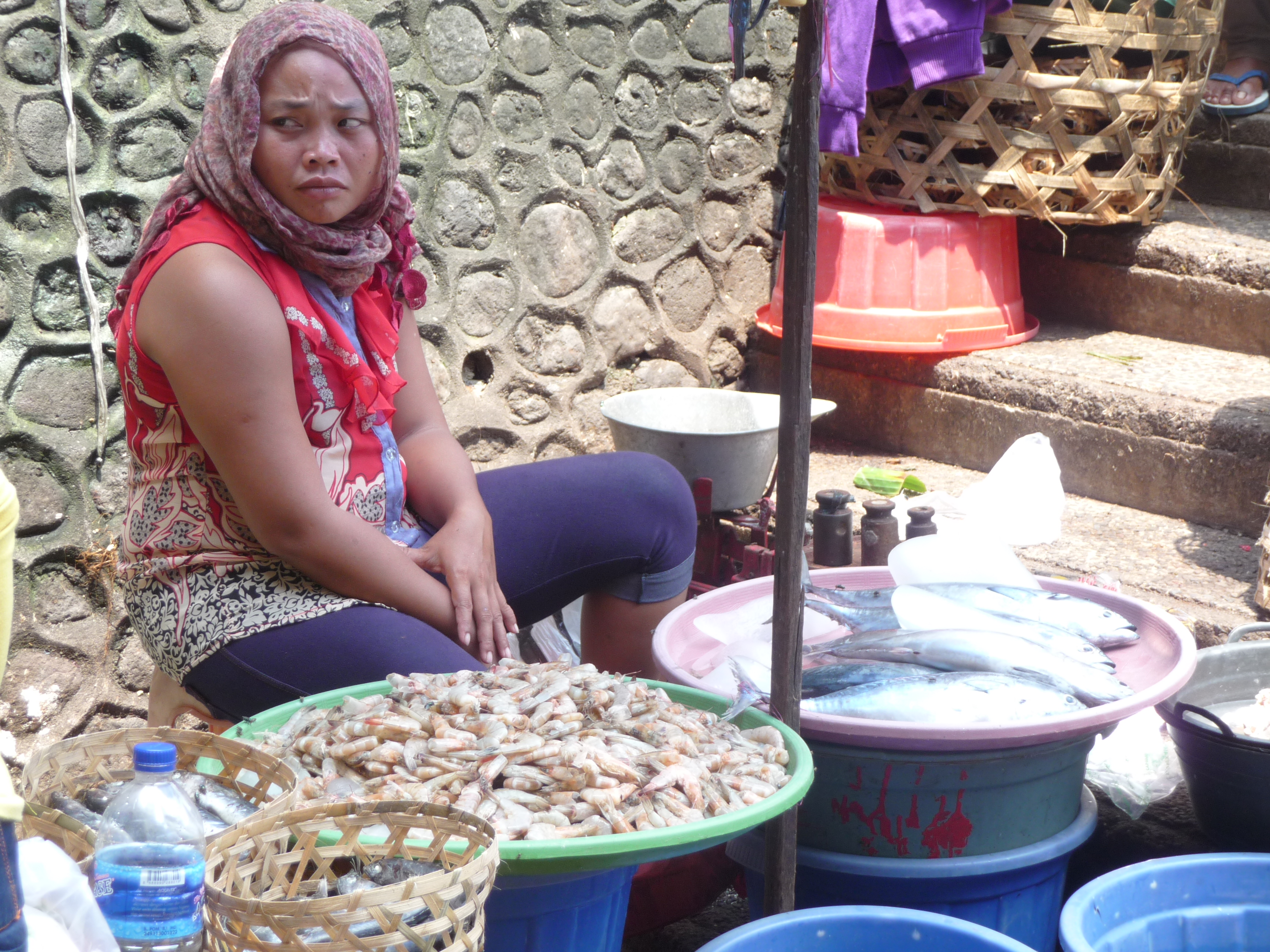
Dried fish stall at Badung market
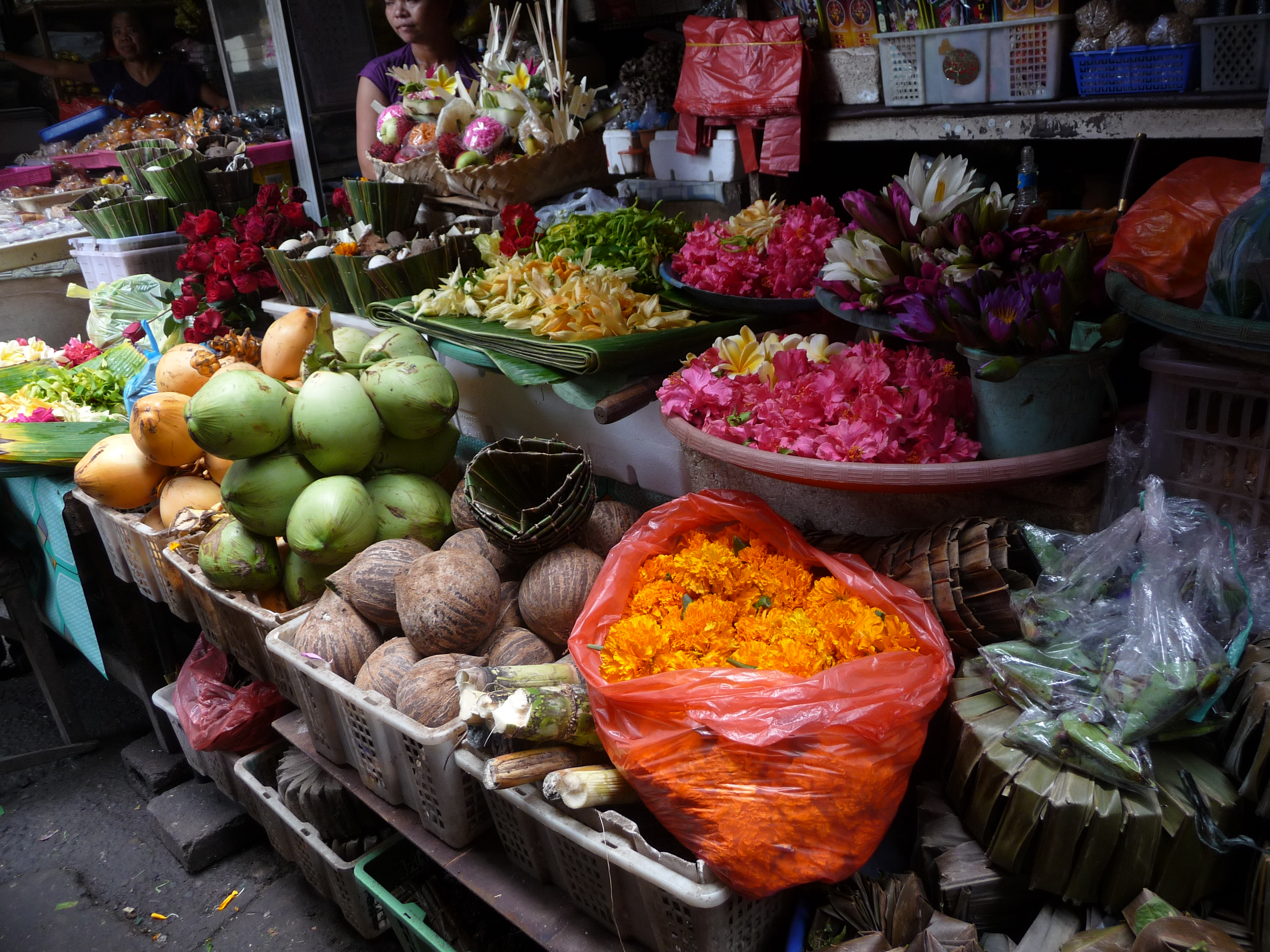
Flowers for offering
Flowers and containers for offerings to the gods
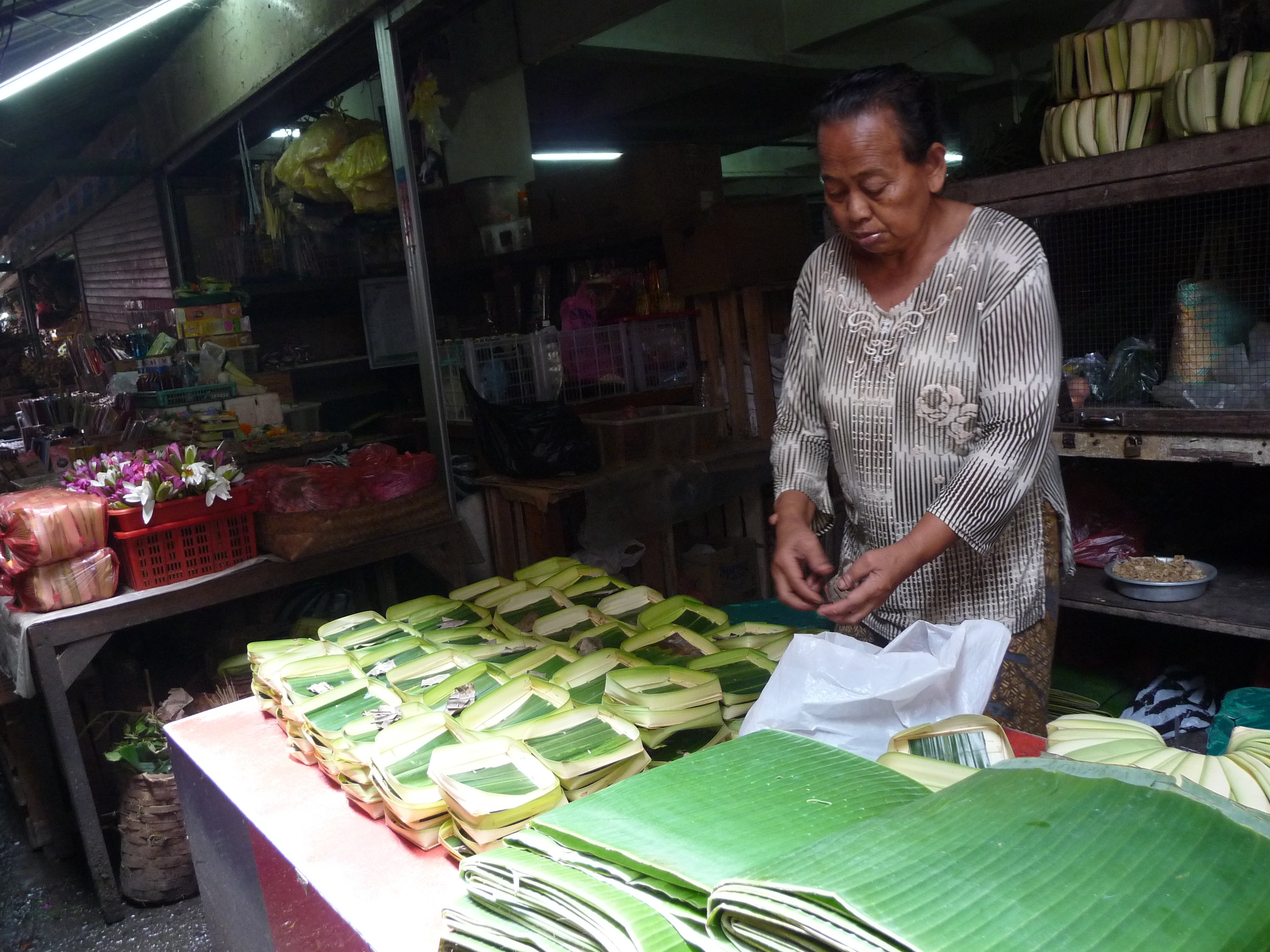
Baskets for offerings to the gods
After browsing in some of the nearby streets we lunched at the Inna Bali hotel. The German artist Walter Spies, who lived in Bali in the late 1920s and 1930s, is credited with popularising the island and the Bali Hotel, as it was then, was built in 1927 to cater for those early tourists. During this era many well-known identities were guests, including Charlie Chaplin and Noel Coward. Although more modest than Raffles in Singapore or the Eastern and Oriental in Penang, there is still a whiff of the colonial about the Inna Bali Hotel in its Art Deco stained glass windows and other architectural features. The hotel is not high on tourists’ must see lists and we were the only guests at lunch that day.
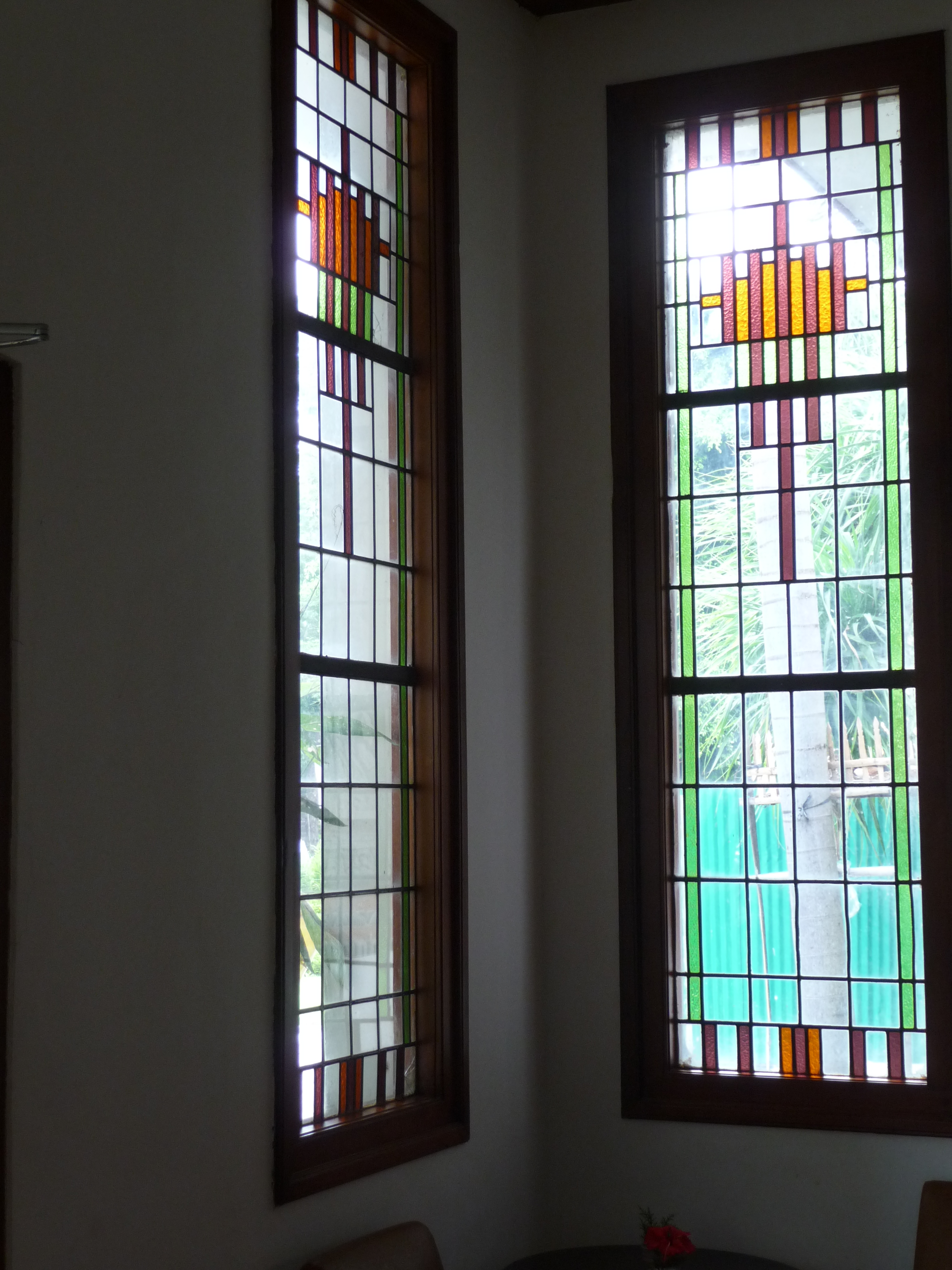
Art Deco windows in Inna Bali hotel
Sipping my drink I looked out at the city which the Dutch captured over 100 years ago. Nearly 70 years since independence Bali retains the exoticness which enticed Walter Spies and now draws millions of tourists every year. Often seen as just a place to enjoy the sun, surf and party, it offers so much more. So if you feel inclined to dip into Bali’s past why not spend a day meeting Denpasar’s ghosts.
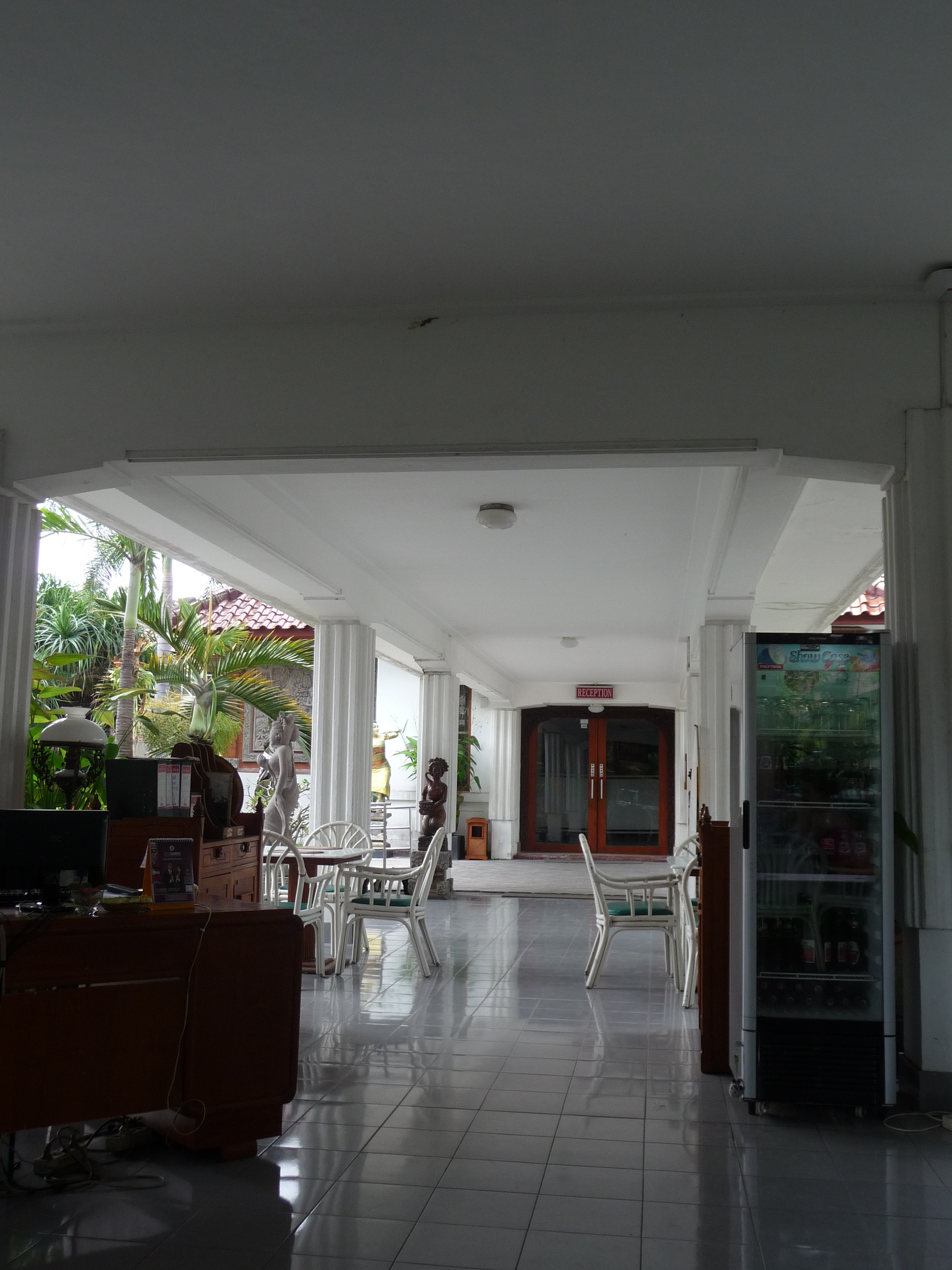
Entrance to Inna Bali hotel
 The Wandering Historian