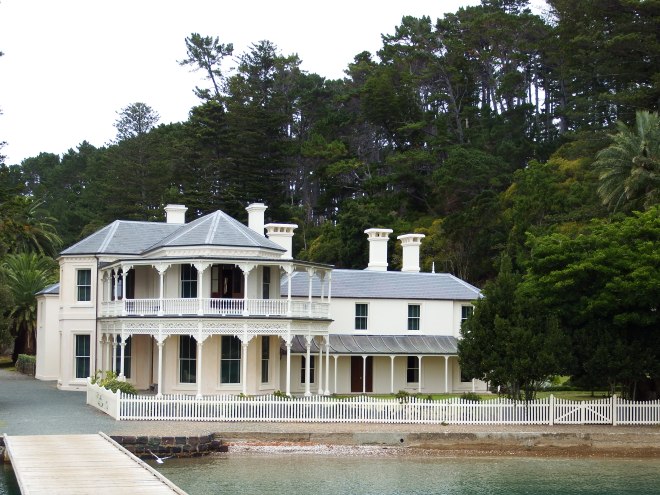
Mansion House, Kawau Island
A week ago I visited Kawau Island, near Auckland in the Hauraki Gulf. I’ve been keen to go there for ages but something has always interrupted my plans – too little time in Auckland or bad weather. However, Monday was a beautiful sunny day, perfect for taking the Royal Mail cruise to the island and seeing Mansion House, the one-time residence of one of New Zealand’s most important historical figures, Governor (later Premier) George Grey, and the reason I was so keen to visit Kawau.
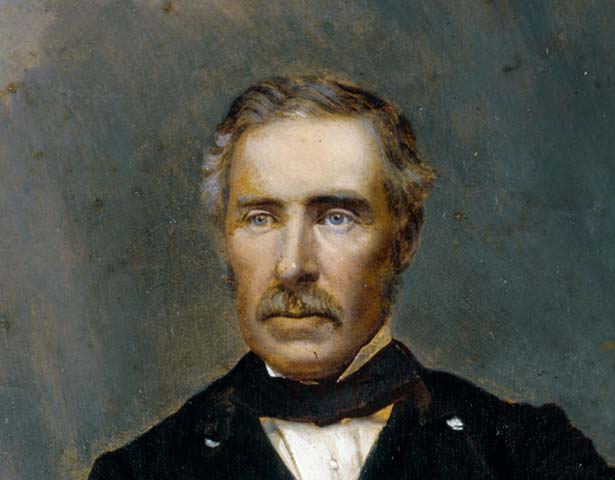
Governor Grey (nzhistory.net.nz)
As a librarian I’ve always had a special fondness for the Governor as he donated a magnificent collection of early New Zealand publications and other important works (over 15,000 volumes) to the city of Auckland and today it forms the basis of the Sir George Grey Special Collections. It’s one of three major heritage library collections in the country; the others are the Alexander Turnbull Library in Wellington and the Hocken Library in Dunedin.
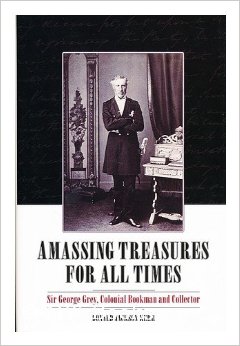 The Special Collections Librarian at the University of Otago, Donald Kerr, has written a fascinating account of Grey’s collecting and collections titled Amassing Treasures for all Times: Sir George Grey, Colonial Bookman and Collector. It wasn’t only New Zealand who benefitted from Grey’s collecting zeal – he also donated collections to Australia, where he was Governor of South Australia, and South Africa, where he was Governor of Cape Colony. But I’m digressing as this post isn’t about the man, a servant of the British Empire if ever there was one, but the house he built.
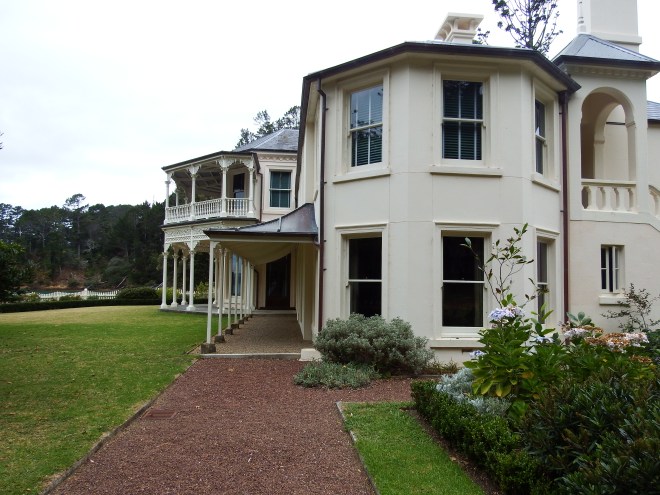
Mansion House, Kawau Island
When Grey bought the Kawau Island in 1862 copper mining had been undertaken there for around 20 years and parts of the island were crowded with miners’ homes, centred around several mining villages. Evidence of the mining can still be seen on the island today.
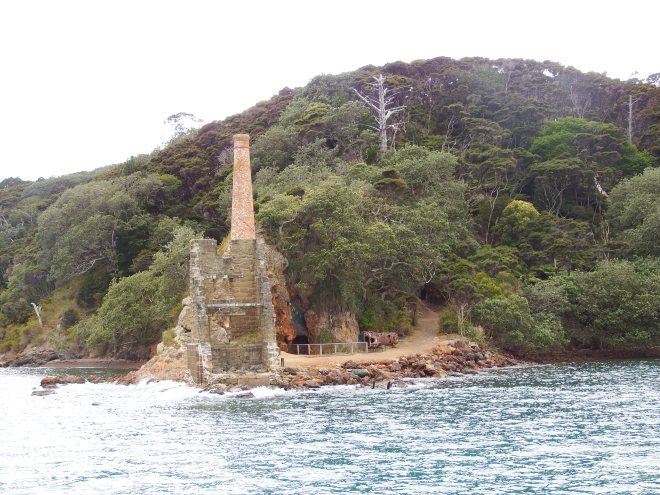
Remains of copper mine, Kawau Island
Mansion House was originally the 10 roomed mine manager’s home which Grey transformed into a stately home. As well as Mansion House he built farm buildings, dwellings for his staff and their families and a school for their children. The school, which has been extended and is now a private home, can be seen in Schoolhouse Bay.
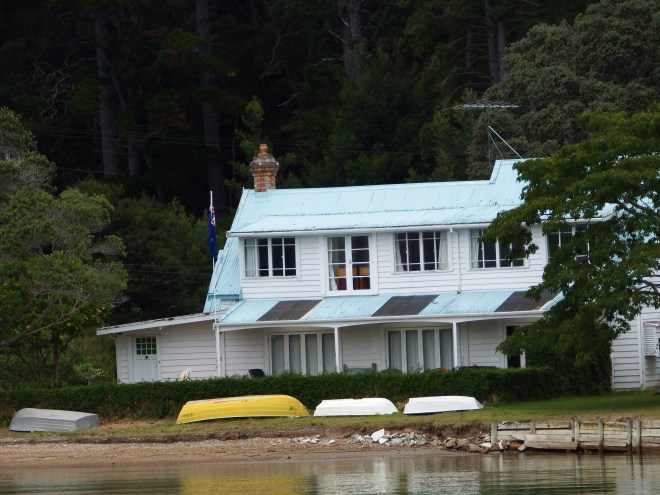
Old Schoolhouse, Schoolhouse Bay, Kawau Island
Governor Grey spent a large part of his personal fortune on Mansion House and its grounds. Grey had a wide range of interests, including history, literature, natural history, maths, astronomy, ethnology and languages. On Kawau he extended his collecting enthusiasm to include exotic plants and wildlife from all over the world. The informative captain on the Royal Mail catamaran told us that the two Brazilian palms growing in the grounds of Mansion House are said to be the best examples in the world today.
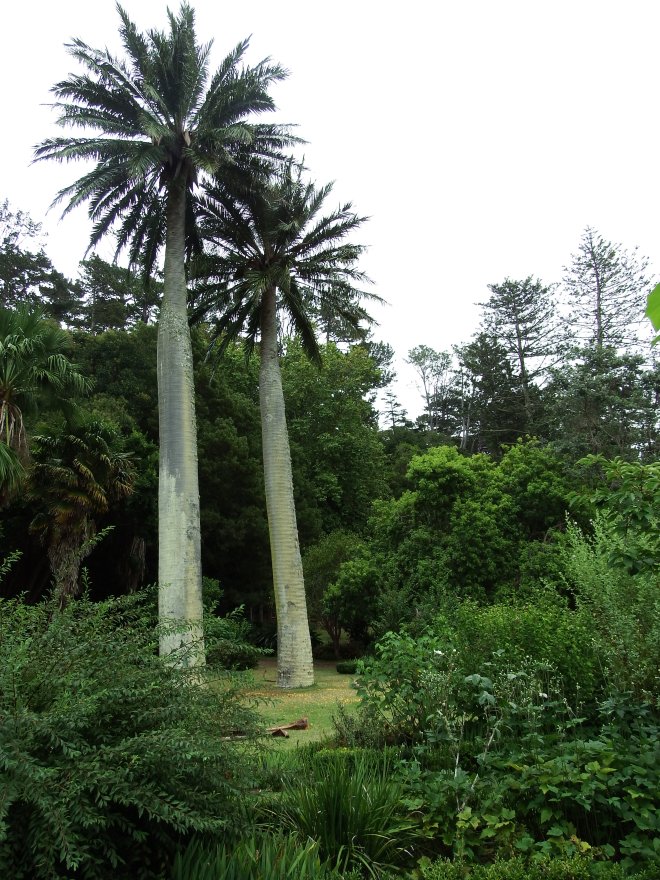
Brazilian palm trees, Mansion House gardens, Kawau Island
As well as plants from all over the world Grey also collected animals and imported over 30 species from zebras to monkeys. Most did not flourish (in a slightly ghoulish decorating touch there’s a zebra skin on the floor of the library) but some did. There are still wallabies, rosellas, kookaburras and peacocks on the island carrying on the legacy of Grey’s collecting passion.
The house is now owned by the Department of Conservation and has been extensively restored in keeping with the period during which Grey lived there. Another of Grey’s collections was of Maori artefacts and some are displayed in the reception room.
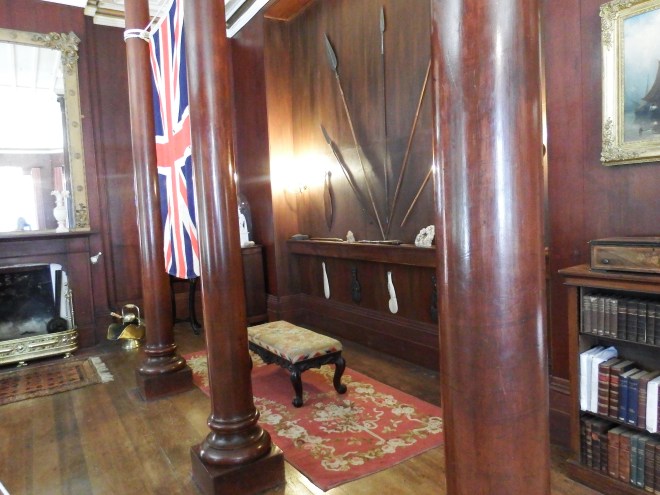
Reception room, Mansion House, Kawau Island
The kitchen is in the original part of the house and so has a lower ceiling, giving it a cosy feel.
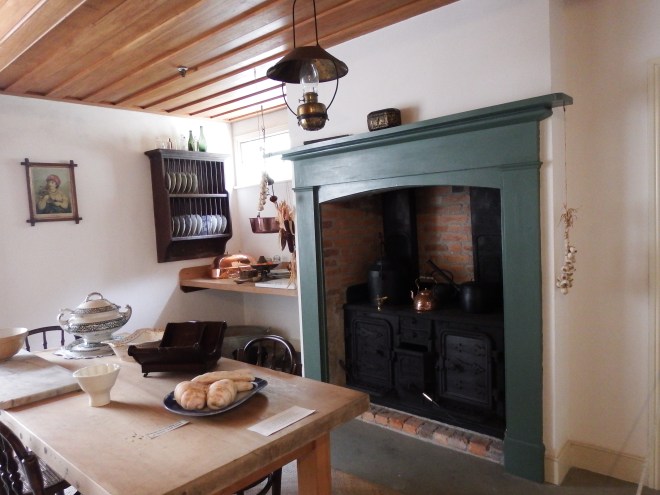
Kitchen, Mansion House, Kawau Island
Grey’s niece, who lived with Grey, married the estate manager and they and their growing family also lived in Mansion House. The nursery wing was up its own flight of stairs.
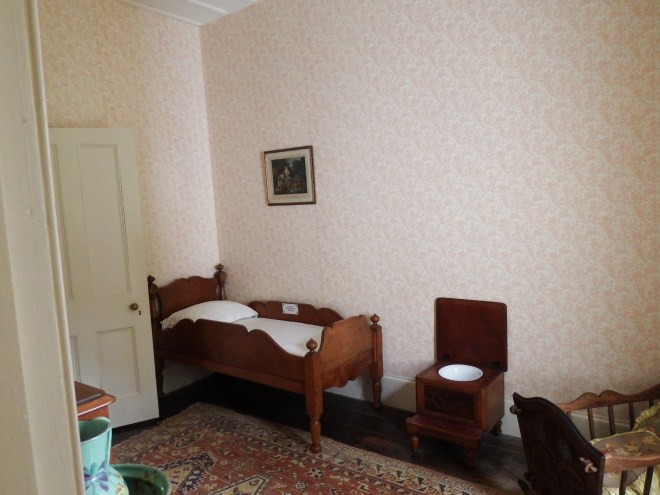
Nursery, Mansion House, Kawau Island
There was also a schoolroom where the children could take their lessons.
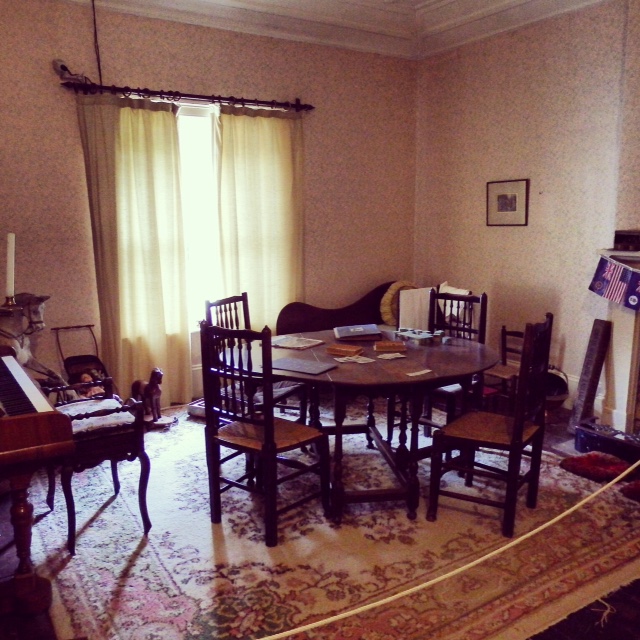
Schoolroom, Mansion House, Kawau Island
Grey’s bedroom was immense with beautiful views out to the sea.
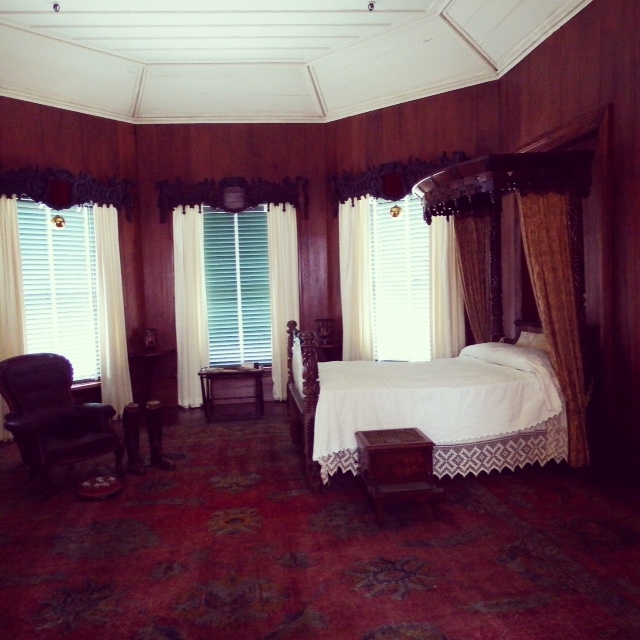
George Grey’s bedroom, Mansion House, Kawau Island
Of course I’m always interested in a library ….
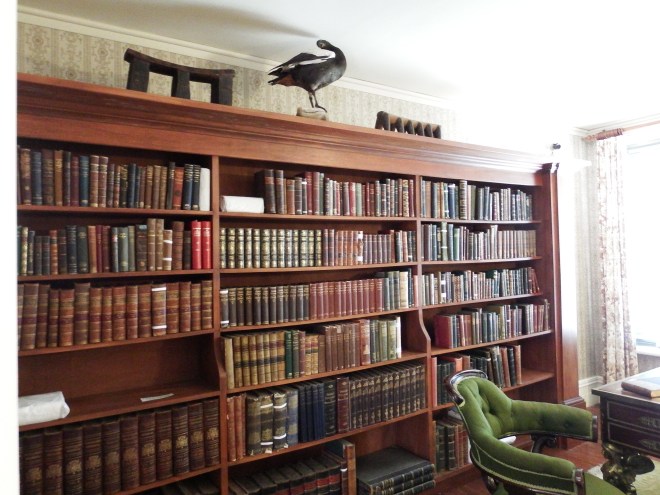
The Library, Mansion House, Kawau Island
Mansion House was everything I’d hoped it would be and is a fascinating part of New Zealand’s colonial history. Well worth a day out if you’re in Auckland.
![Front cover 500 pixels[1]](https://alfredbuxton.com/wp-content/uploads/2013/09/front-cover-500-pixels1.jpg?w=660)
 The Wandering Historian