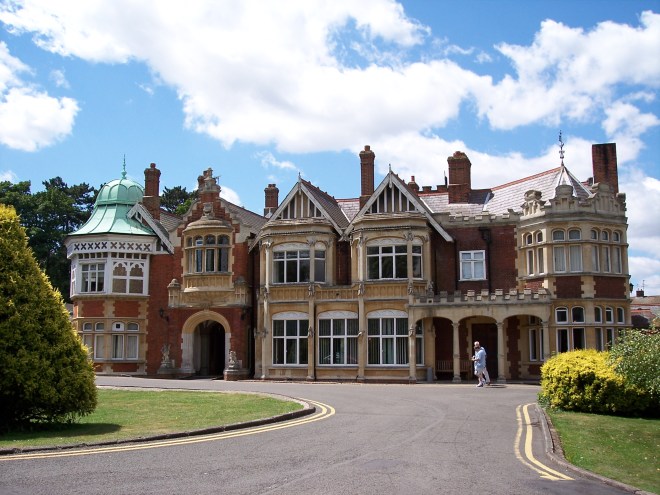
The Mansion, Bletchley Park (image by Wikipedia)
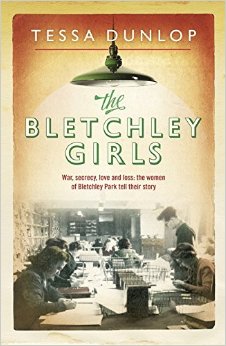
I’ve just returned from a three week holiday to New Orleans, London and Malta and one of the places I visited while in London was Bletchley Park. On my first day back at work, as a librarian at Radio New Zealand, I was asked to do some research for an forthcoming interview of one of the Bletchley girls. Her name is Charlotte Webb and she features in the recently published book, The Bletchley Girls, by Tessa Dunlop. What a coincidence – I’d bought the book when I was at Bletchley Park but only just started reading it. The interview was the following day so within two weeks of visiting Bletchley I was able to hear one of the women who worked there talking about her time at at the Park. You can listen to Charlotte Webb’s interview here.
It’s a short train ride from Marylebone Station in London to Bletchley and Bletchley Park is two minutes walk from the station. Although a lot of the employees would have travelled to Bletchley by train, many would have biked and there’s a bike shed with bikes from the time parked there waiting for their owners to finish their shifts.
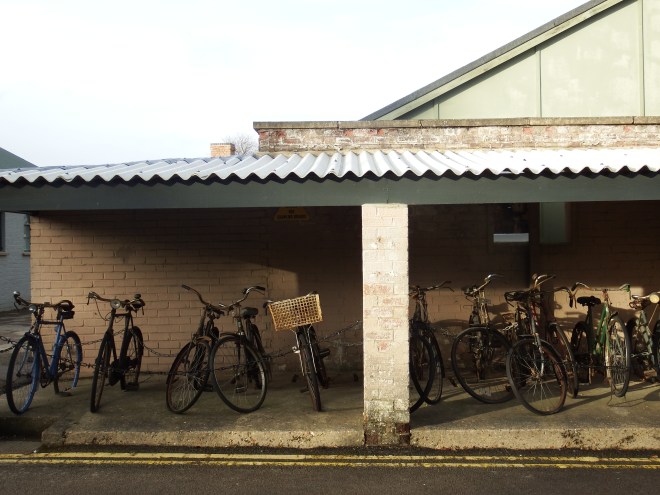
Bike shed as it would have been during World War Two
There’s been a lot written about Bletchley in the years since the secrecy around it was loosened. At its peak during World War Two 9,000 people worked here, most of them women, although their part in the huge contribution Bletchley made to the war has not been as publicised as that of the men until recently. Two successful movies on Bletchley – Enigma and The Imitation Game have heightened interest and added to the glamour of the Park. It was only weeks since I’d seen the latter so it was all fresh in my mind as I strolled around.
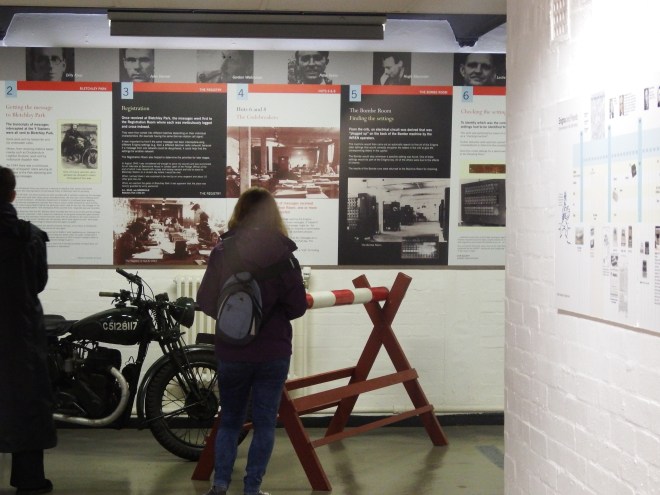 The Imitation Game centres around Alan Turing who’s lauded as the father of the computer and as contributing hugely to the Allies’ success. At the Park there’s an extensive exhibition on his life and work, including the posthumous letter of pardon from Queen Elizabeth II. One of his eccentricities was to chain his mug to a radiator and this has been replicated in the museum. There’s also a life-sized statue of Turing by Stephen Kettle (2007) set against a background photo of the cryptographers working in one of the huts at Bletchley.
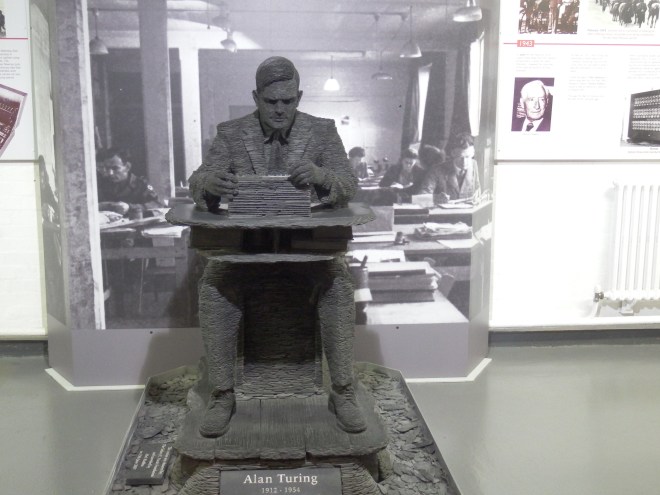
Alan Turing
The building I associate most with Bletchley is the large house known as “the Mansion” by those who worked there.
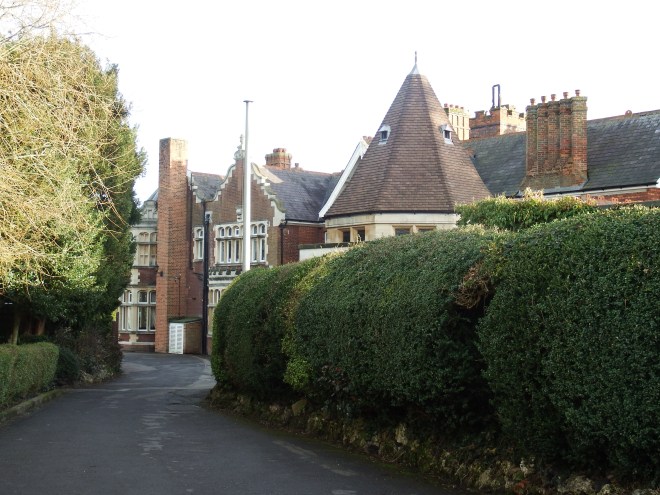
Side view of the Mansion
Lots of the downstairs rooms have been restored and furnished to reflect the war years and there’s also a cafe where you can stop, sit and really soak it all in.
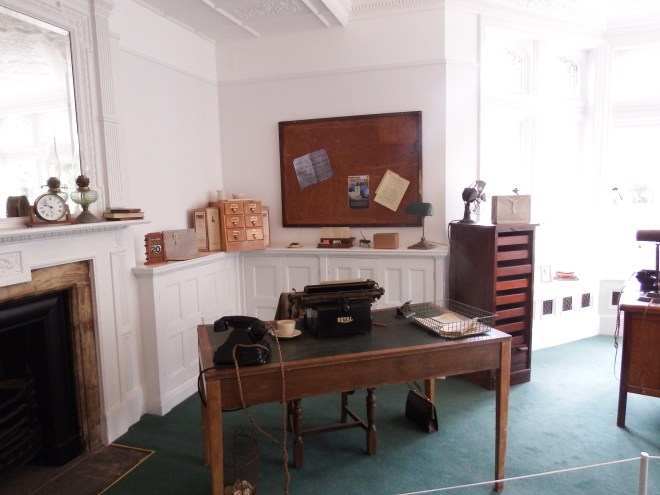
Part of the office in the Mansion
As a librarian I was interested in the library at Bletchley which had been built as such by the original owner Sir Samuel Herbert Leon, a wealthy businessman. During the war it was initially used by the Italian and German naval sub-sections and later, as space was so limited, it was full of desks and equipment.
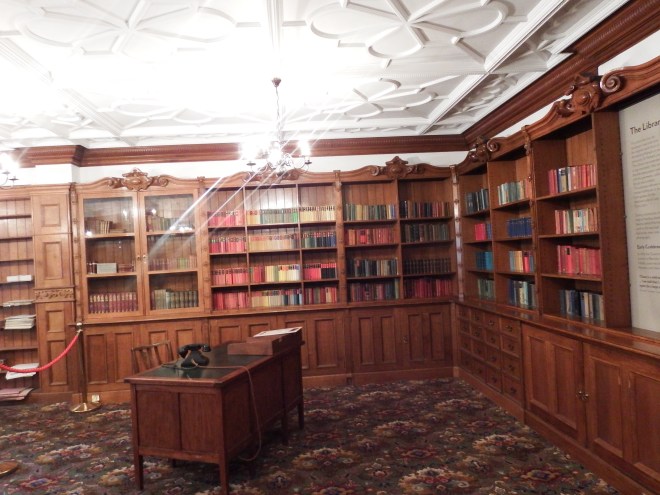
The Library
There’s lots to see in the surrounding buildings and pretty grounds to wander around.
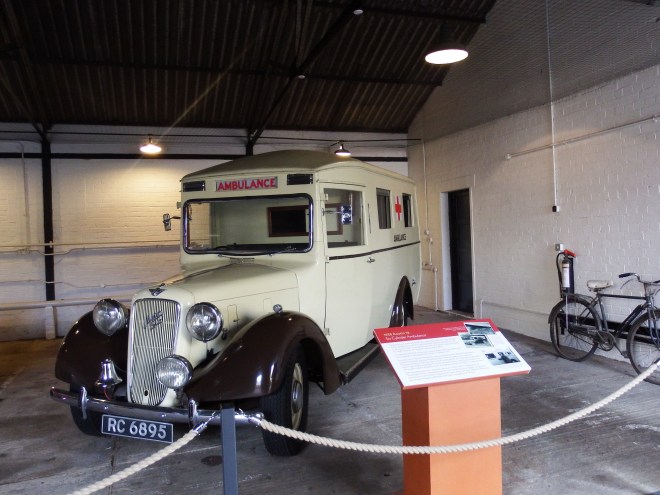
World War Two ambulance at Bletchley Park
Bletchley Park is an important part of Britain’s and her allies’ history and is well worth a visit. http://www.bletchleypark.org.uk/. Must get on to finishing that book!
*Winston Churchill on Bletchley Park
 The Wandering Historian