Malta: Nurse of the Mediterranean

Nurse of the Mediterranean stamp 2

As the 25th of April draws near and plans for commemorating the 100th anniversary of the ANZAC troops landing at Gallipoli gather momentum, I recently discovered an interesting aspect of the campaign I wasn’t aware of  until I visited Malta.  Malta was part of the British Empire from 1800 to 1964 and still retains lots of cultural links with Britain.

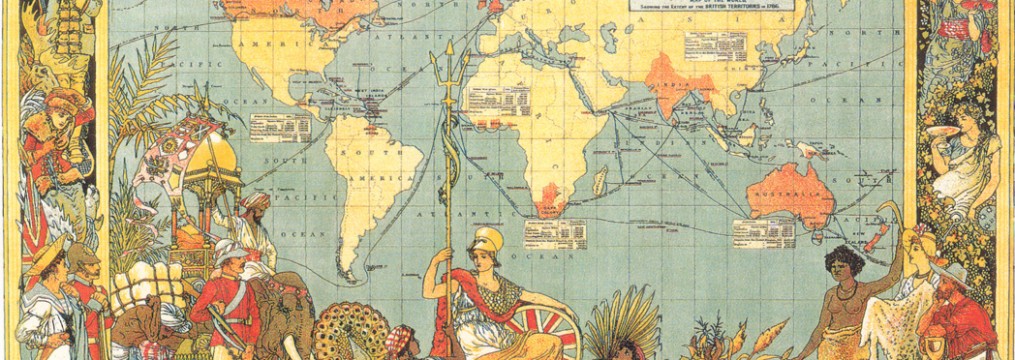
London newspapers photo

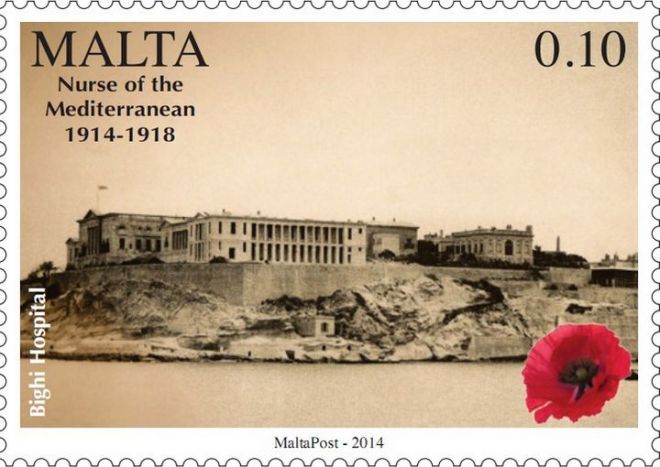
I always enjoy poking around bookshops when I’m away and usually find books on the place I’m visiting which I haven’t seen elsewhere.  In a bookshop in Valletta I found a small book written about Malta during the British era and reading it was surprised to see Malta described as “the Nurse of the Mediterranean”.  At the airport before leaving I bought some stamps for last minute postcards and again “the Nurse of the Mediterranean” popped up.
Nurse of the Mediterranean stamp

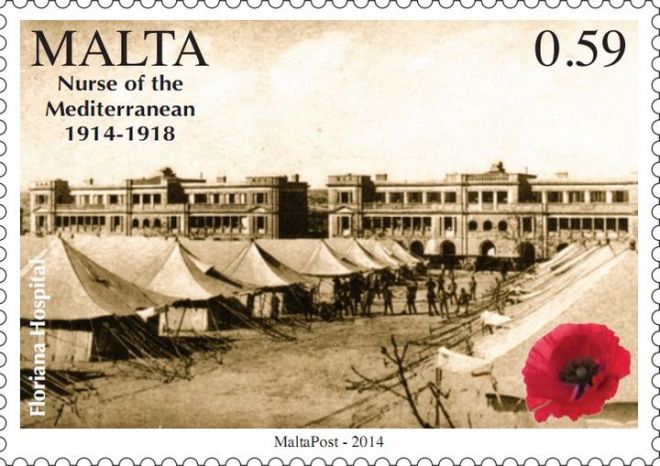
I was intrigued, delved further and was amazed to find that the casualties, known as, casevacs (casualty evacuation cases) from Gallipoli were sent to Malta for treatment.  It’s logical as Malta would have been the closest British possession to Turkey at the time, but I’m surprised more hasn’t been made of Malta’s role in the things I’ve read and heard about New Zealand’s campaign at Gallipoli.

The tiny island really rose to the challenge of caring for the huge number of casualties transported there.  In 1914 there were 278 military beds over four hospitals in Malta but by the end of the war there were 27 hospitals with 25,000 beds.  Over 2,600 officers and 64,500 men from other ranks were evacuated and treated in Malta.
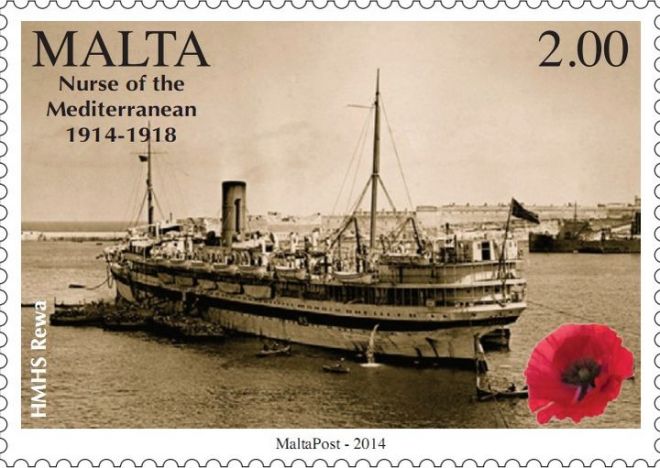
Nurse of the Mediterranen stamp 3

After a voyage from Gallipoli of around a week, each hospital ship was met by groups of Maltese women who worked in shifts to greet and comfort the men with sweets, cigarettes and drinks.  A large sewing party provided pyjamas, shirts, socks and scarves for the patients.   The women did all they could to create a homelike environment for those convalescing, with tea parties, excursions and concerts.  Others also recognised the importance of entertainment to lift morale and the Australia Hall was built as a venue to provide entertainment for the New Zealand and Australian soldiers.
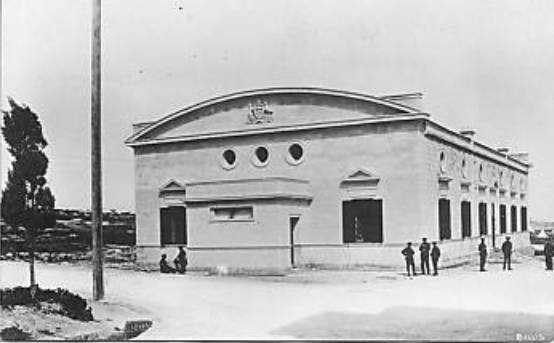
Australia Hall, Malta

Australia Hall, Malta

Little seems to have been written about Malta’s contribution to the ANZAC effort, but it seems unquestionable that many more New Zealanders and Australians would have died but for the efforts of the Maltese people.   I  do hope that in the many books, documentaries and articles on Gallipoli the centenary has spawned there are some that give Malta the credit she deserves.

An episode on Malta was recently screened by the BBC in a series of documentaries about the First World War hosted by Dr Kevin Fong.  See a clip from it here.
Bletchley Park: The goose that laid the golden egg but never cackled*

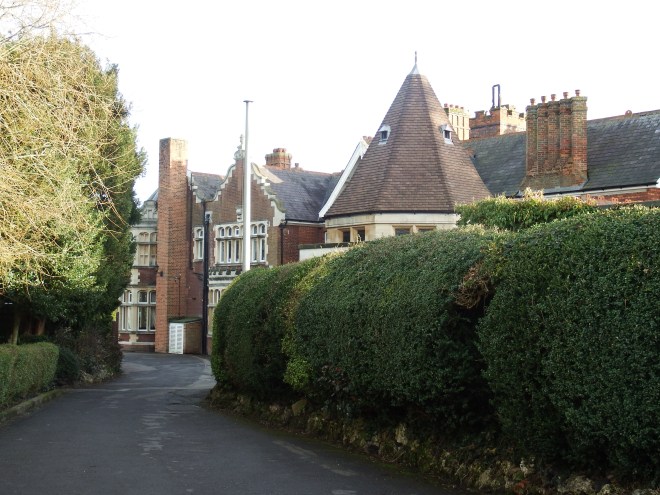
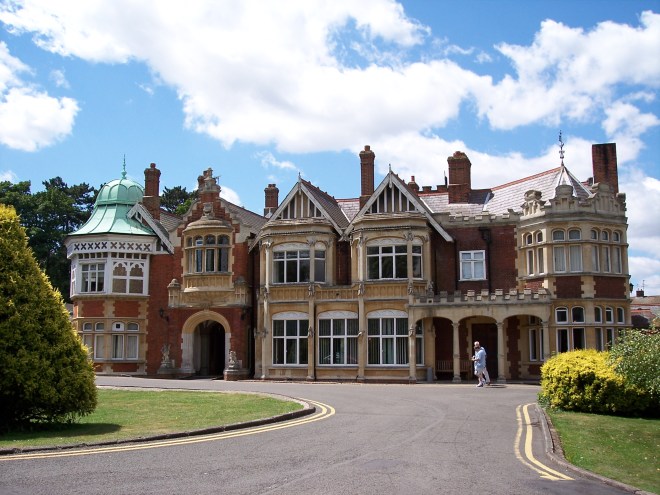
The Mansion, Bletchley Park (image by Wikipedia)

The Mansion, Bletchley Park (image by Wikipedia)

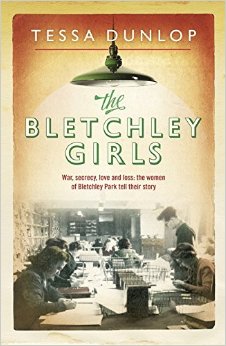
I’ve just returned from a three week holiday to New Orleans, London and Malta and one of the places I visited while in London was Bletchley Park.  On my first day back at work, as a librarian at Radio New Zealand, I was asked to do some research for an forthcoming interview of one of the Bletchley girls.  Her name is Charlotte Webb and she features in the recently published book, The Bletchley Girls, by Tessa Dunlop.  What a coincidence – I’d bought the book when I was at Bletchley Park but only just started reading it.  The interview was the following day so within two weeks of visiting Bletchley I was able to hear one of the women who worked there talking about her time at at the Park.  You can listen to Charlotte Webb’s interview here.

The Bletchley Girls


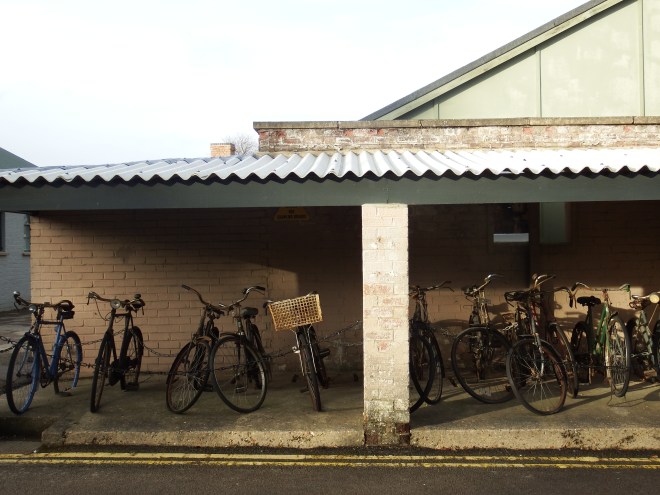
It’s a short train ride from Marylebone Station in London to Bletchley and Bletchley Park is two minutes walk from the station.  Although a lot of the employees would have travelled to Bletchley by train, many would have biked and there’s a bike shed with bikes from the time parked there waiting for their owners to finish their shifts.

Bike shed as it would have been during World War Two

Bike shed as it would have been during World War Two

There’s been a lot written about Bletchley in the years since the secrecy around it was loosened.  At its peak during World War Two 9,000 people worked here, most of them women, although their part in the huge contribution Bletchley made to the war has not been as publicised as that of the men until recently.    Two successful movies on Bletchley  – Enigma and  The Imitation Game have heightened interest and added to the glamour of the Park.   It was only weeks since I’d seen the latter so it was all fresh in my mind as I strolled around.

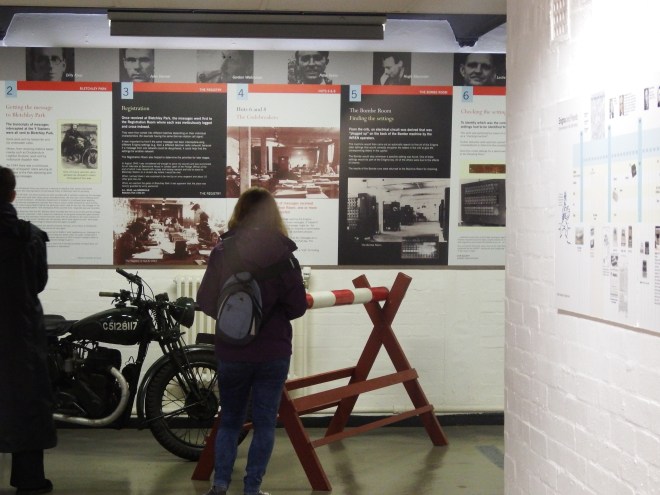
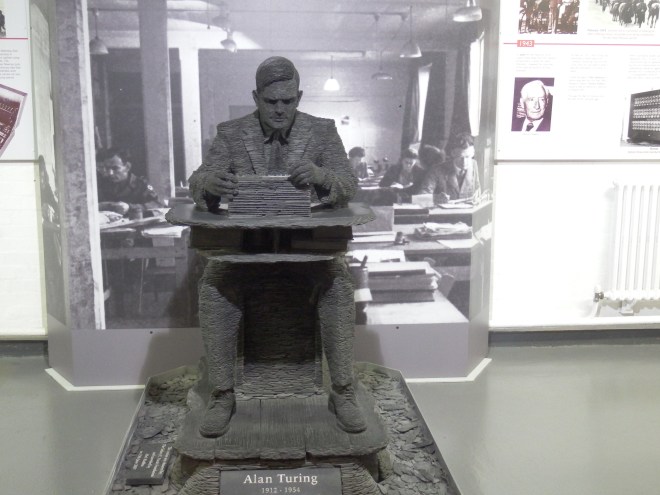
DSCF5601The Imitation Game centres around Alan Turing who’s lauded as the father of the computer and as contributing hugely to the Allies’ success.   At the Park there’s an extensive exhibition on his life and work, including the posthumous letter of pardon from Queen Elizabeth II.  One of his eccentricities was to chain his mug to a radiator and this has been replicated in the museum.  There’s also a life-sized statue of Turing by Stephen Kettle (2007) set against a background photo of the cryptographers working in one of the huts at Bletchley.

Alan Turing

Alan Turing

The building I associate most with Bletchley is the large house known as  “the Mansion” by those who worked there.

Side view of the Mansion

Side view of the Mansion

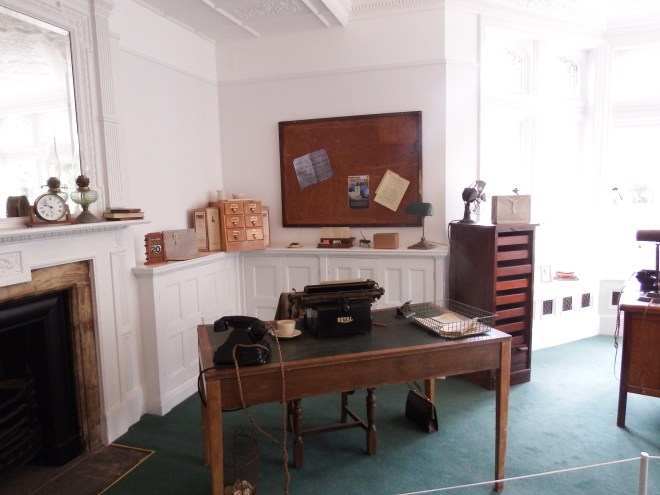
Lots of the downstairs rooms have been restored and furnished to reflect the war years and there’s also a cafe where you can stop, sit and really soak it all in.

Part of the office in the Mansion

Part of the office in the Mansion

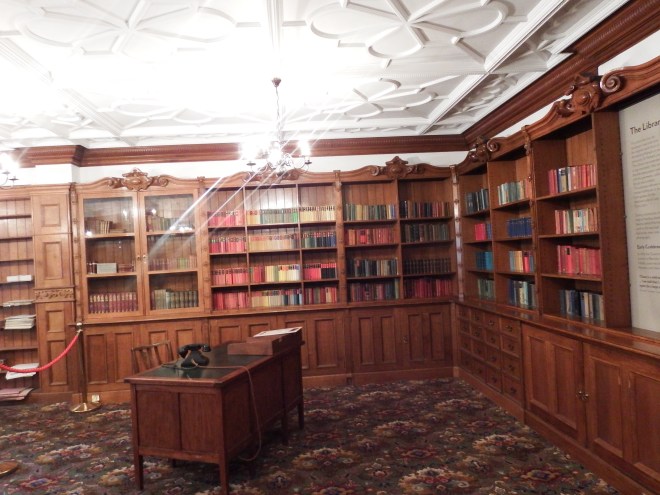
As a librarian I was interested in the library at Bletchley which had been built as such by the original owner Sir Samuel Herbert Leon, a wealthy businessman.  During the war it was initially used by the Italian and German naval sub-sections and later, as space was so limited, it was full of desks and equipment.

The Library

The Library

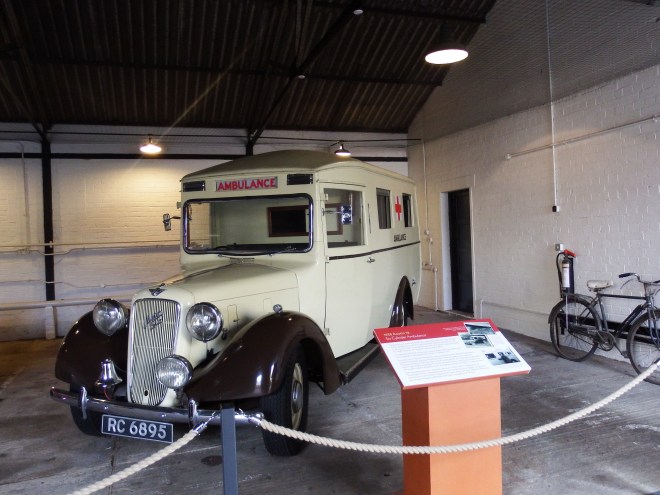
There’s lots to see in the surrounding buildings and pretty grounds to wander around.

World War Two ambulance at Bletchley Park

World War Two ambulance at Bletchley Park

Bletchley Park is  an important part of Britain’s and her allies’ history and is well worth a visit.  http://www.bletchleypark.org.uk/.  Must get on to finishing that  book!

*Winston Churchill on Bletchley Park


Advance Australia Fair: Crossing Australia by train

Today, 26 January, is Australia Day, commemorating the arrival of the First Fleet of British ships in 1788.   It’s hard to comprehend the vastness of Australia but a trip on the Indian Pacific is a good way to start.

IMG_0276

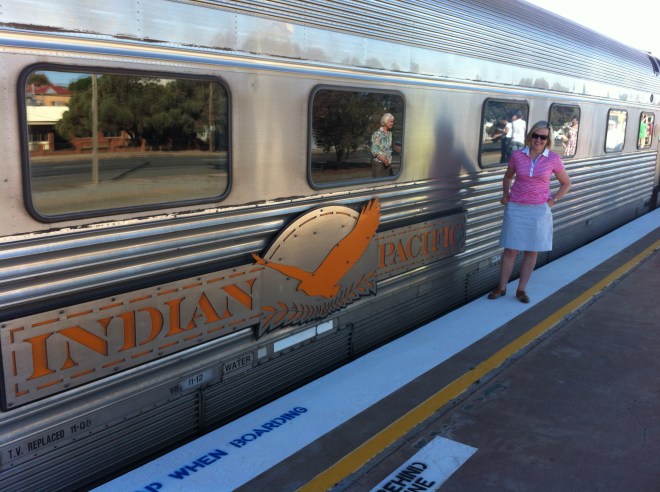
From Sydney to Perth on the Indian Pacific

“I don’t think I could eat our national emblem,” Lisa comments as I lift my fork to my mouth. I pause, think for a while and then pop my piece of kangaroo steak in. It has a delicious smokiness to it. As I chew I think briefly of the unfortunate kangaroo the train hit during the night. Earlier that day, while rattling across the endlessly flat landscape, there’d been an announcement explaining the huge thump which had woken me, and conveying the disturbing information that our brakes have been damaged. Hopefully that’s not as bad as it sounds.

It’s the second day in our journey from Sydney to Perth in the sleek silver lines of the Indian Pacific; a journey which will take us three days and nights across this vast continent. As we speed along and the solitude of the Australian landscape is reinforced kilometre by kilometre, the sense of adventure heightens. OK this isn’t breaking new ground, roughing it or high thrills adventure, but nonetheless being on this train emits a whiff of Hercule Poirot and an echo of a bygone way of travel. “Won’t it be boring?” ask friends. Quite the contrary.

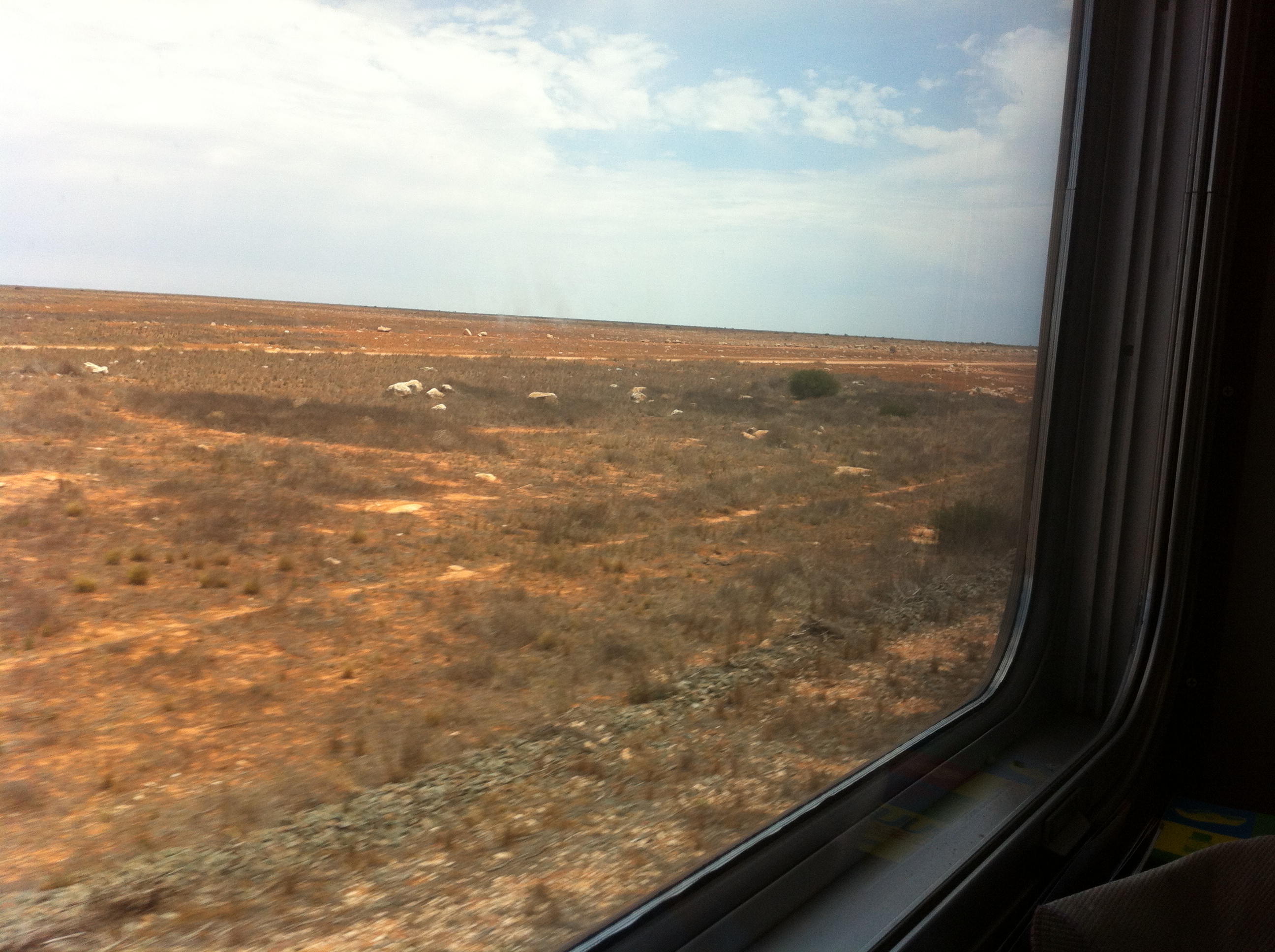
After leaving the greenness of Sydney and the Blue Mountains we enter the typical Australian bush of gum trees and barrenness seeming to stretch forever. The lush green of Adelaide follows and then the redness of the Nullarbor Plain. We go to sleep one night and wake up the next morning to an outlook which is completely unchanged. The extent and barrenness of the Nullarbor (which in Latin means no trees) is awe inspiring.

Nullarbor Plain from the Indian Pacific

Nullarbor Plain from the Indian Pacific

Throughout the journey we see lots of kangaroos hopping along. A line of 12 camels ambling across the Nullarbor disrupts breakfast one morning and dingos stand and watch as the train rolls by. A group of emus look flustered and harassed as they rush past. Sitting, looking out the window, far from being monotonous, has a hypnotic effect and you never know what you might see.

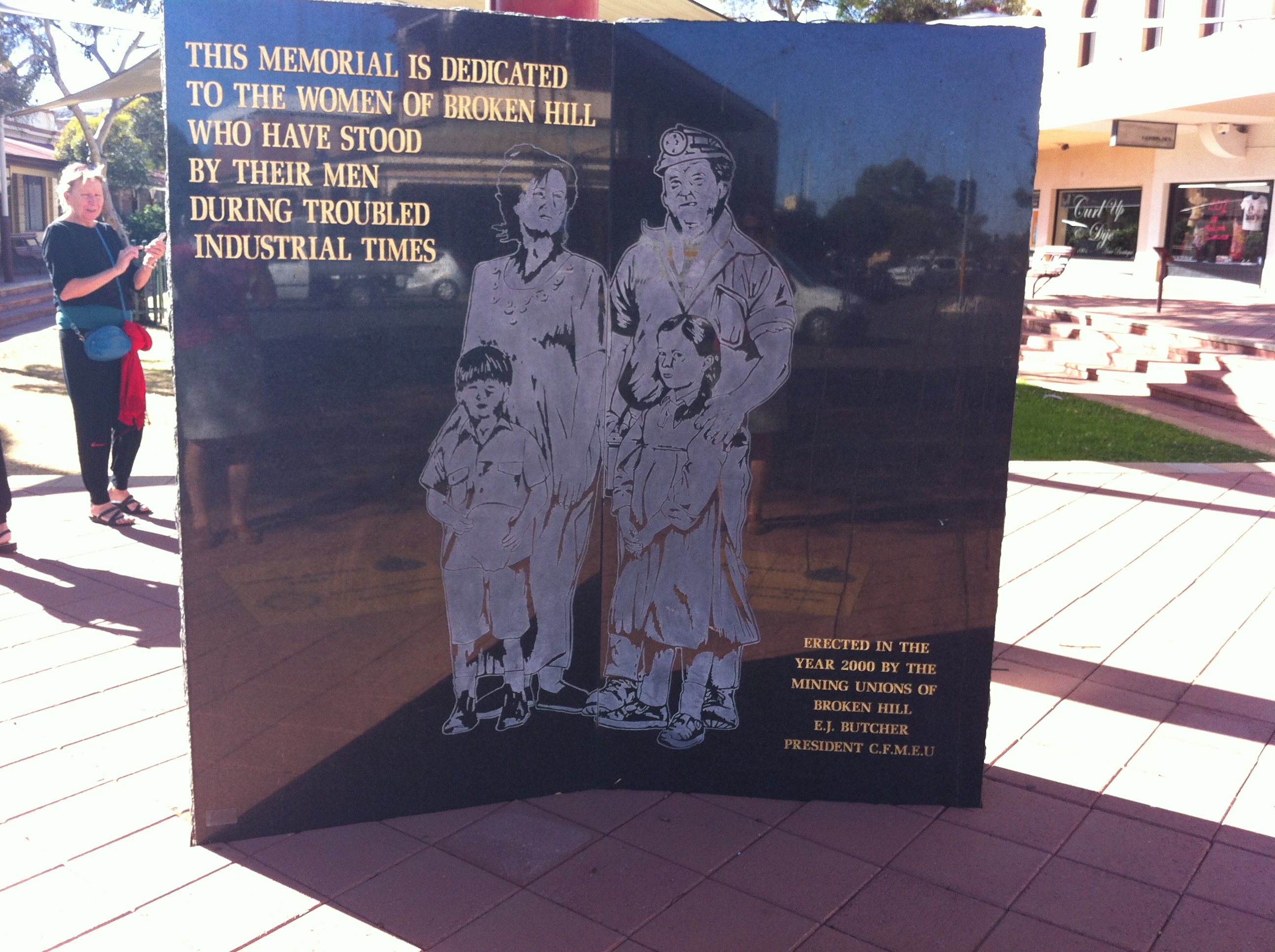
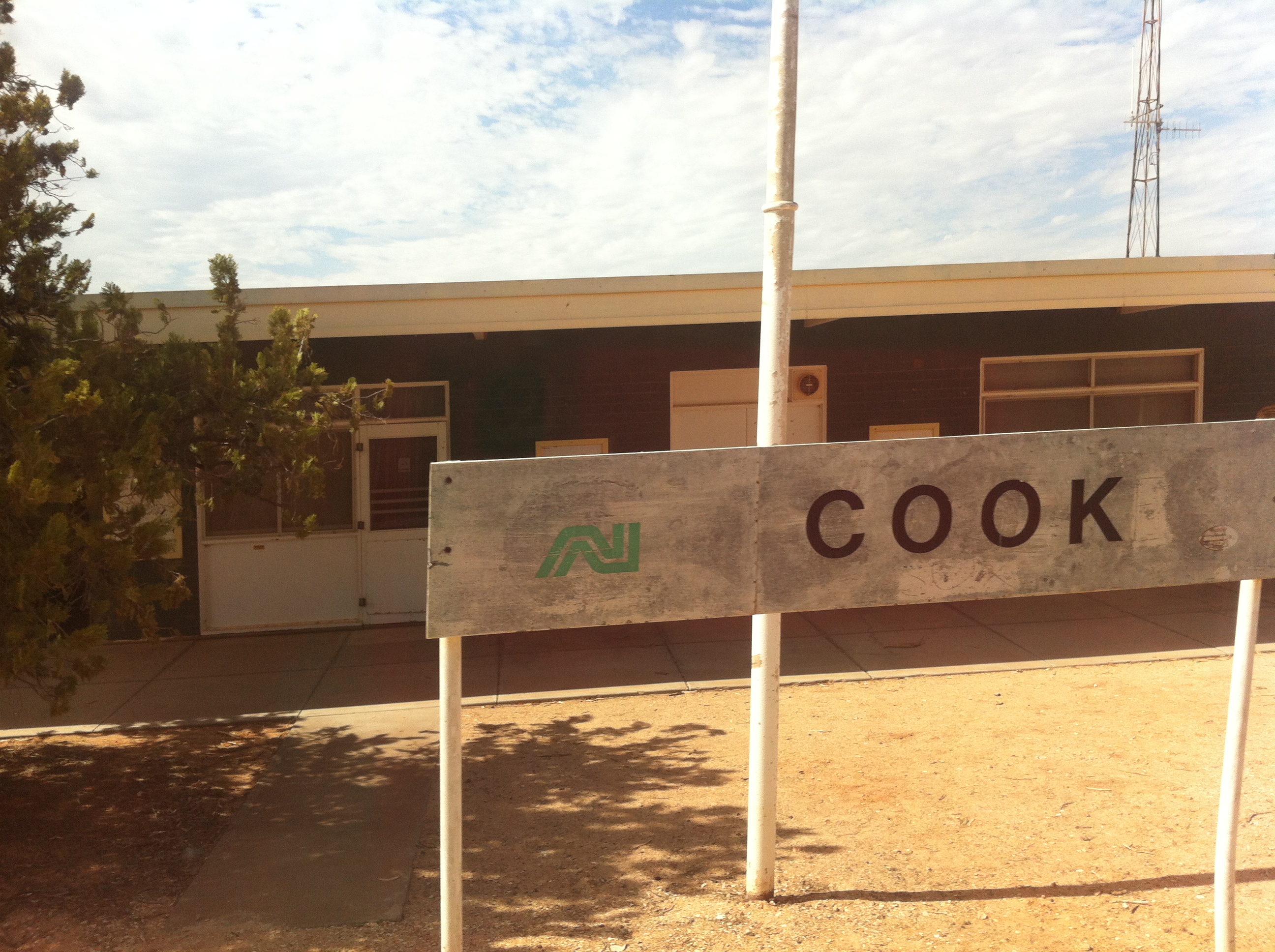
Stops along the way are a fascinating glimpse into the variety of Australian ways of life. Broken Hill is Australia’s oldest mining town and still dominated by the mining industry. We have half a day in nervous little Adelaide, trying to assert itself against its grander sisters Sydney and Melbourne and admire its Victorian buildings and Englishness. Tiny Cook in the heart of the Nullarbor, (population 4) has a feeling of total isolation and a temperature of 30 degrees when we are there at 9.00am. We arrive in Kalgoorlie in the evening, forego the tour and wander around this beautiful old gold town with its wide, tree lined streets and impressive Victorian buildings. We select one of the many two-storied verandahed hotels for a drink and sit watching the world go by before heading back to the train.

Broken Hill, NSW

Broken Hill, NSW

Cook, Nullarbor Plain

Cook, Nullarbor Plain

Life on the train is a little world unto itself and we soon settle into its rituals. A wake up morning cup of tea starts the day, then a shower. Breakfast is a rolling meal, but lunch and dinner are booked. It’s nice to have a drink beforehand and there’s plenty of time to enjoy it.

We enjoy meeting our fellow passengers as much as seeing the country. Most in our area of the train are older Australians and it’s refreshing to see people out enjoying their own, very spectacular, backyard. Our dining guests change daily and they are as varied as the landscape. Mark and Brenda are retired academics from Perth. Mark has a botched knee operation so is confined to a wheelchair much to the disappointment of Brenda who has been looking forward to a retirement of travel. She, Mark and their two children have a ‘country competition’ and she is falling behind the goal of visiting as many as her age.
Lisa and Brendan from South Australia are a complete contrast. Very garrulous Lisa refers to Australia as ‘our land’ and mining as ‘raping our land’ which I find a bit alarming. This is their big trip around Australia before heading off overseas – once they’ve got passports. In contrast to Brenda, Lisa’s never had one.
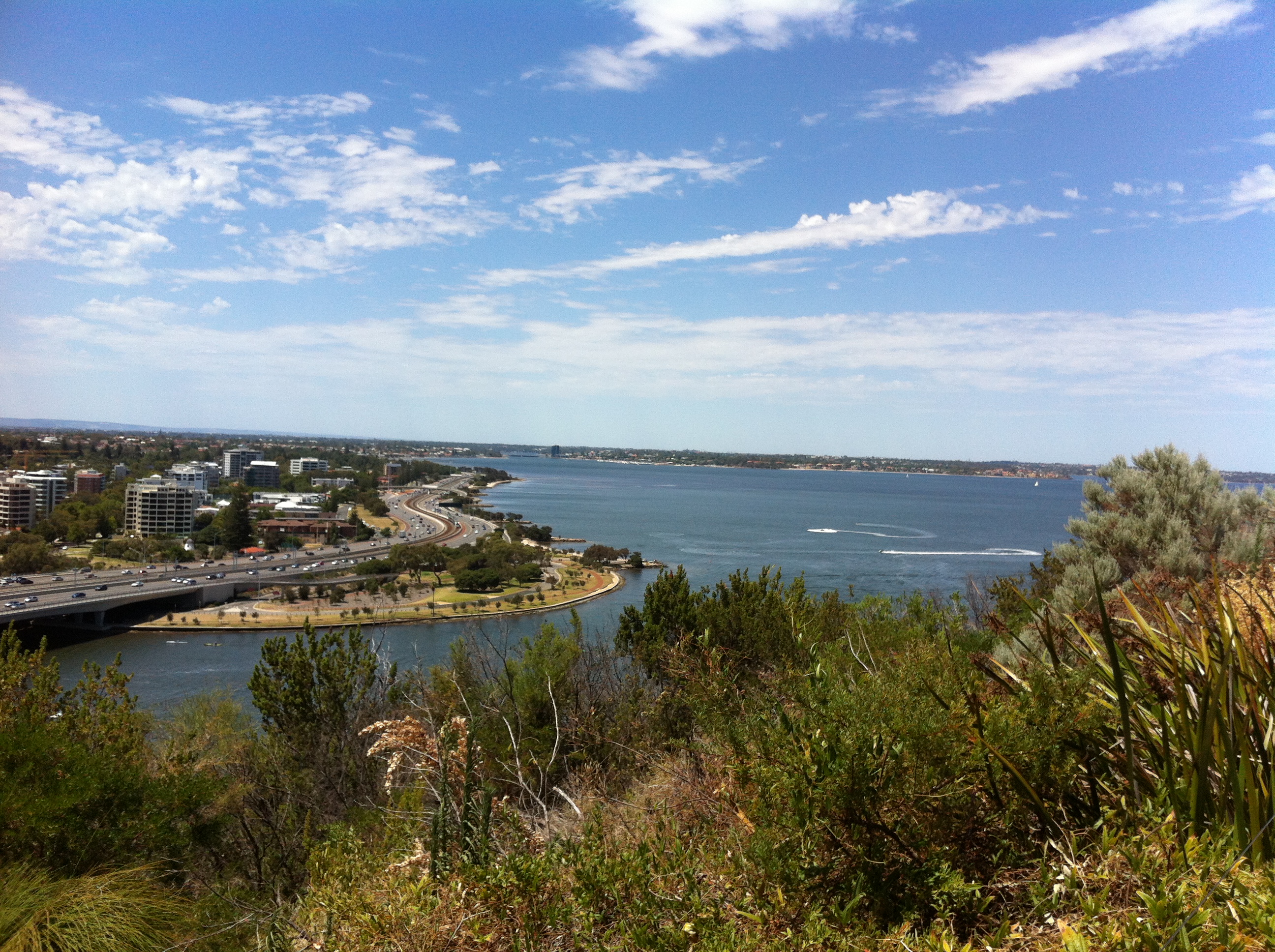
As we leave the Nullarbor and head towards Perth the landscape changes again and suburbia and greenery are intermingled. Our carriage pulls into Perth railway station and we feel a real sense of having travelled and arrived. But more than that, after three days on the Indian Pacific we have a greater appreciation for this enormous country and all that inhabit her, including her national emblem.

Perth, the end of the line

Perth, the end of the line