What they played: a sheet music catalogue

I often get given items relating to research I undertook on a music retail and publishing company, Charles Begg & Co Ltd.  I think I’m seen as the unofficial archivist for the business and have gathered quite a collection of different things since I published the history of the company.

Front cover 500 pixels[1]

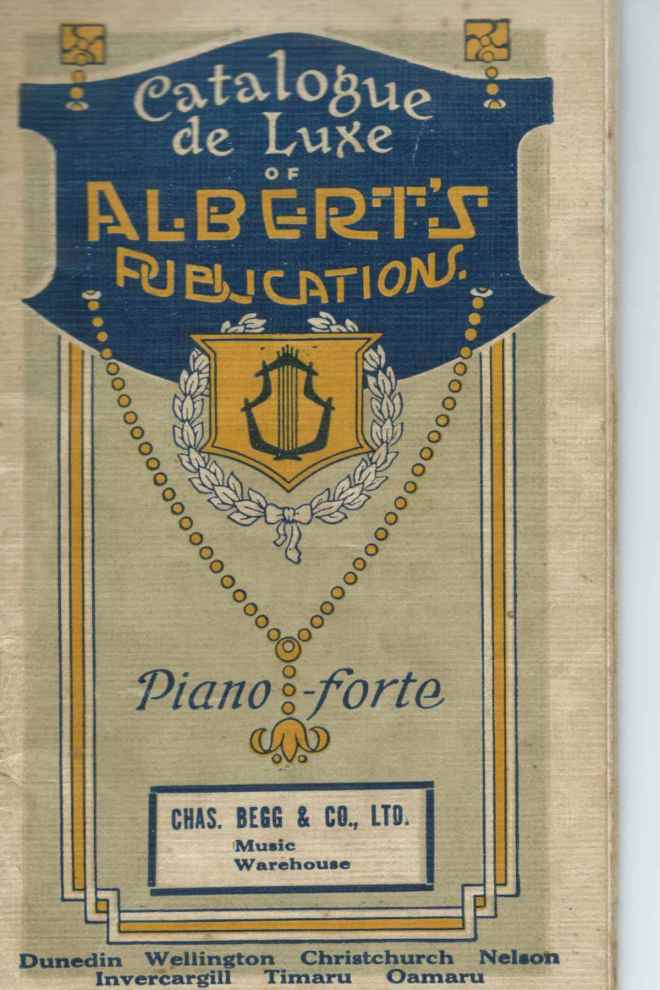
Recently I was given a small catalogue of sheet music published by the Australian publisher, Albert’s, sometime after 1910 and  prior to World War One.  

Albert's publications - cover
The reason I was given it is the business I am interested in, which is a New Zealand one, has its name printed on the cover of the catalogue –  along with branches it had open at that time.  This little catalogue (9.5cm x 15.5cm) would have been given to customers to promote Begg’s as well as Albert’s.

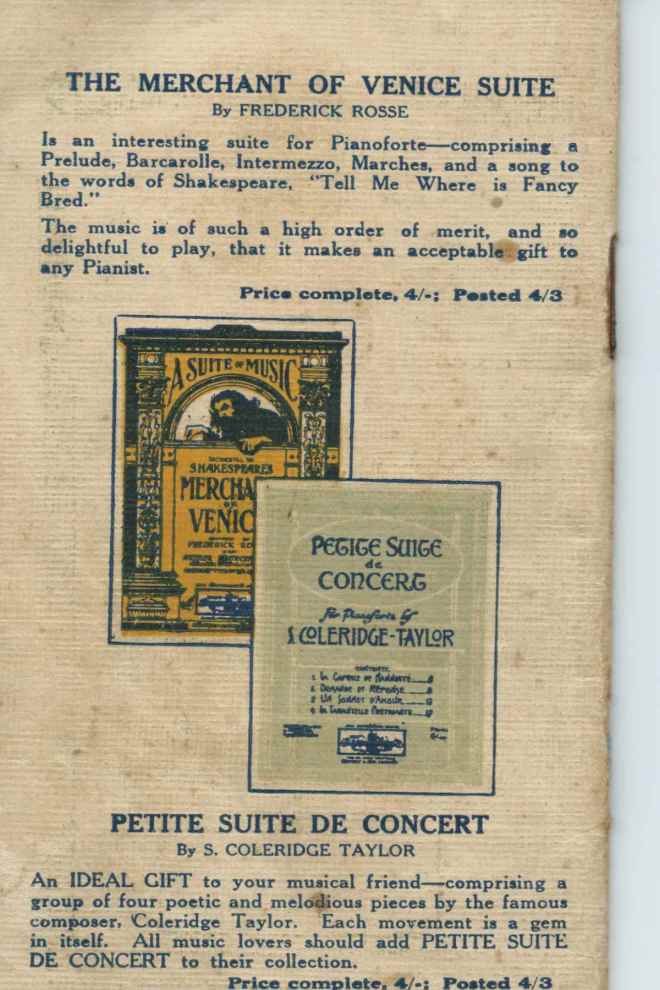
Albert's publications - back cover

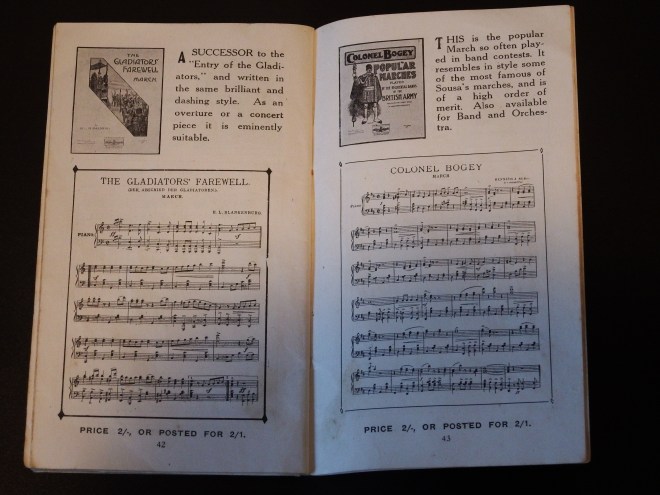
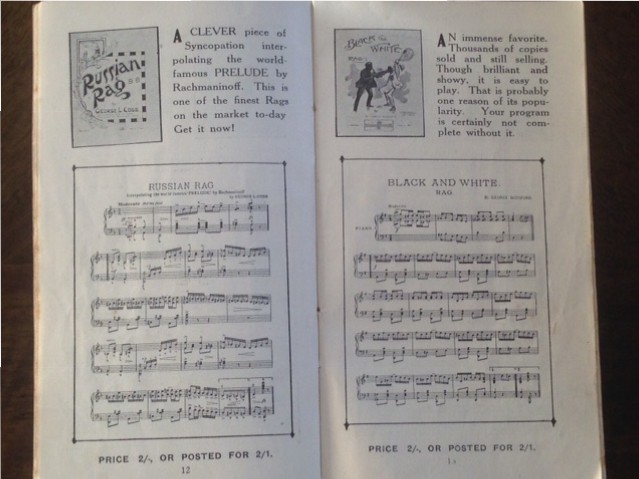
Inside are samples of pieces published by Albert’s, with a cover illustration and the first few bars of the piece, all designed to whet the customer’s appetite for the latest tunes of the day.  I’m confident in dating this catalogue prior to 1914 as there are no war themed pieces, hundreds of which were published during the First World War.  The closest is Colonel Bogey’s Popular Marches seen in the catalogue,

Albert's - Colonel Bogey

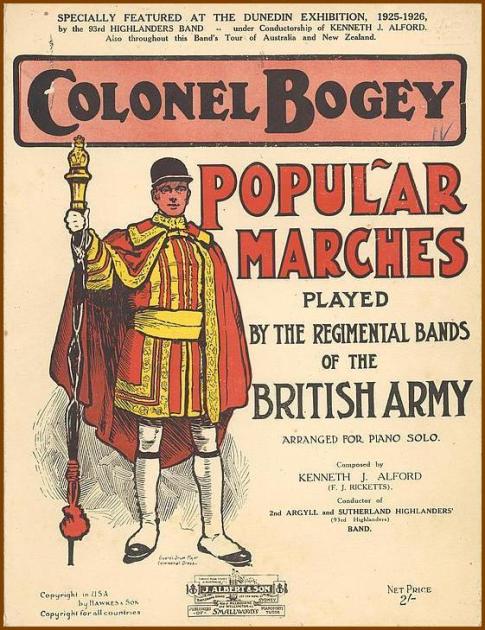
and in a later edition (after 1926) of the sheet music form here.  I love the colours of the cover.

Colonel Bogey's popular marches

It’s possible to glean a lot about popular musical taste from a booklet like this.  The book includes marches, fox trots, waltzes, novelettes and caprices – echoes of a different world.  At the back there is a list of other publications of Albert’s including such intriguing titles as “Can You Tame Wild Cairo Wimmen?”, I’ve Lost My Heart in Maoriland”, Good Gravy Rag” and “Umbrellas to Mend”.

Black and White rag in booklet

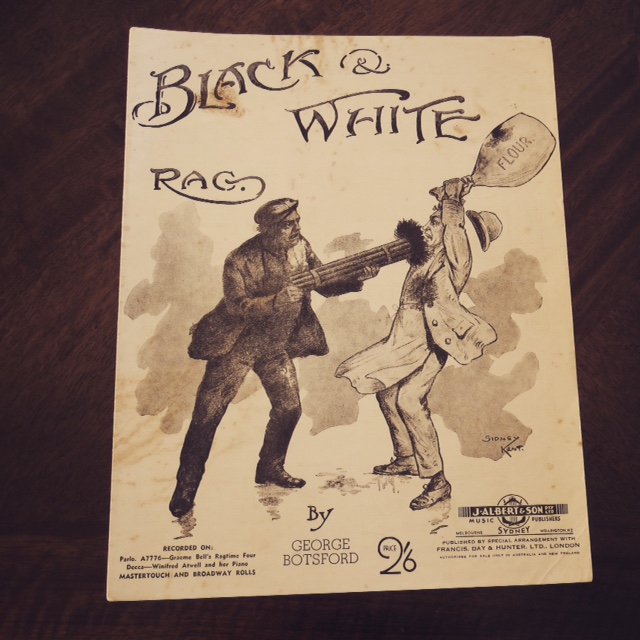
Funnily enough, given the thousands and thousands of pieces of music published at this time, I have one of the pieces advertised in the catalogue, “Black & White Rag”(1908)  but unfortunately I can’t tell if the customer purchased it from Begg’s or not as there’s no retailer’s stamp.  I like to think Begg’s did sell this copy – it just completes the picture somehow.

Black & White rag cover final


Advance Australia Fair: Crossing Australia by train

Today, 26 January, is Australia Day, commemorating the arrival of the First Fleet of British ships in 1788.   It’s hard to comprehend the vastness of Australia but a trip on the Indian Pacific is a good way to start.
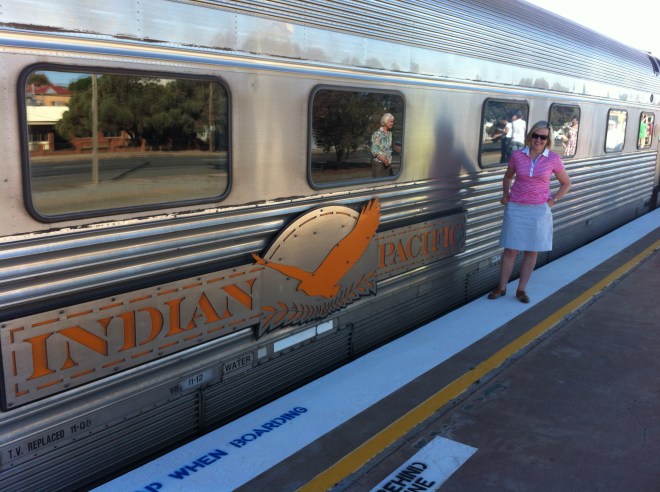
IMG_0276

From Sydney to Perth on the Indian Pacific

“I don’t think I could eat our national emblem,” Lisa comments as I lift my fork to my mouth. I pause, think for a while and then pop my piece of kangaroo steak in. It has a delicious smokiness to it. As I chew I think briefly of the unfortunate kangaroo the train hit during the night. Earlier that day, while rattling across the endlessly flat landscape, there’d been an announcement explaining the huge thump which had woken me, and conveying the disturbing information that our brakes have been damaged. Hopefully that’s not as bad as it sounds.

It’s the second day in our journey from Sydney to Perth in the sleek silver lines of the Indian Pacific; a journey which will take us three days and nights across this vast continent. As we speed along and the solitude of the Australian landscape is reinforced kilometre by kilometre, the sense of adventure heightens. OK this isn’t breaking new ground, roughing it or high thrills adventure, but nonetheless being on this train emits a whiff of Hercule Poirot and an echo of a bygone way of travel. “Won’t it be boring?” ask friends. Quite the contrary.

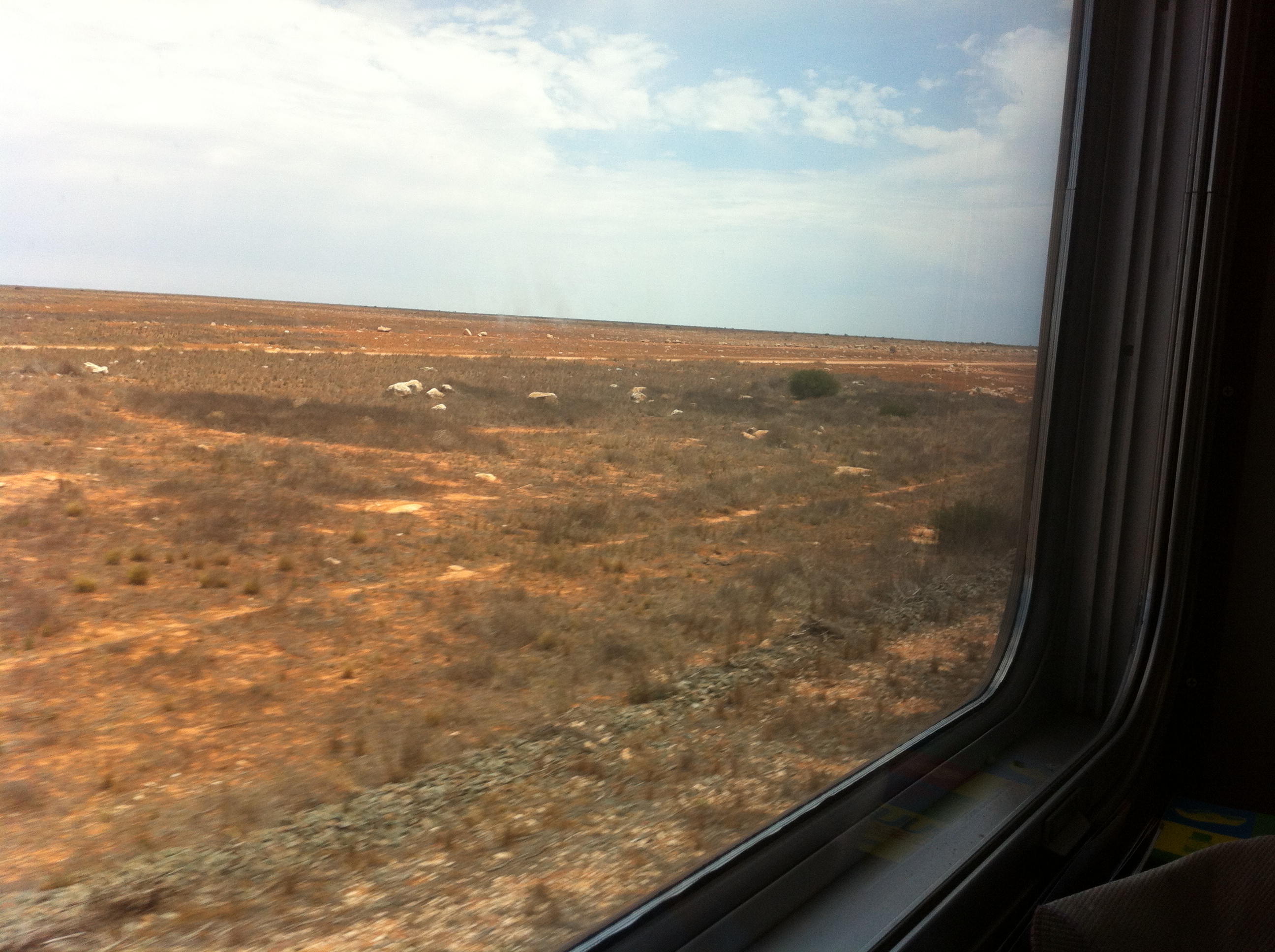
After leaving the greenness of Sydney and the Blue Mountains we enter the typical Australian bush of gum trees and barrenness seeming to stretch forever. The lush green of Adelaide follows and then the redness of the Nullarbor Plain. We go to sleep one night and wake up the next morning to an outlook which is completely unchanged. The extent and barrenness of the Nullarbor (which in Latin means no trees) is awe inspiring.
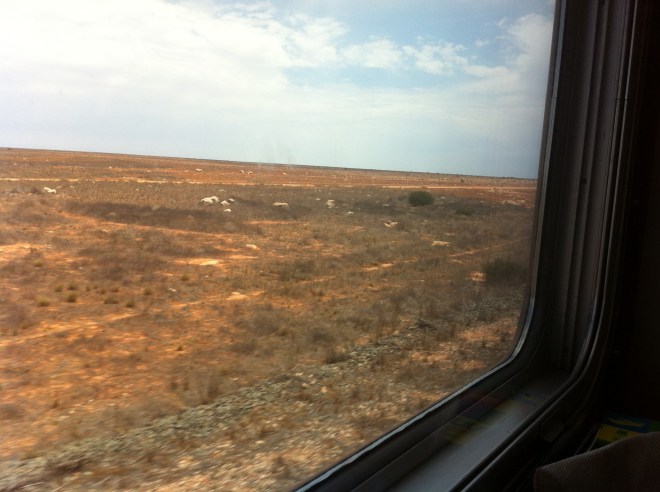
Nullarbor Plain from the Indian Pacific

Nullarbor Plain from the Indian Pacific

Throughout the journey we see lots of kangaroos hopping along. A line of 12 camels ambling across the Nullarbor disrupts breakfast one morning and dingos stand and watch as the train rolls by. A group of emus look flustered and harassed as they rush past. Sitting, looking out the window, far from being monotonous, has a hypnotic effect and you never know what you might see.

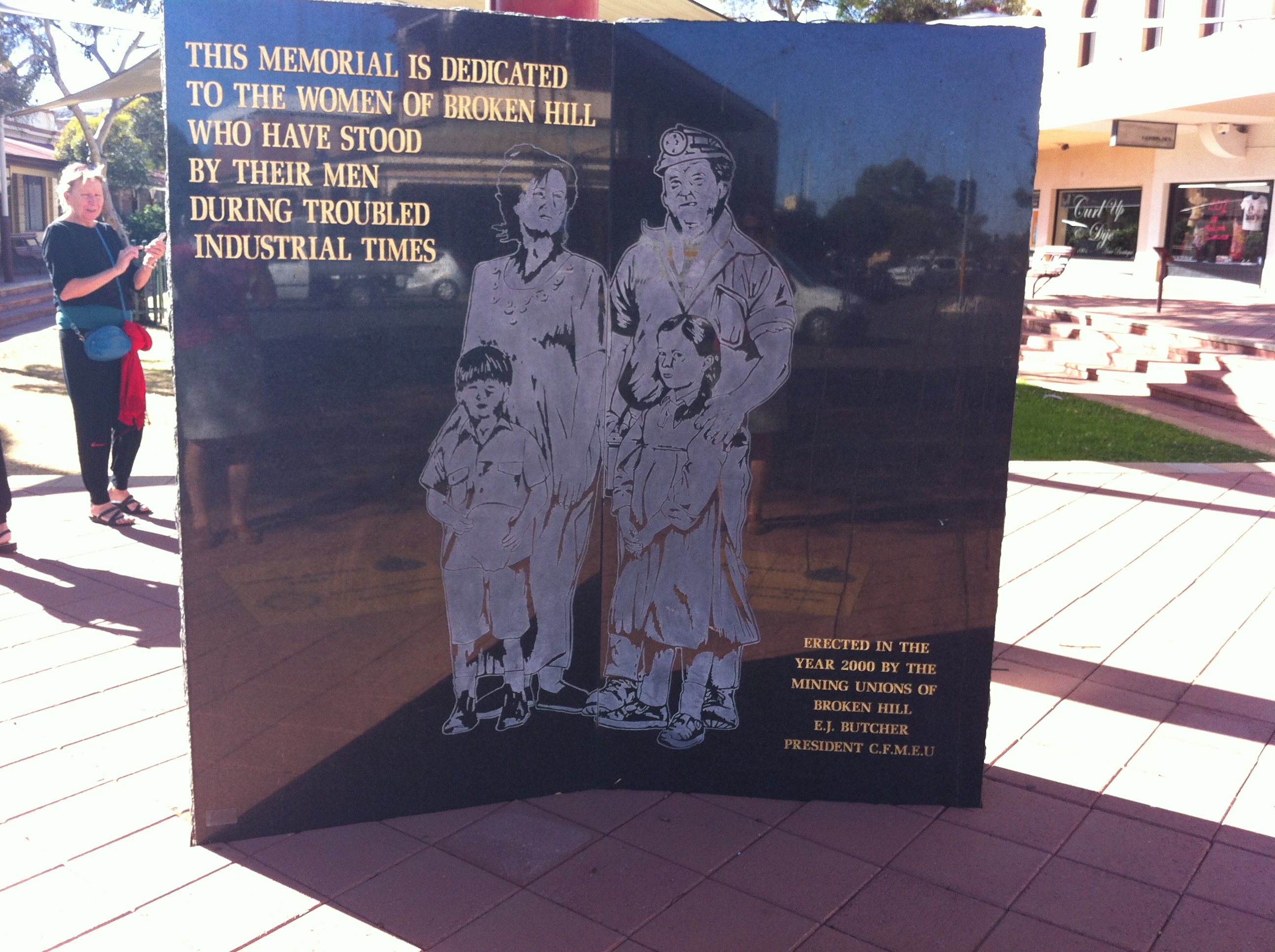
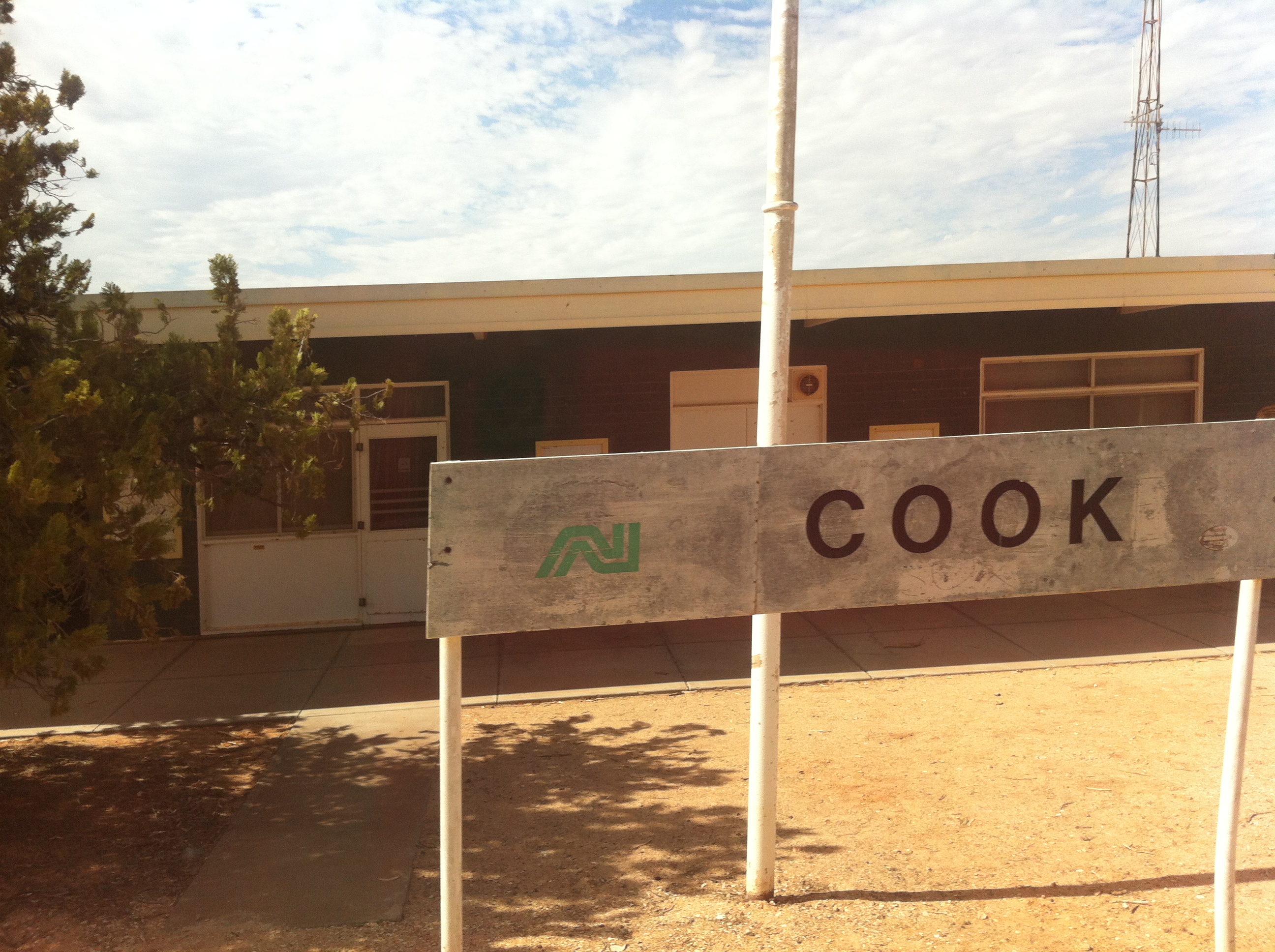
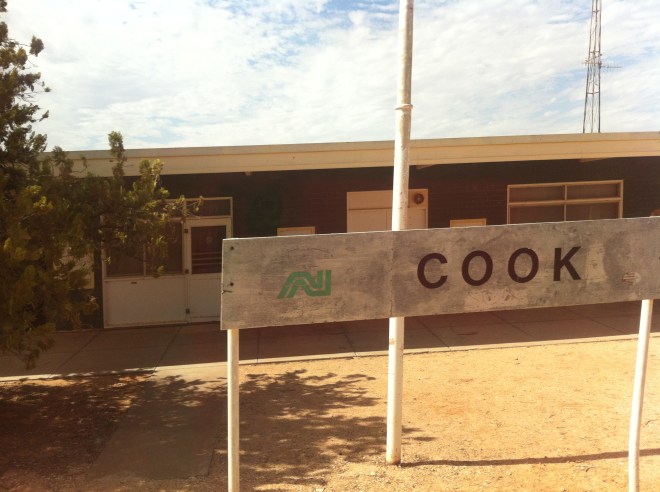
Stops along the way are a fascinating glimpse into the variety of Australian ways of life. Broken Hill is Australia’s oldest mining town and still dominated by the mining industry. We have half a day in nervous little Adelaide, trying to assert itself against its grander sisters Sydney and Melbourne and admire its Victorian buildings and Englishness. Tiny Cook in the heart of the Nullarbor, (population 4) has a feeling of total isolation and a temperature of 30 degrees when we are there at 9.00am. We arrive in Kalgoorlie in the evening, forego the tour and wander around this beautiful old gold town with its wide, tree lined streets and impressive Victorian buildings. We select one of the many two-storied verandahed hotels for a drink and sit watching the world go by before heading back to the train.
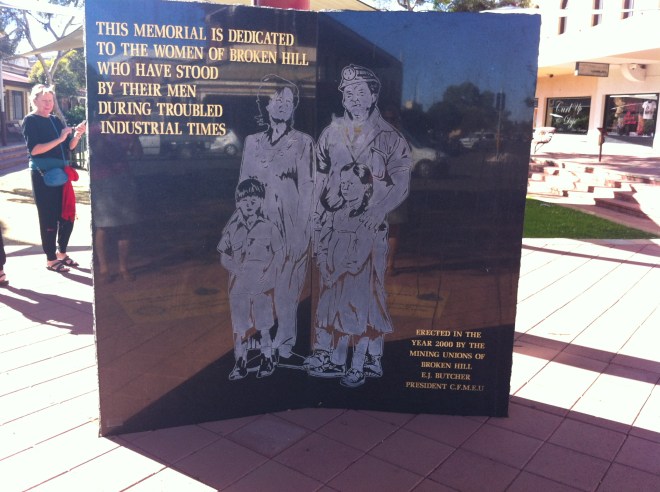
Broken Hill, NSW
Broken Hill, NSW

Cook, Nullarbor Plain

Cook, Nullarbor Plain

Life on the train is a little world unto itself and we soon settle into its rituals. A wake up morning cup of tea starts the day, then a shower. Breakfast is a rolling meal, but lunch and dinner are booked. It’s nice to have a drink beforehand and there’s plenty of time to enjoy it.

We enjoy meeting our fellow passengers as much as seeing the country. Most in our area of the train are older Australians and it’s refreshing to see people out enjoying their own, very spectacular, backyard. Our dining guests change daily and they are as varied as the landscape. Mark and Brenda are retired academics from Perth. Mark has a botched knee operation so is confined to a wheelchair much to the disappointment of Brenda who has been looking forward to a retirement of travel. She, Mark and their two children have a ‘country competition’ and she is falling behind the goal of visiting as many as her age.
Lisa and Brendan from South Australia are a complete contrast. Very garrulous Lisa refers to Australia as ‘our land’ and mining as ‘raping our land’ which I find a bit alarming. This is their big trip around Australia before heading off overseas – once they’ve got passports. In contrast to Brenda, Lisa’s never had one.
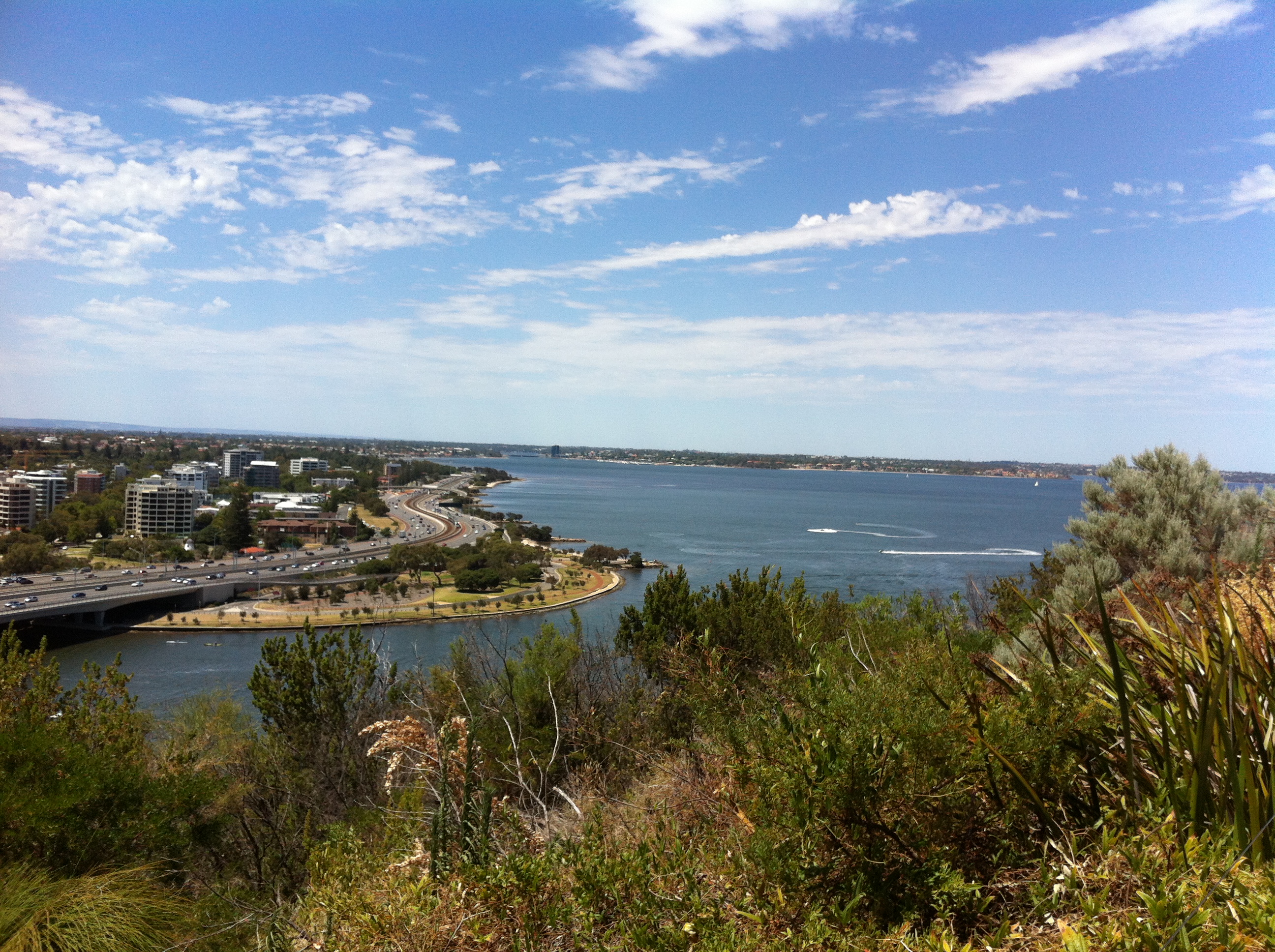
As we leave the Nullarbor and head towards Perth the landscape changes again and suburbia and greenery are intermingled. Our carriage pulls into Perth railway station and we feel a real sense of having travelled and arrived. But more than that, after three days on the Indian Pacific we have a greater appreciation for this enormous country and all that inhabit her, including her national emblem.
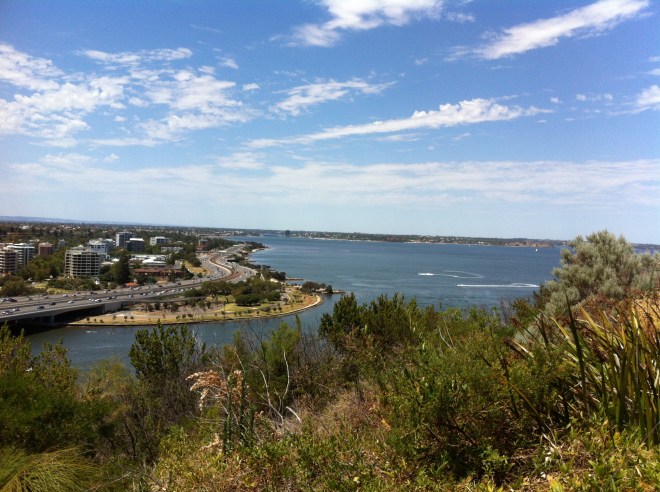
Perth, the end of the line
Perth, the end of the line

Lovely Lord Howe Island

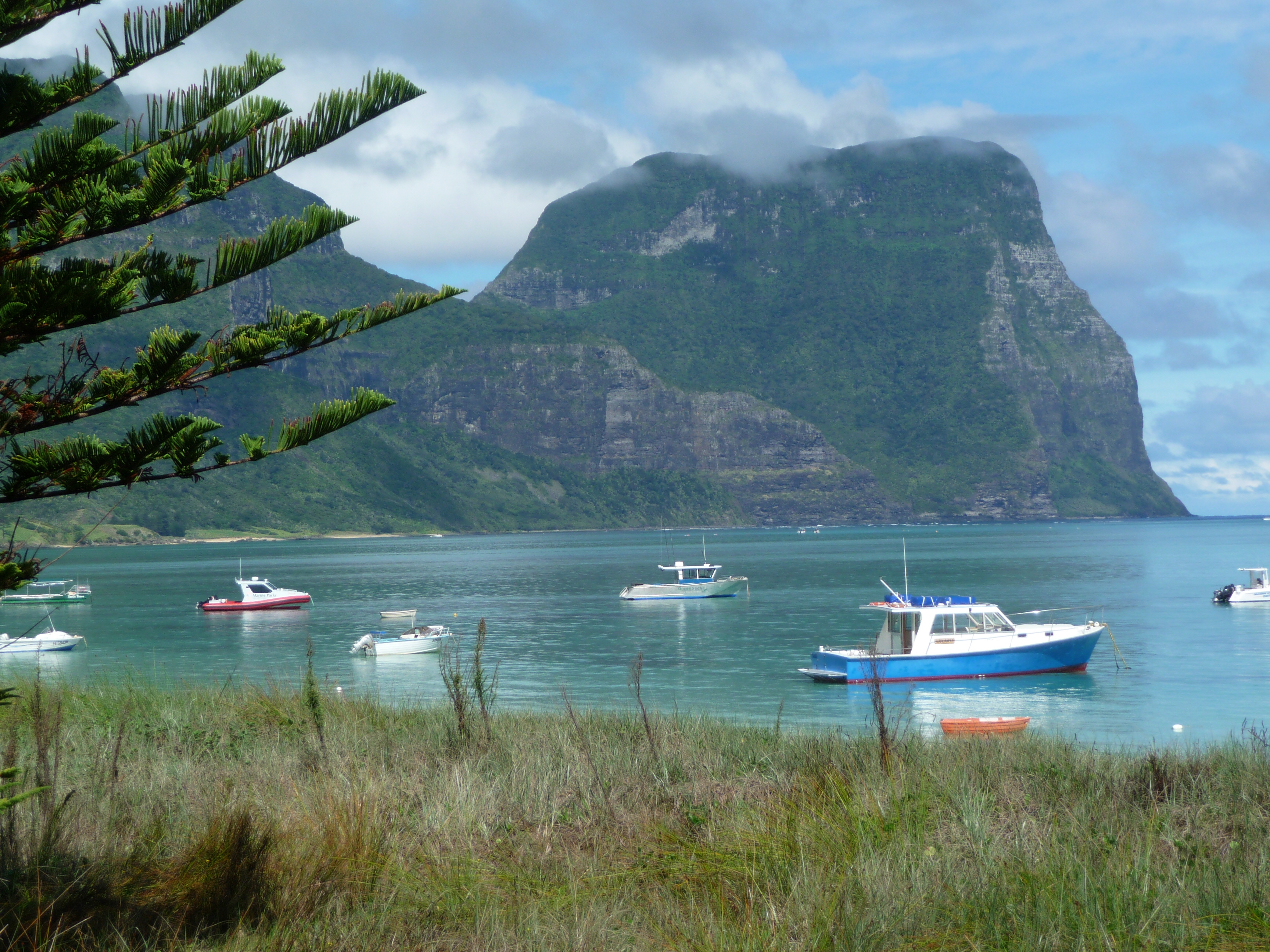
Mt Gower and Mt Lidgard

Mt Gower and Mt Lidgard

“Come in Coral Princess, come in.”  Jill, the 76 year old front woman of the glass bottom boat company, sighed.

“He hasn’t got his radio on so I’ll just have to do it the old fashioned way, like a fishwife” she said with a grin and marched towards the water’s edge.

Cupping her hands to her lips she gave a loud cry, startling a young couple who were cosying up to each other nearby.

“Come in Coral Princess.”

Ken, the skipper heard her this time and brought the boat to the shore’s edge as Jill gave our group her final instructions in the slow, deliberate drawl of the Lord Howe Islander.

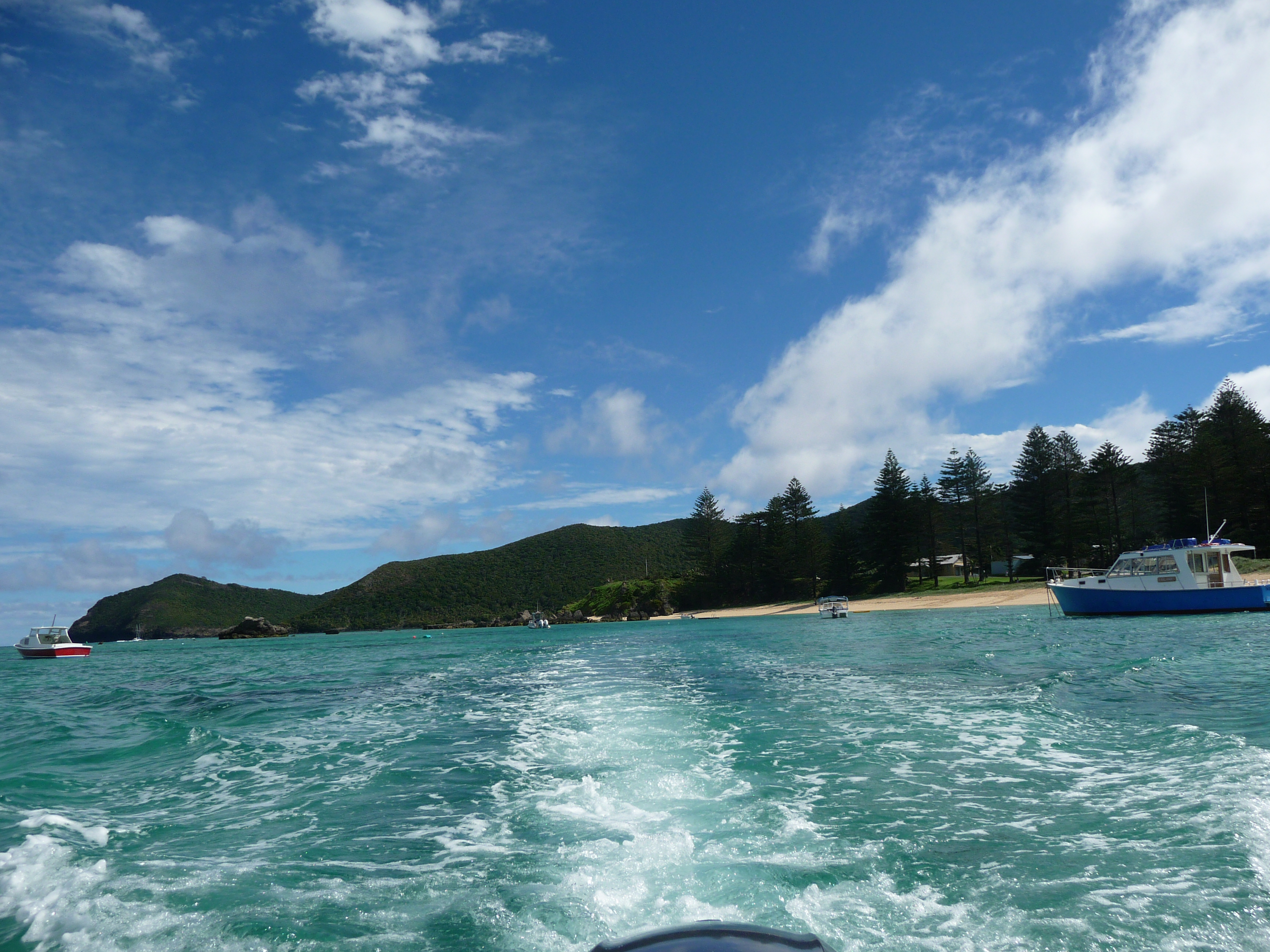
Sculpted by our wetsuits we stepped aboard and set course for the magnificent coral reef on the western side of this remote island.   Ken kept up a constant patter of information and anecdotes, most of which seemed to be at the expense of the coral on the Great Barrier Reef.  According to Ken, although there is more variety, it is less healthy than the coral around Lord Howe.

P1030987

Ken anchored the boat over the reef and we put on our flippers and masks and slipped in.  The sea was warm and clear and below the water another world glistened.   Brightly coloured fish shimmered in and out of multi-coloured, swaying coral forests; sea urchins, clams and other shellfish nestled in the sand.  A striped snake eel gave me a start and as Ken had warned a small shark hovered, reminding us that there is a darker side to nature.  After half an hour, on Ken’s signal we climbed aboard, shedding our gear as we compared what we’d seen.

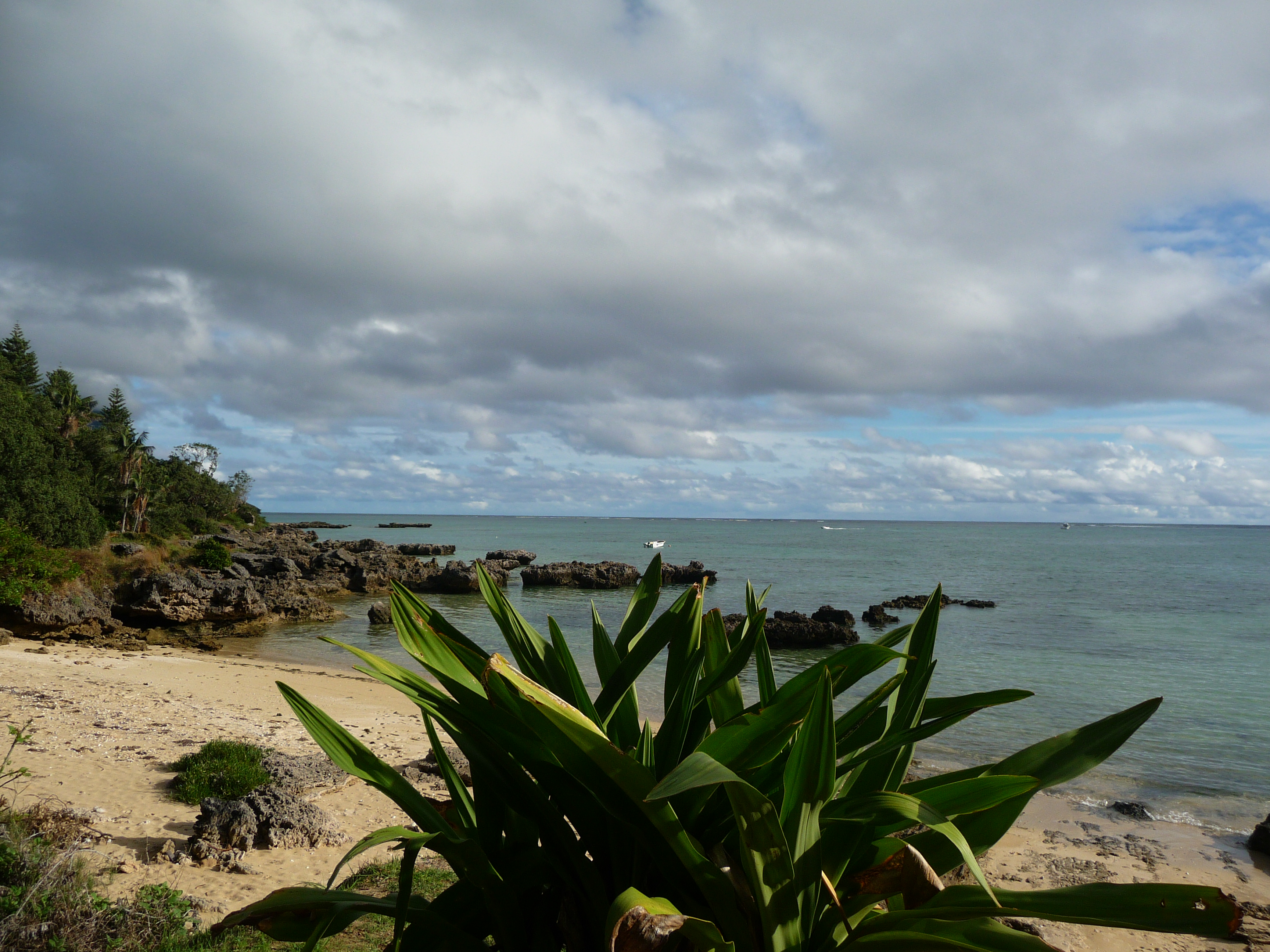
Flax and scene

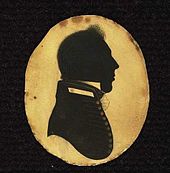
Over 900 kilometres from the Australian mainland Lord Howe Island is a UNESCO site and only 400 visitors are allowed on the island at any time, outnumbering the residents.   It was claimed as a British possession by Lieutenant Lidgbird Ball in 1788 and named after the first Lord of the Admiralty at the time.   Lord Howe was settled in 1834 and many of the residents today are from families who have lived on the island for generations.  Kenetia palms were the major industry until recently but now the island’s income relies heavily on tourism.

Lieutenant Henry Lidgbird Ball who discovered Lord Howe Island

Lieutenant Henry Lidgbird Ball who discovered Lord Howe Island

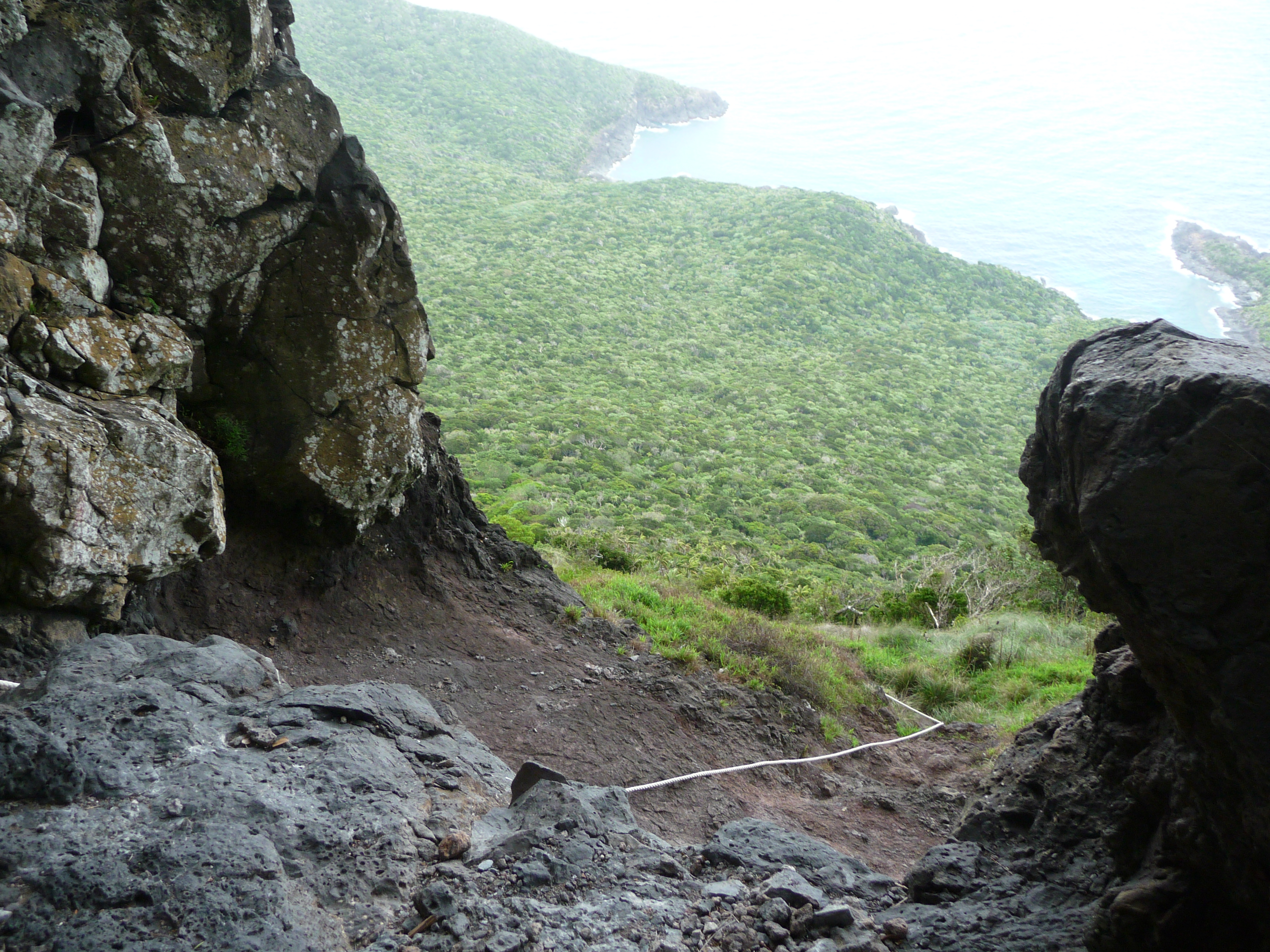
Fishing, snorkelling and walking are popular activities.  There are a range of walking options with the most strenuous being the one day climb to the top of Mt Gower.  The nearby Mt Lidgard is also a challenge and both have ropes to help climbers.

Ropes on Mt Lidgard

Ropes on Mt Lidgard

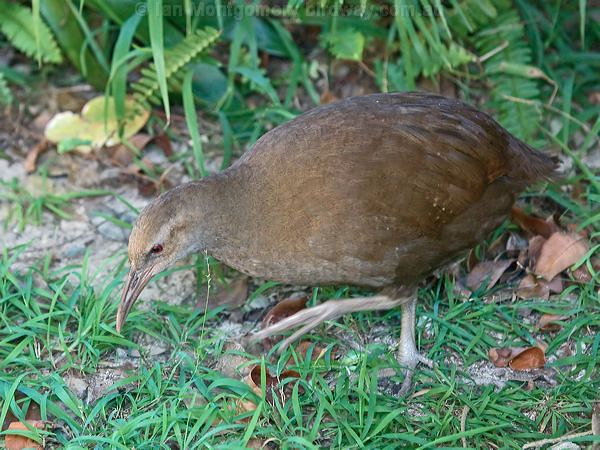
The flightless  Lord Howe woodhen can now be seen all over the island, although it was on the point of extinction thirty years ago.

Lord Howe woodhen

Lord Howe woodhen

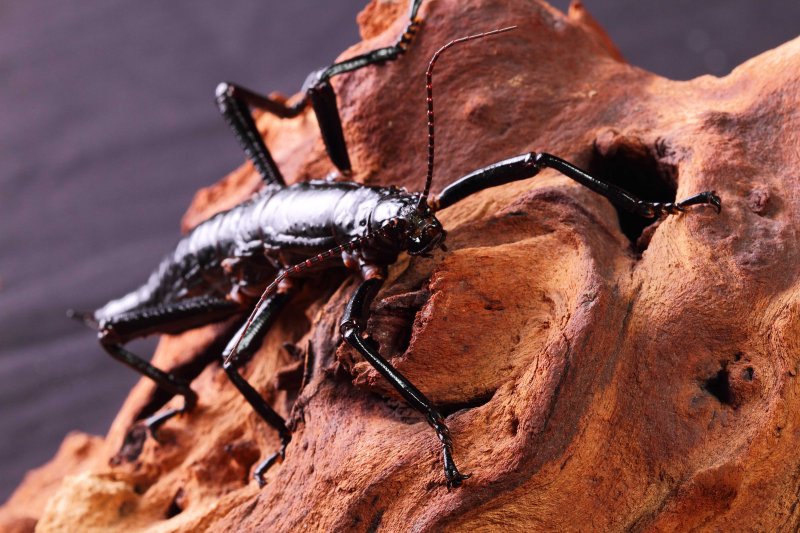
The Lord Howe stick insect was thought to be extinct until 2001 but has since been bred successfully in captivity.

Lord Howe stick insect

Lord Howe stick insect

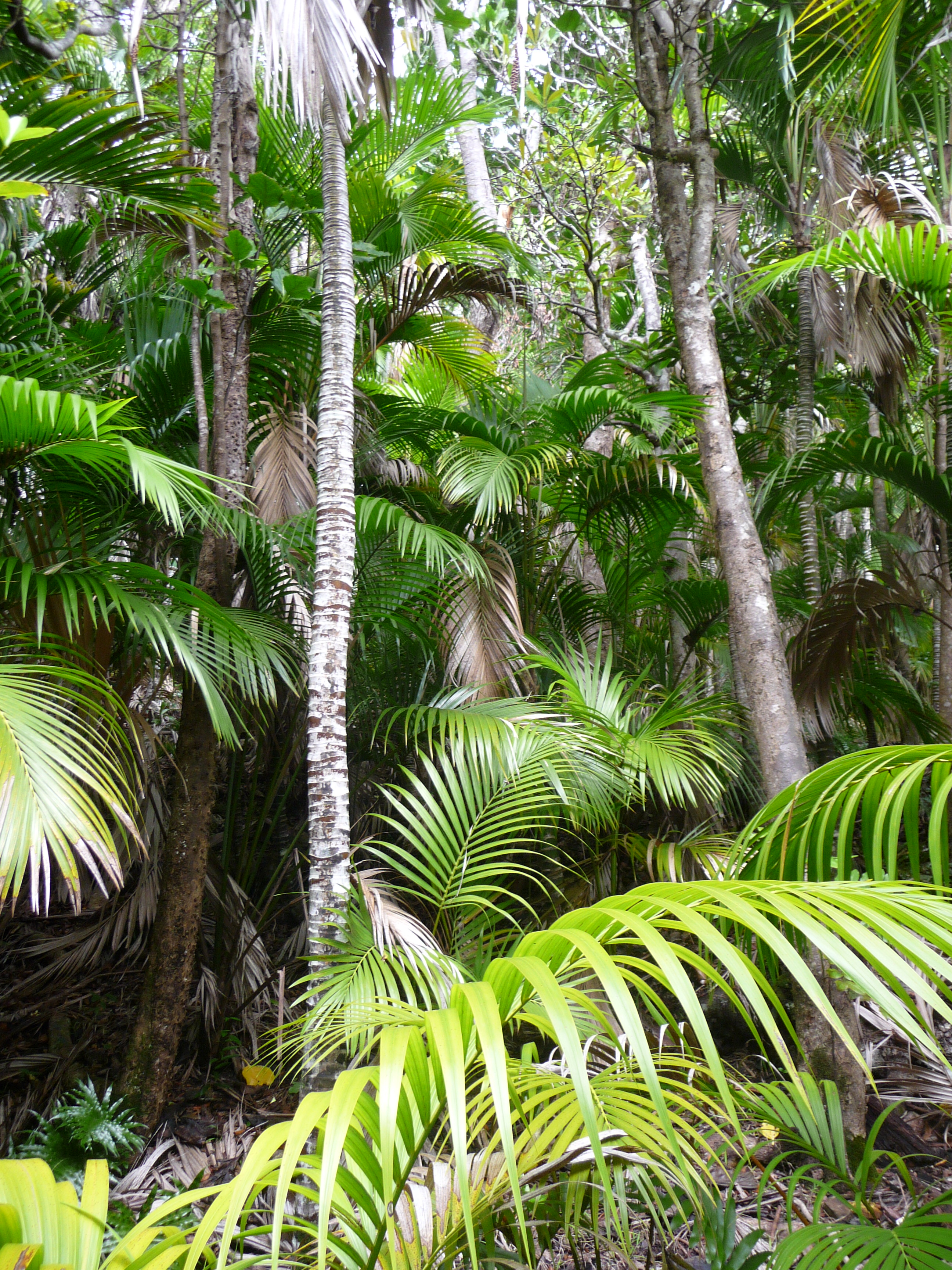
Cycling is the main form of transport and bikes are available for hire.  Wheeling along with no cars on the road, the sun shining, the native birds singing and the palm trees whispering – time on Lord Howe Island is a great way to spend a few days.

Kenetia palms

Kenetia palms