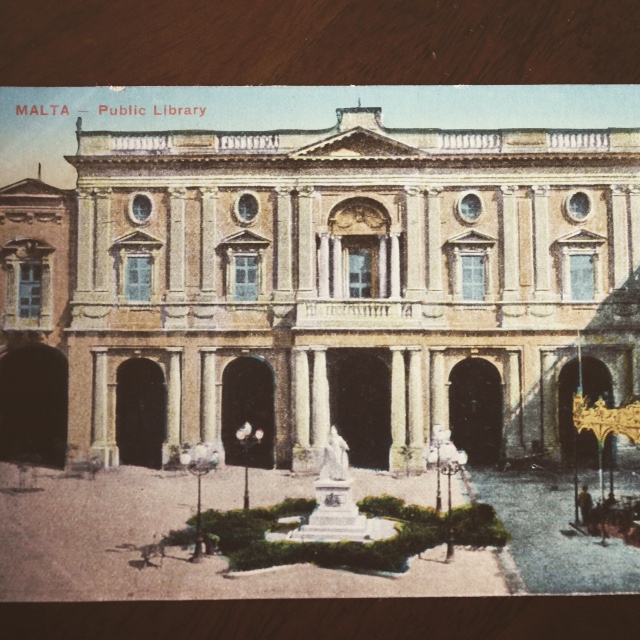
Historical postcards – Queen Victoria’s statue, Malta

QV statue - Malta

Queen Victoria became the outward symbol of Empire in a way that none of her predecessors or successors were.  This was due to a combination of the length of her reign (1837 – 1901) – she is still the longest serving British monarch, although it’s likely Queen Elizabeth will surpass her (as of 9 September this year) – and the huge expansion the British Empire undertook during this period. Streets, towns, cities, provinces and states were named after her and numerous statues  of the Queen were erected.
QV Malta 4
Nearly one hundred statues of her were commissioned to commemorate the Diamond Jubilee of her reign in 1897, or as memorials after her death in 1901.  This is in addition to those which were commissioned earlier in her reign.
QV Malta 3

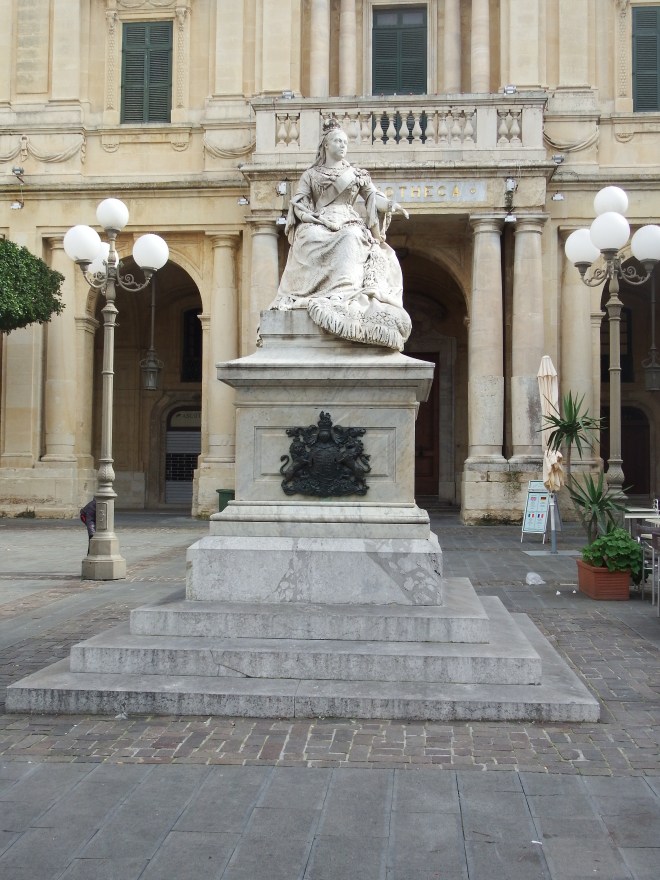
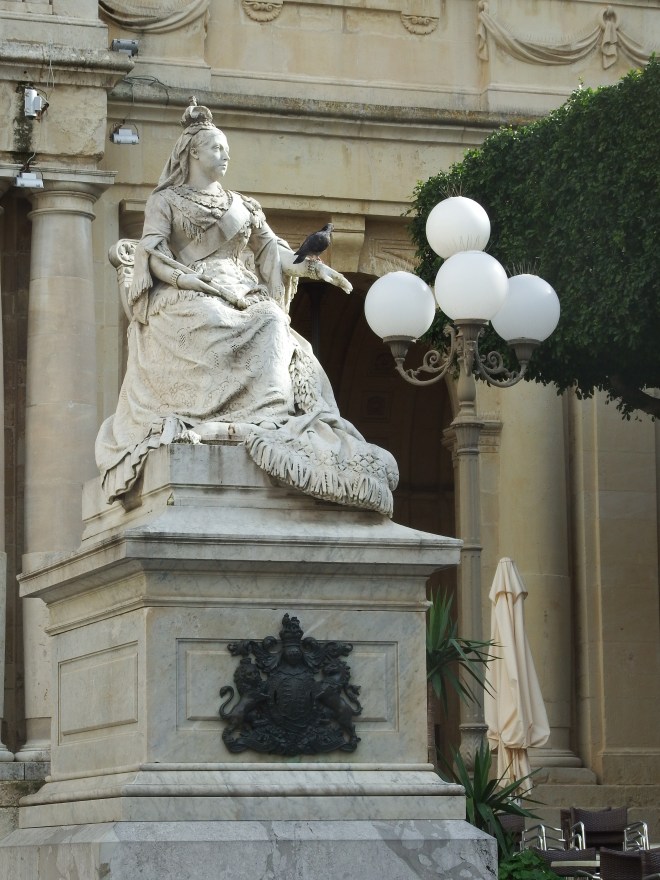
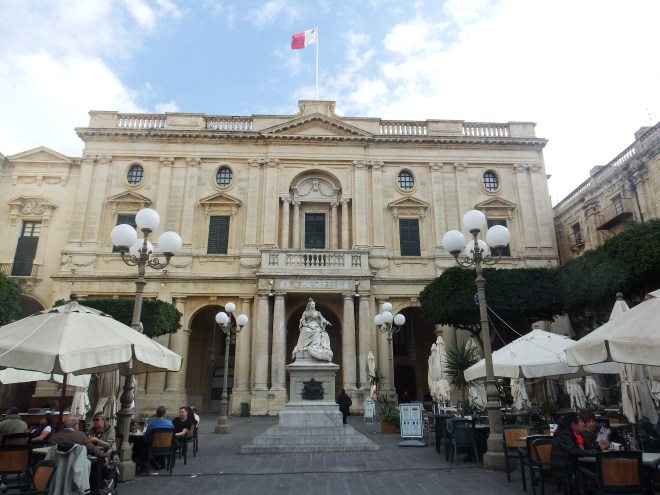
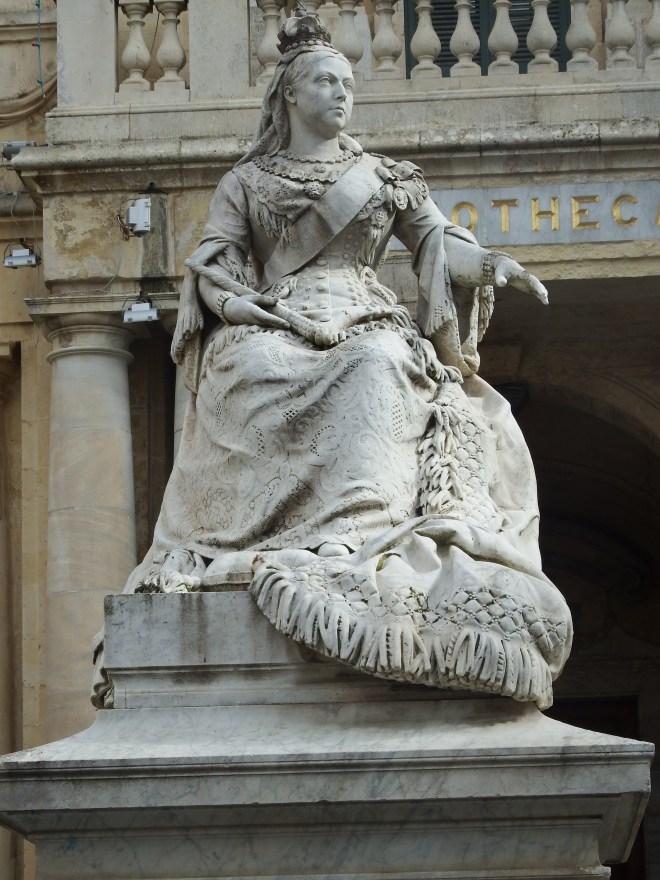
As I’ve mentioned earlier, I’ve recently begun to collect historical postcards and now collect cards showing these statues, some of which no longer exist.  When I was in Malta a month ago I visited Republic Square in Valletta  and admired the statue of Queen Victoria outside the National Library. It was carved in white marble by Giueseppe Valenti in 1891 to commemorate Queen Victoria’s golden jubilee (1897).   The square is a popular meeting place with shops and cafes so I enjoyed some Maltese pastizzi (cheese pastries) and coffee while admiring the statue.
QV Malta 2

Although lots of the statues of the good Queen are very similar, or even identical, the Maltese one is rather special because the Queen is wearing a beautiful Maltese lace shawl.  Sometime before Queen Victoria had placed an order for “eight dozen pairs long and eight dozen pairs short mitts beside a scarf” of Maltese lace to encourage the revival of the old art of lace making in Malta.  The statue reflects her interest in the local industry, and was no doubt a good advertisement for it.
QV Malta 1

The statue was restored and cleaned in 2011 so the detail in the lace shawl is easy to see.  The only postcard I’ve managed to find so far is not particularly clear but gives a general view of the statue and its location outside the library.  The card was probably produced at the beginning of the 20th century.  The small garden around the statue is no longer there but it looks as though the square has always had a cafe.

In 1901 when Queen Victoria died, the Maltese people  laid wreaths around the statute.
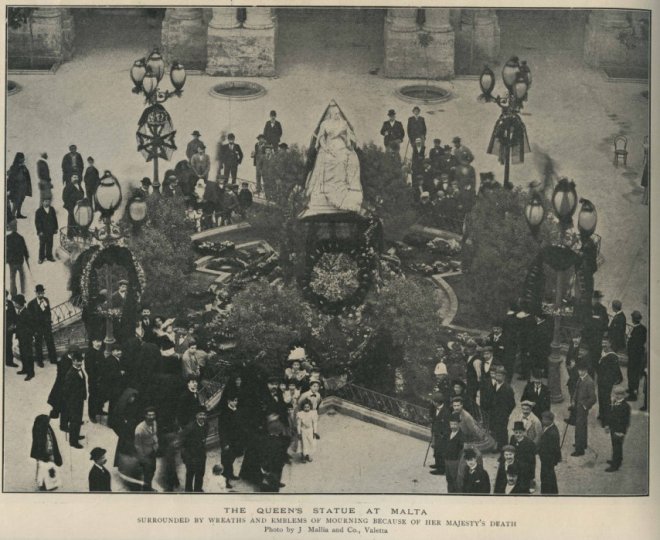
Photo credit:  "The Times of Malta" newspaper

Photo credit: “The Times of Malta” newspaper

I’ll keep looking for other postcards of this statue as they’re a fascinating way of tracing the history of a place and the Empire.
 

Greetings from Malta: the story behind a postcard

I’ve recently started to collect old postcards – the tinted ones of the 19th and early 20th centuries.  I started my collection when my daughter and I did a vintage road tour of the South Island last year and I needed something to look at in the vintage shops as she tried on vintage clothes.  My collecting obsession soon became as great as hers!

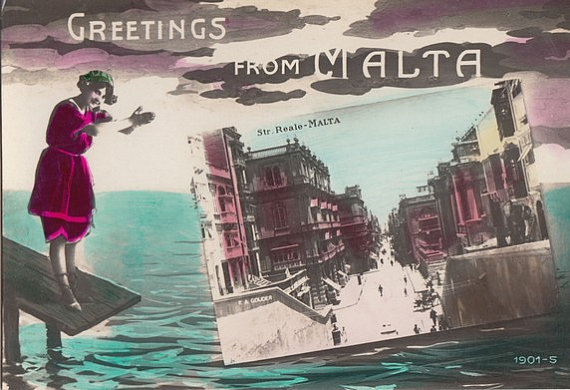
Malta postcardThere are hundreds of tinted postcards for sale but I don’t collect cards of just anywhere instead selecting ones of places I’ve been to, or places I’m interested in going to.   After my visit to Malta I looked at various online sites for postcards and bought a few.  The one I was most interested in arrived today and from the front is a typical holiday card to be sent back to friends and family at home.   It shows Strada Reale (now Republic Street) in Valletta and a girl in an Edwardian (the postcard is dated 1901 on the front) swimming outfit ready to plunge into the Mediterranean.

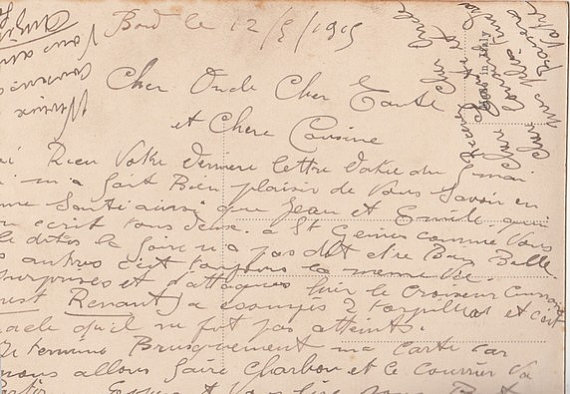
The postcard came from a dealer in Paris called Francis, who sent me a lovely note with it.  Despite this it didn’t occur to me that the card had originally been sent to someone in France and not Britain.  Imagine my surprise when I looked at the back, saw the entire message was written in French and the date was 12 March 1915.

Back of Malta postcard

With my rather rusty schoolgirl French (and some help)  it seems likely the card is from a soldier in Malta, writing to his aunt, uncle and cousins.   He talks of “attacks” and “a miracle”.  He also talks of taking the card to catch “the courier”.  The card has not been sent by post but probably in an envelope which could mean it was one of a few he wrote to be dispatched to France via the courier.   I’ve had a quick look on the internet and  over 100 French soldiers from the First World War are buried in Malta, so it fits.  Dated March 1915 this card pre-dates the beginning of the Gallipoli campaign and the huge influx of wounded to Malta, although it’s not positive from the card that he was wounded; he may have been there for another reason.

It seems such a lovely  coincidence that this plopped into my letterbox today.

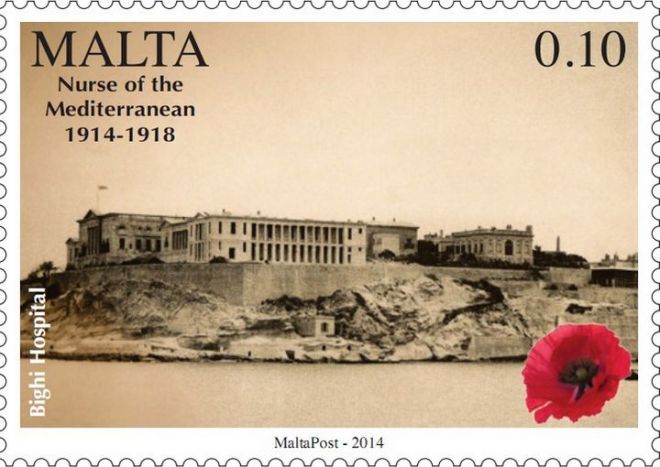
Malta: Nurse of the Mediterranean

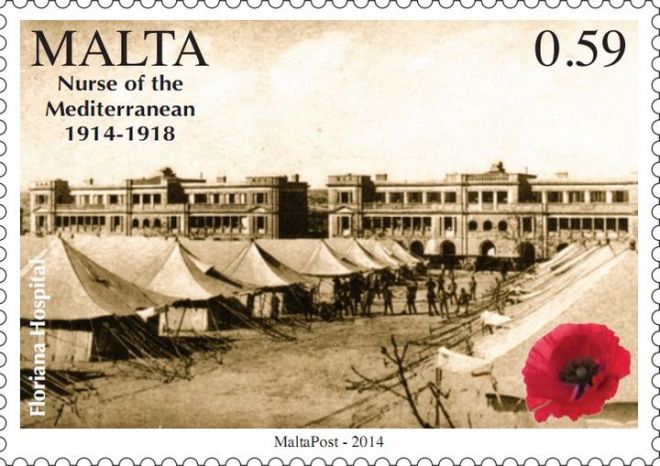
Nurse of the Mediterranean stamp 2

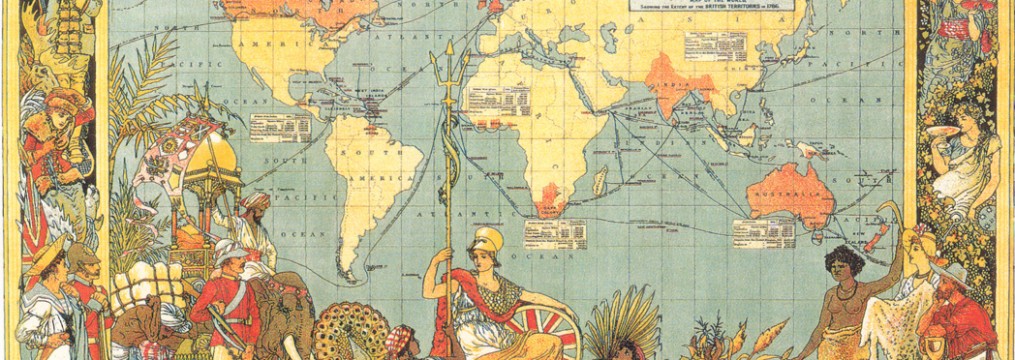
As the 25th of April draws near and plans for commemorating the 100th anniversary of the ANZAC troops landing at Gallipoli gather momentum, I recently discovered an interesting aspect of the campaign I wasn’t aware of  until I visited Malta.  Malta was part of the British Empire from 1800 to 1964 and still retains lots of cultural links with Britain.

London newspapers photo

I always enjoy poking around bookshops when I’m away and usually find books on the place I’m visiting which I haven’t seen elsewhere.  In a bookshop in Valletta I found a small book written about Malta during the British era and reading it was surprised to see Malta described as “the Nurse of the Mediterranean”.  At the airport before leaving I bought some stamps for last minute postcards and again “the Nurse of the Mediterranean” popped up.

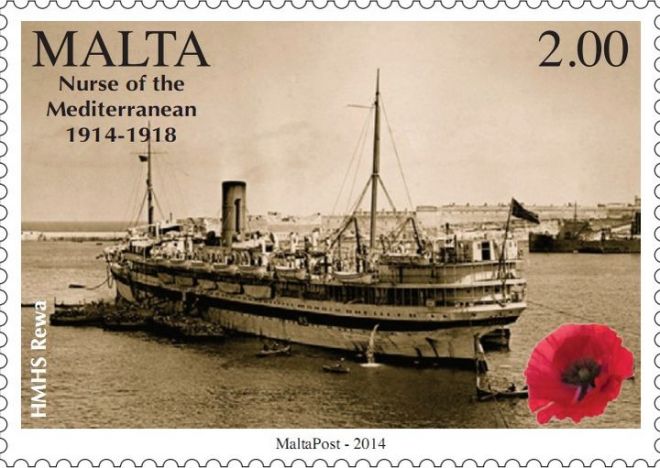
Nurse of the Mediterranean stamp

I was intrigued, delved further and was amazed to find that the casualties, known as, casevacs (casualty evacuation cases) from Gallipoli were sent to Malta for treatment.  It’s logical as Malta would have been the closest British possession to Turkey at the time, but I’m surprised more hasn’t been made of Malta’s role in the things I’ve read and heard about New Zealand’s campaign at Gallipoli.

The tiny island really rose to the challenge of caring for the huge number of casualties transported there.  In 1914 there were 278 military beds over four hospitals in Malta but by the end of the war there were 27 hospitals with 25,000 beds.  Over 2,600 officers and 64,500 men from other ranks were evacuated and treated in Malta.

Nurse of the Mediterranen stamp 3

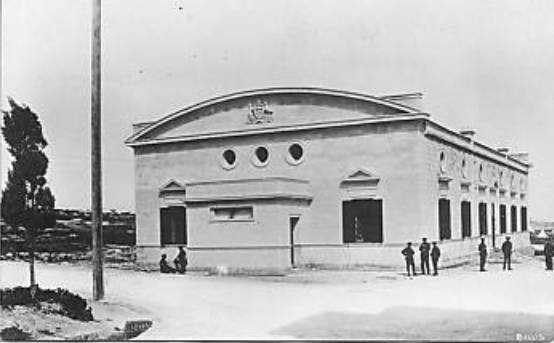
After a voyage from Gallipoli of around a week, each hospital ship was met by groups of Maltese women who worked in shifts to greet and comfort the men with sweets, cigarettes and drinks.  A large sewing party provided pyjamas, shirts, socks and scarves for the patients.   The women did all they could to create a homelike environment for those convalescing, with tea parties, excursions and concerts.  Others also recognised the importance of entertainment to lift morale and the Australia Hall was built as a venue to provide entertainment for the New Zealand and Australian soldiers.

Australia Hall, Malta

Australia Hall, Malta

Little seems to have been written about Malta’s contribution to the ANZAC effort, but it seems unquestionable that many more New Zealanders and Australians would have died but for the efforts of the Maltese people.   I  do hope that in the many books, documentaries and articles on Gallipoli the centenary has spawned there are some that give Malta the credit she deserves.

An episode on Malta was recently screened by the BBC in a series of documentaries about the First World War hosted by Dr Kevin Fong.  See a clip from it here.