Farewell Zealandia: Forgotten Kiwi Songs of World War One – Te Manawa, Palmerston North

Farewell Zealandia

Dancing Union Jack bunting leads you to the little green house, venue for Farewell Zealandia, Forgotten Kiwi Songs of WW1.  The Union Jacks are appropriate for this was Britain’s war and New Zealand’s participation was a rally to the call of Empire.
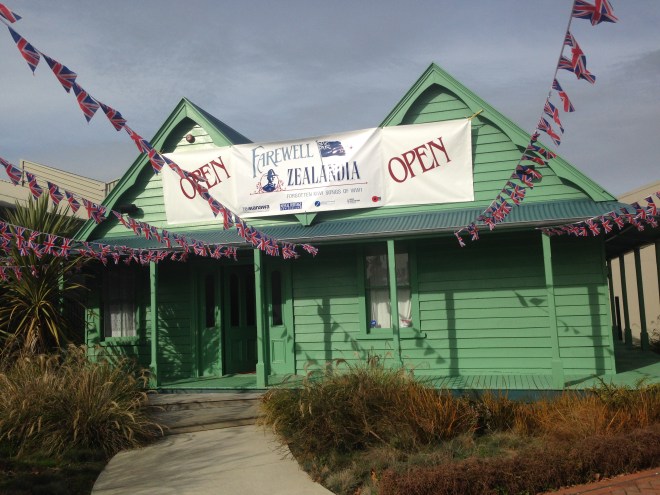
Farewell Zealandia - outside

It’s believed a staggering 500 or so songs were composed in New Zealand during WW1 but most of these have not survived.   Farewell Zealandia throws the spotlight on 20 of them, now part of the collection of the archive at Musical Heritage New Zealand.

One hundred years on, the songs appear jingoistic and sentimental revealing a naivety strange to jaundiced 21st century ears.  But the lyrics are so heartfelt and trusting it’s hard not to feel moved as you walk through the exhibition.
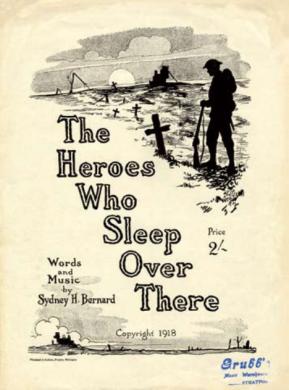
Heroes Who Sleep Over There, The

The little house, reflecting those in which many New Zealanders lived at the time, is the perfect backdrop for the songs and careful thought has been put into the setting for each.  “Camp Stew” is simmering in the kitchen and an old wheel chair sits beneath “The Red-Cross Nurse”.
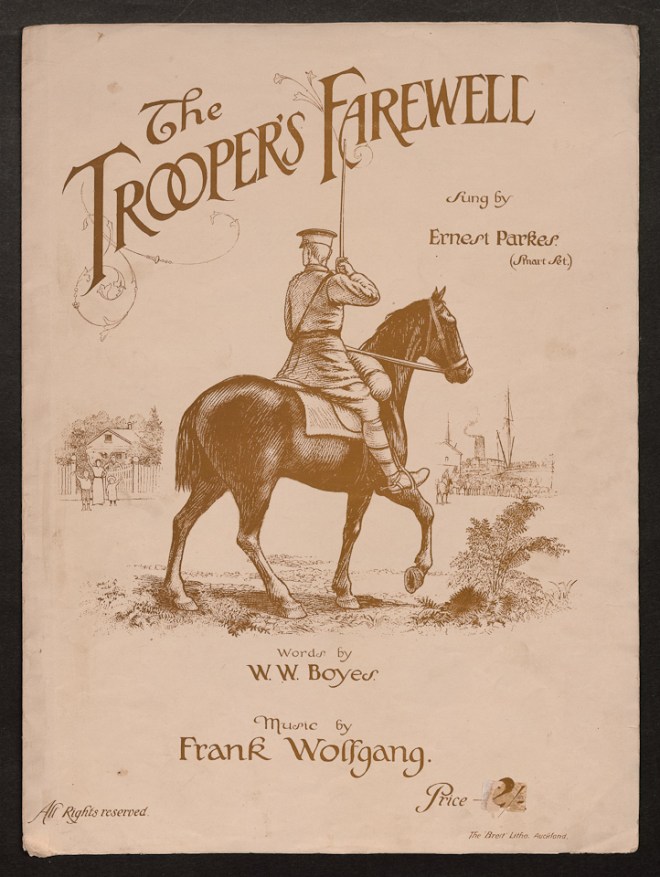


The Trooper's Farewell

Each exhibit includes background information on the composer and lyricist and photographs relating to the lyrics, all contributing to a better appreciation of New Zealand’s war.  The collection of songs – so few out of the hundreds composed during the four years of war – reflects the importance of popular music at the time when there was a piano in most homes and new publications were eagerly awaited.
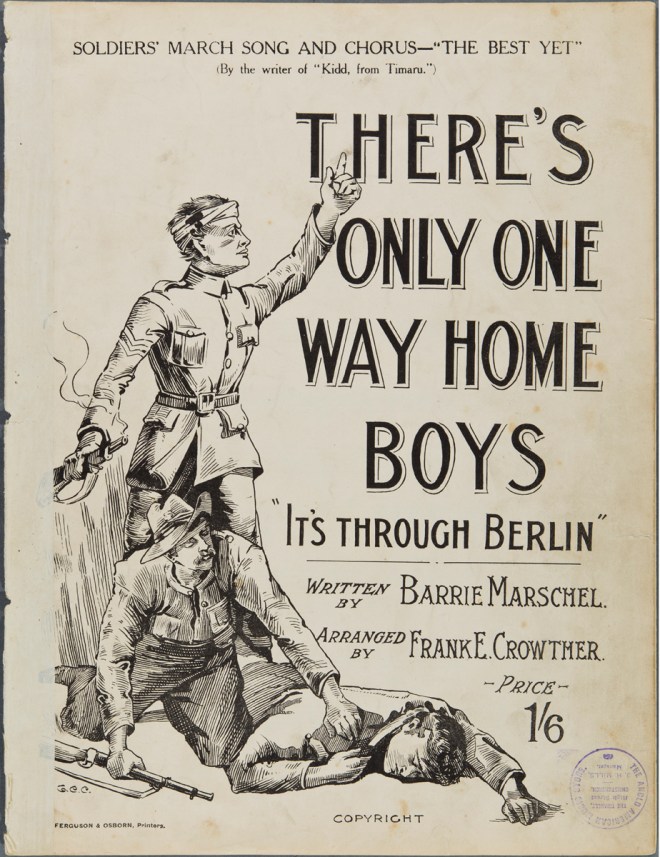
There's Only One Way Home Boys

By each exhibit there is a hearing trumpet.  The songs were recorded recently by Radio New Zealand and a link is on their website.  http://www.radionz.co.nz/collections/farewell-zealandia.  A CD of the songs is planned.
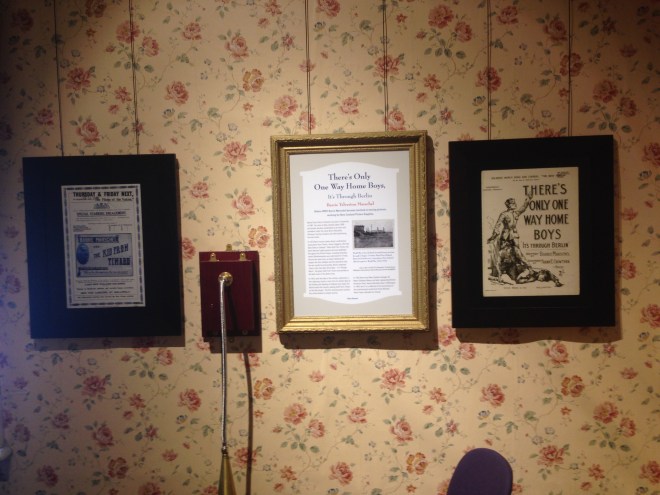
Farewell Zealandia - interior

The exhibition is a collaboration between Te Manawa Museum of Art, Science and History and Musical Heritage New Zealand.  Touring options are being worked on but if you’re able to, I recommend strolling beneath the Union Jacks to the green house in Palmerston North before Farewell Zealandia closes  on 30 August 2015.
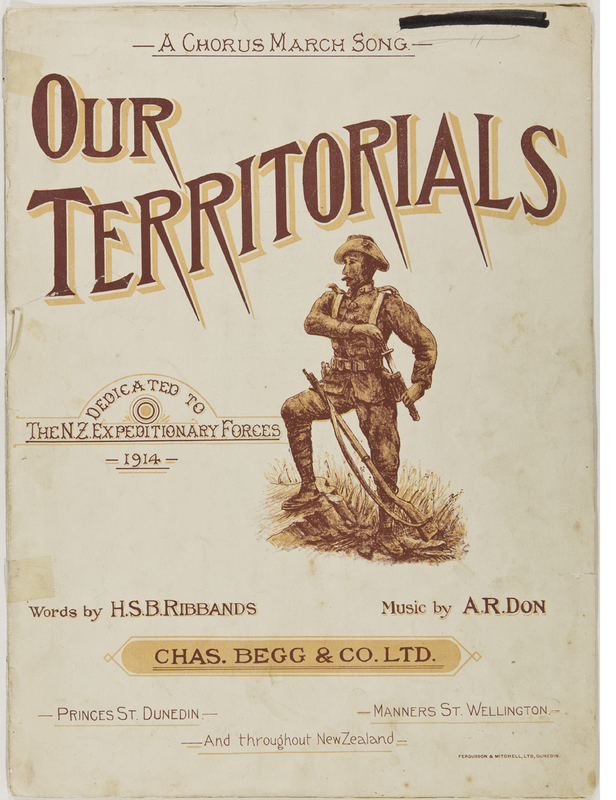
Our Territorials


What they played: a sheet music catalogue

I often get given items relating to research I undertook on a music retail and publishing company, Charles Begg & Co Ltd.  I think I’m seen as the unofficial archivist for the business and have gathered quite a collection of different things since I published the history of the company.

Front cover 500 pixels[1]

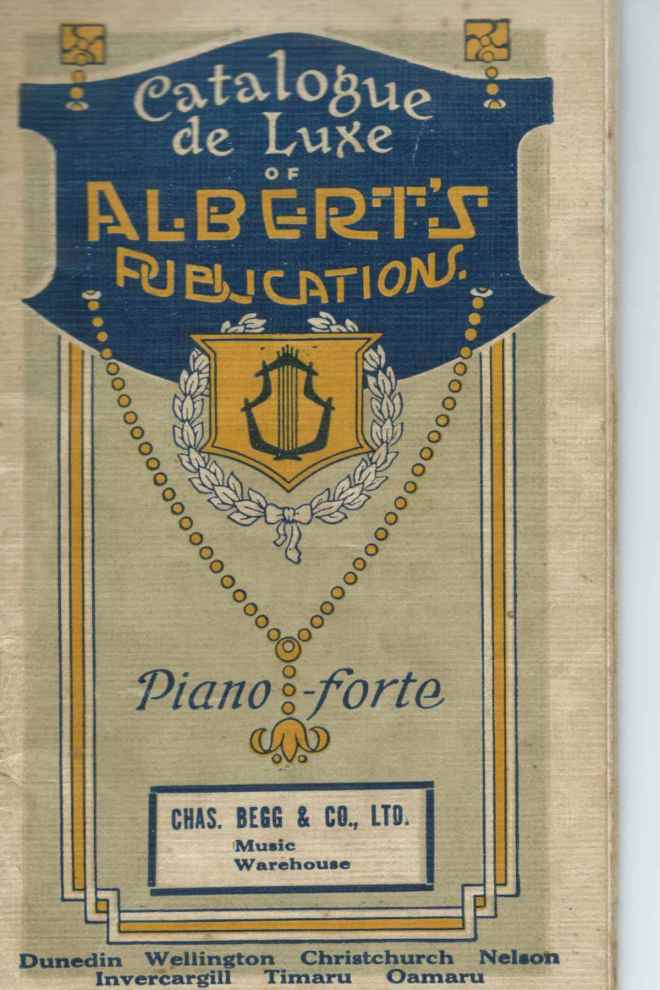
Recently I was given a small catalogue of sheet music published by the Australian publisher, Albert’s, sometime after 1910 and  prior to World War One.  

Albert's publications - cover
The reason I was given it is the business I am interested in, which is a New Zealand one, has its name printed on the cover of the catalogue –  along with branches it had open at that time.  This little catalogue (9.5cm x 15.5cm) would have been given to customers to promote Begg’s as well as Albert’s.

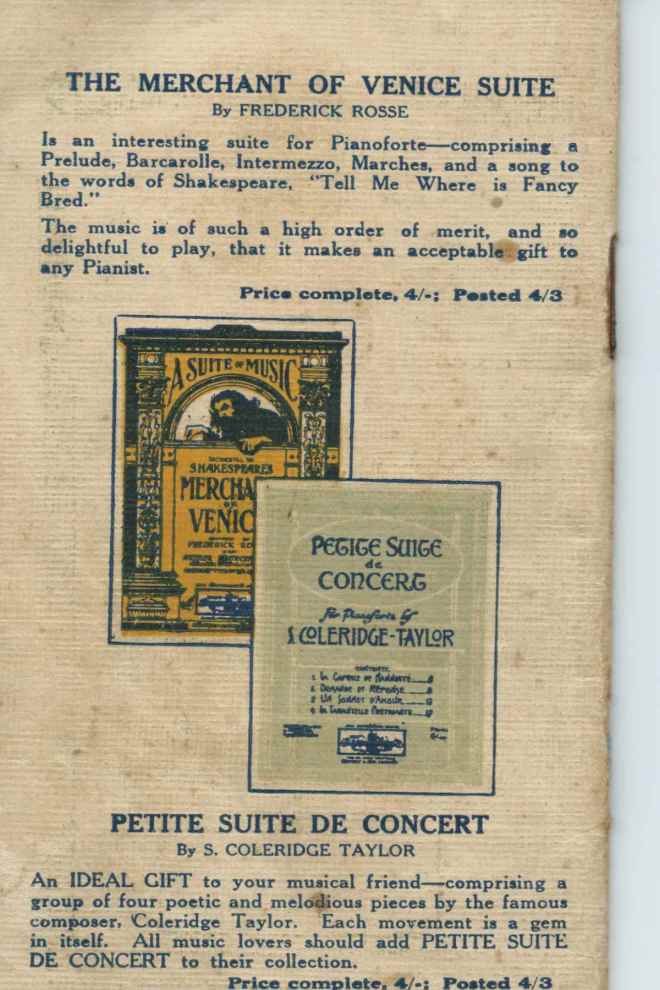
Albert's publications - back cover

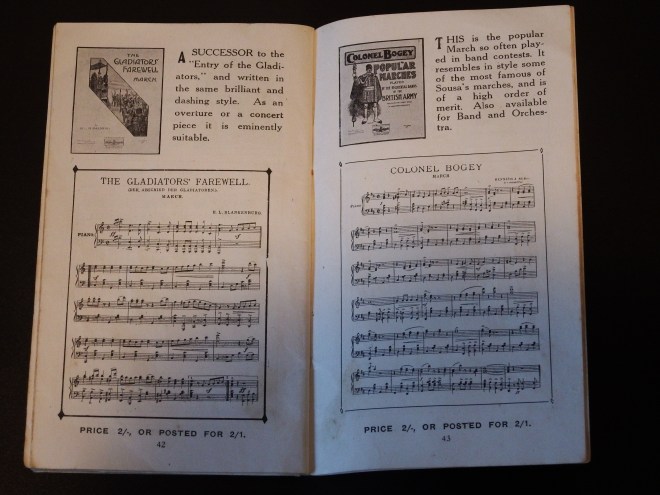
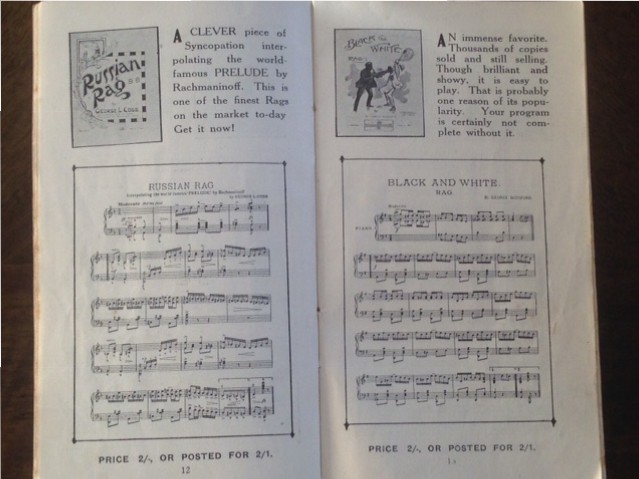
Inside are samples of pieces published by Albert’s, with a cover illustration and the first few bars of the piece, all designed to whet the customer’s appetite for the latest tunes of the day.  I’m confident in dating this catalogue prior to 1914 as there are no war themed pieces, hundreds of which were published during the First World War.  The closest is Colonel Bogey’s Popular Marches seen in the catalogue,

Albert's - Colonel Bogey

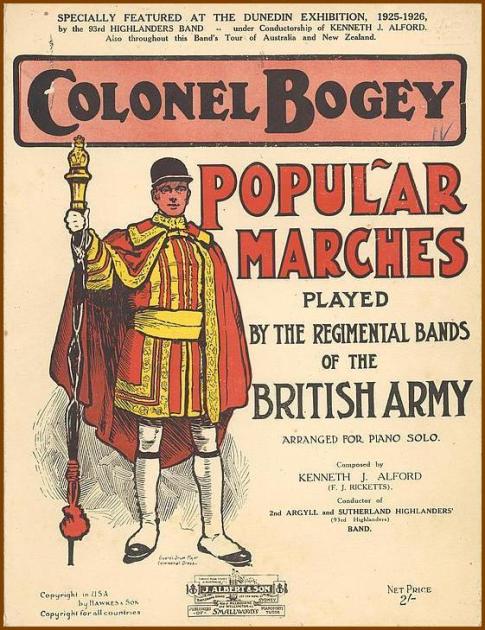
and in a later edition (after 1926) of the sheet music form here.  I love the colours of the cover.

Colonel Bogey's popular marches

It’s possible to glean a lot about popular musical taste from a booklet like this.  The book includes marches, fox trots, waltzes, novelettes and caprices – echoes of a different world.  At the back there is a list of other publications of Albert’s including such intriguing titles as “Can You Tame Wild Cairo Wimmen?”, I’ve Lost My Heart in Maoriland”, Good Gravy Rag” and “Umbrellas to Mend”.

Black and White rag in booklet

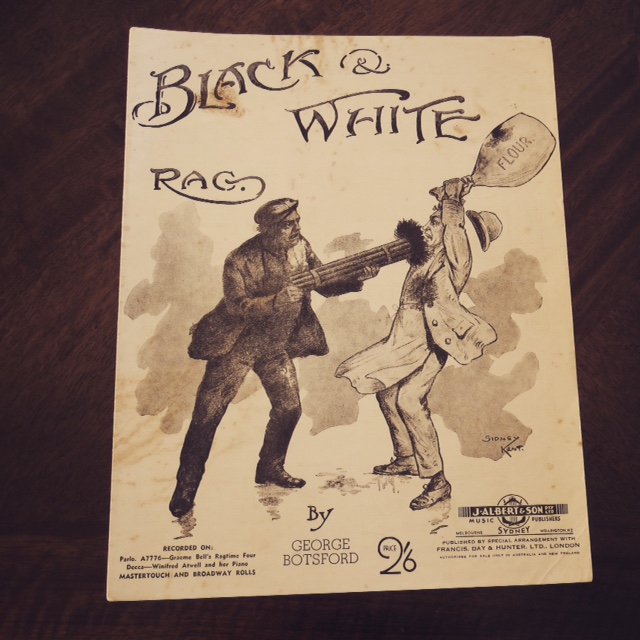
Funnily enough, given the thousands and thousands of pieces of music published at this time, I have one of the pieces advertised in the catalogue, “Black & White Rag”(1908)  but unfortunately I can’t tell if the customer purchased it from Begg’s or not as there’s no retailer’s stamp.  I like to think Begg’s did sell this copy – it just completes the picture somehow.

Black & White rag cover final


Receiving a letter by tin can mail


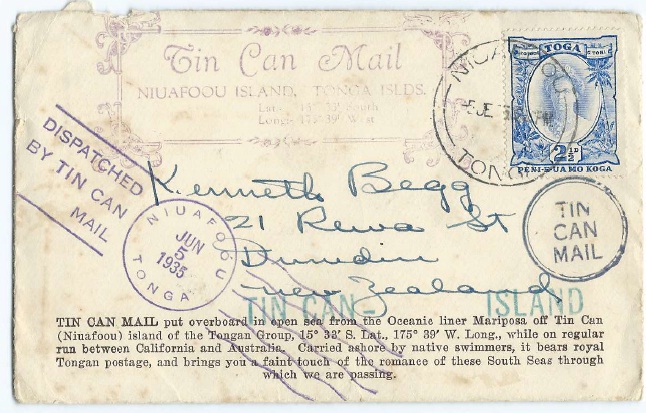
tin can front

“We will soon be watching for the natives to come out for the tin can full of letters which will be lowered from this boat.  Hope you will get yours soon.”

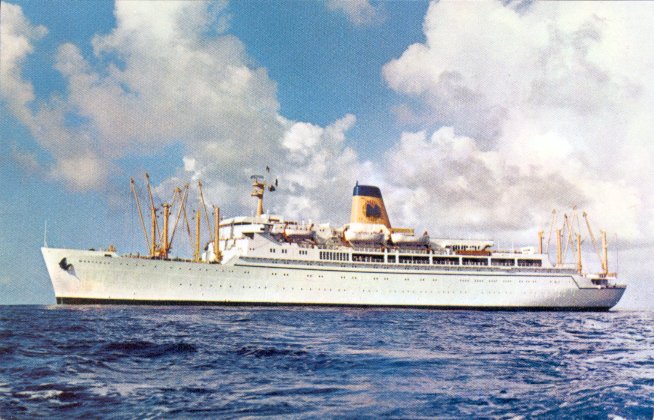
SS Mariposa, Oceanic Line, launched 1931

SS Mariposa, Oceanic Line, launched 1931

Eight-year-old Kenny Begg of Musselburgh, Dunedin was probably more interested in the spear and bow and arrows its writer had purchased in Fiji “where the natives have great bushy heads of hair and dark brown skins” than in how his letter had got to his family’s letterbox in June 1935.  But today the contents of the envelope are not nearly as interesting as the envelope itself and when my father found it among his old papers it piqued my curiosity.

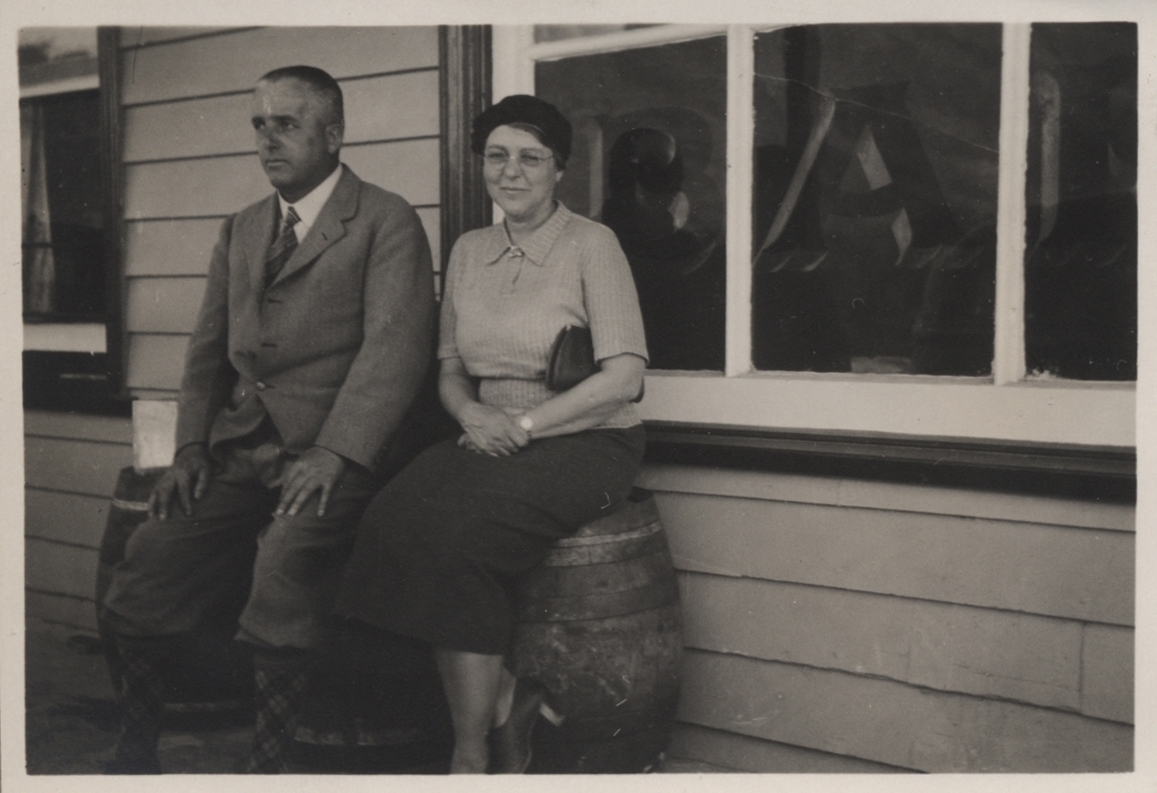
The letter’s author, Mrs Frances Cranmer, had been visiting New Zealand with her husband, an executive in the Philco Radio Co in the US.  Kenny’s father, Eric Begg managed the chain of music and electrical shops, Charles Begg & Co Ltd, who were Philco’s sole agent in New Zealand.  The Cranmers had spent some time with the Begg family and all three Begg sons received a letter via tin can mail.

Mr and Mrs Cranmer in New Zealand

Mr and Mrs Cranmer in New Zealand

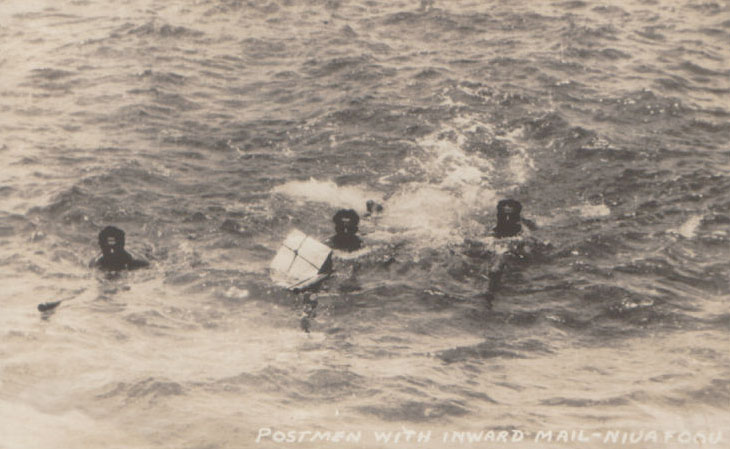
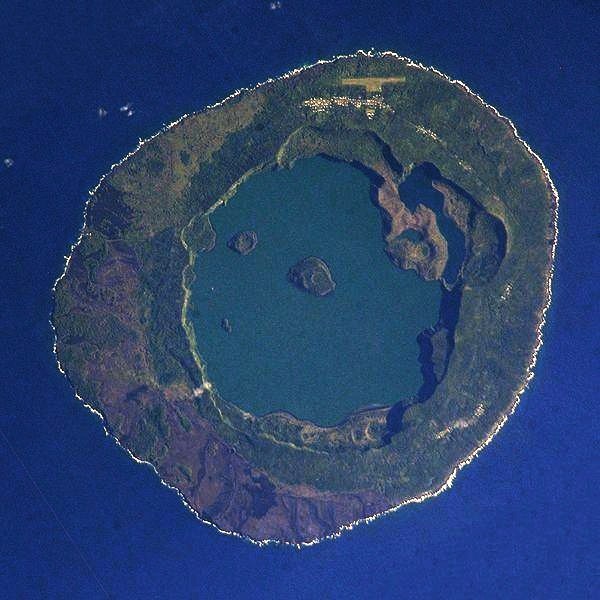
Mrs Cranmer wrote the letters on board the Oceanic Line’s SS Mariposa, on its cruise from Australia to California.  Along the route the Mariposa sailed past Niuafo’ou, a doughnut shaped  island in the Tongan group located between Fiji and Samoa.  Niuafo’ou was an active volcano with no harbour or beaches so ships could not land there.  To receive and send mail islanders swam out to anchored boats to collect the mail which was lowered down to them from the ship in a tin can.  Kenny’s letter, which Mrs Cranmer posted in the tin can, would have been taken back to the island to be stamped with the tin can mail’s distinctive stamps, and then swum out to the next visiting vessel.

Tin can mail postmen collecting the mail c1930 (Angela Savage)

Tin can mail postmen collecting the mail c1930 (Angela Savage)

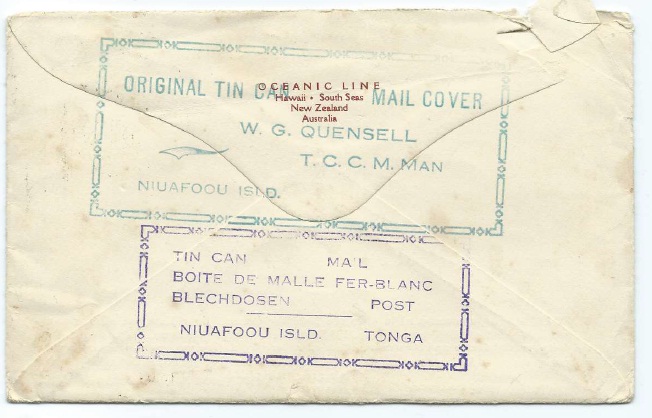
Although seen by some as a tourist gimmick the tin can mail was a genuine mail service, all mail to and from the island arrived and left in this way.  The service began in 1882 but it was when an American, Walter Quensell, conceived the idea of stamping the letters in 1928 that it became popular.  This led to passenger ships passing Niuafo’ou as often as twice a week enabling their guests to send letters which  “bring you a faint touch of the romance of these South Seas through which we are passing”  as the envelope so delightfully puts it.  Swimming out to a ship was difficult and in addition the waters were infested with sharks.  After one of the swimmers died from a shark attack Tonga’s Queen Salote insisted the mailmen operate from a canoe, an instruction which was not always followed.

The tin can mail service lasted over 100 years and was of great value to the islanders, creating a source of income as well as enabling them to get fresh vegetables, meat and news.  In 1946 Niuafo’ou erupted and all the islanders were evacuated.  Although the service resumed on their return 12 years later the arrival of an airport on Niuafo’ou marked the end of the tin can mail service.

Niuafo'ou (Wikipedia)

Niuafo’ou (Wikipedia)

But back to our letter.  After Niuafo’ou, Mrs Cranmer told Kenny, their next stop was Pago Pago “where the Samoans live.  They are dark skinned people too but do not have hair like the Fijians”.   Frances Cranmer’s letter is nearly 80 years old now but her kindness in remembering the little boy she’d met briefly and taking the trouble to send him what is now a fascinating piece of history is still remembered.

tin can back