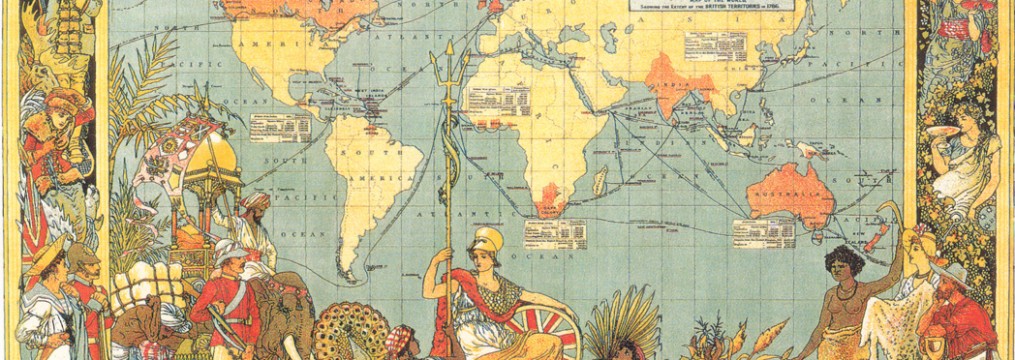
I’ve recently started to collect old postcards – the tinted ones of the 19th and early 20th centuries. I started my collection when my daughter and I did a vintage road tour of the South Island last year and I needed something to look at in the vintage shops as she tried on vintage clothes. My collecting obsession soon became as great as hers!
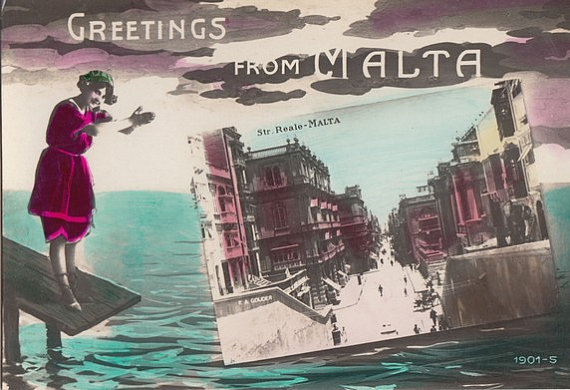 There are hundreds of tinted postcards for sale but I don’t collect cards of just anywhere instead selecting ones of places I’ve been to, or places I’m interested in going to. After my visit to Malta I looked at various online sites for postcards and bought a few. The one I was most interested in arrived today and from the front is a typical holiday card to be sent back to friends and family at home. It shows Strada Reale (now Republic Street) in Valletta and a girl in an Edwardian (the postcard is dated 1901 on the front) swimming outfit ready to plunge into the Mediterranean.
The postcard came from a dealer in Paris called Francis, who sent me a lovely note with it. Despite this it didn’t occur to me that the card had originally been sent to someone in France and not Britain. Imagine my surprise when I looked at the back, saw the entire message was written in French and the date was 12 March 1915.
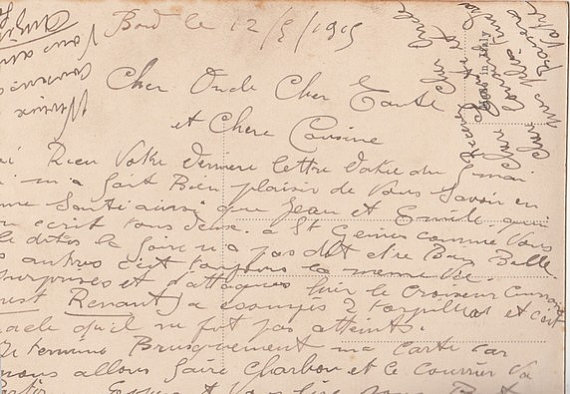
With my rather rusty schoolgirl French (and some help) it seems likely the card is from a soldier in Malta, writing to his aunt, uncle and cousins. He talks of “attacks” and “a miracle”. He also talks of taking the card to catch “the courier”. The card has not been sent by post but probably in an envelope which could mean it was one of a few he wrote to be dispatched to France via the courier. I’ve had a quick look on the internet and over 100 French soldiers from the First World War are buried in Malta, so it fits. Dated March 1915 this card pre-dates the beginning of the Gallipoli campaign and the huge influx of wounded to Malta, although it’s not positive from the card that he was wounded; he may have been there for another reason.
It seems such a lovely coincidence that this plopped into my letterbox today.
 The Wandering Historian