Greetings from Malta: the story behind a postcard

I’ve recently started to collect old postcards – the tinted ones of the 19th and early 20th centuries.  I started my collection when my daughter and I did a vintage road tour of the South Island last year and I needed something to look at in the vintage shops as she tried on vintage clothes.  My collecting obsession soon became as great as hers!
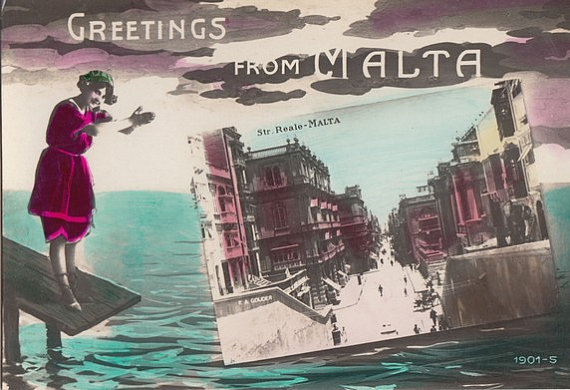
Malta postcardThere are hundreds of tinted postcards for sale but I don’t collect cards of just anywhere instead selecting ones of places I’ve been to, or places I’m interested in going to.   After my visit to Malta I looked at various online sites for postcards and bought a few.  The one I was most interested in arrived today and from the front is a typical holiday card to be sent back to friends and family at home.   It shows Strada Reale (now Republic Street) in Valletta and a girl in an Edwardian (the postcard is dated 1901 on the front) swimming outfit ready to plunge into the Mediterranean.

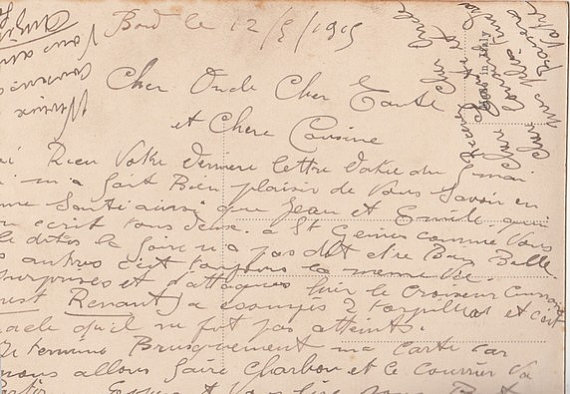
The postcard came from a dealer in Paris called Francis, who sent me a lovely note with it.  Despite this it didn’t occur to me that the card had originally been sent to someone in France and not Britain.  Imagine my surprise when I looked at the back, saw the entire message was written in French and the date was 12 March 1915.
Back of Malta postcard

With my rather rusty schoolgirl French (and some help)  it seems likely the card is from a soldier in Malta, writing to his aunt, uncle and cousins.   He talks of “attacks” and “a miracle”.  He also talks of taking the card to catch “the courier”.  The card has not been sent by post but probably in an envelope which could mean it was one of a few he wrote to be dispatched to France via the courier.   I’ve had a quick look on the internet and  over 100 French soldiers from the First World War are buried in Malta, so it fits.  Dated March 1915 this card pre-dates the beginning of the Gallipoli campaign and the huge influx of wounded to Malta, although it’s not positive from the card that he was wounded; he may have been there for another reason.

It seems such a lovely  coincidence that this plopped into my letterbox today.
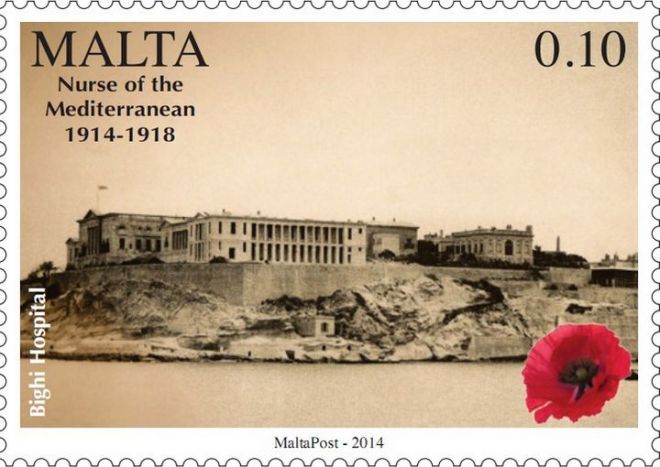
Malta: Nurse of the Mediterranean

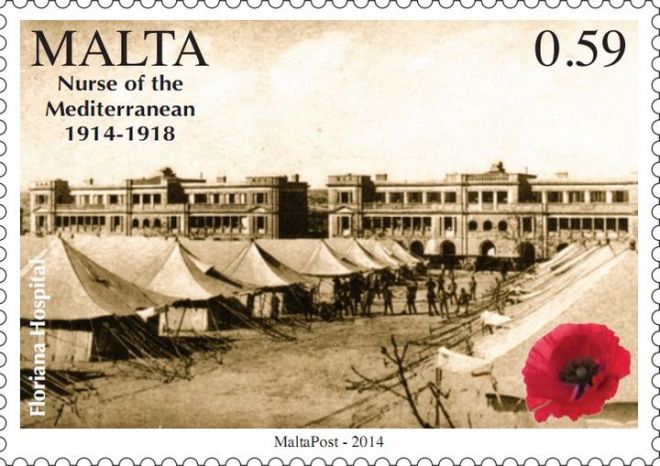
Nurse of the Mediterranean stamp 2

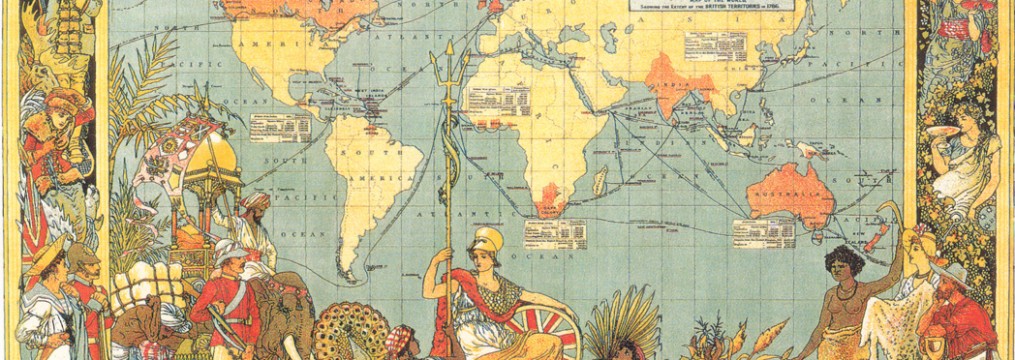
As the 25th of April draws near and plans for commemorating the 100th anniversary of the ANZAC troops landing at Gallipoli gather momentum, I recently discovered an interesting aspect of the campaign I wasn’t aware of  until I visited Malta.  Malta was part of the British Empire from 1800 to 1964 and still retains lots of cultural links with Britain.

London newspapers photo

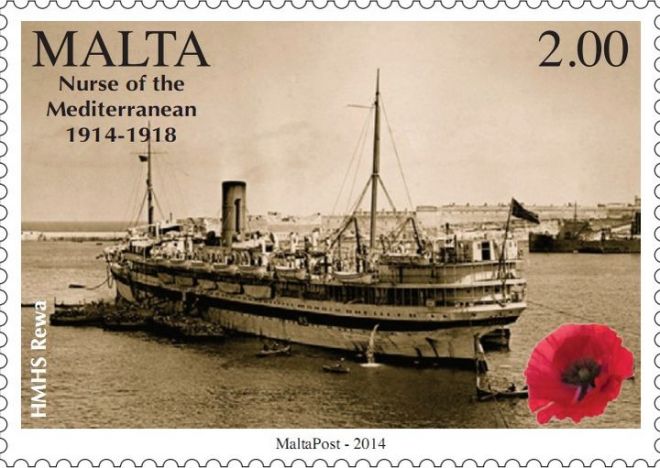
I always enjoy poking around bookshops when I’m away and usually find books on the place I’m visiting which I haven’t seen elsewhere.  In a bookshop in Valletta I found a small book written about Malta during the British era and reading it was surprised to see Malta described as “the Nurse of the Mediterranean”.  At the airport before leaving I bought some stamps for last minute postcards and again “the Nurse of the Mediterranean” popped up.

Nurse of the Mediterranean stamp

I was intrigued, delved further and was amazed to find that the casualties, known as, casevacs (casualty evacuation cases) from Gallipoli were sent to Malta for treatment.  It’s logical as Malta would have been the closest British possession to Turkey at the time, but I’m surprised more hasn’t been made of Malta’s role in the things I’ve read and heard about New Zealand’s campaign at Gallipoli.

The tiny island really rose to the challenge of caring for the huge number of casualties transported there.  In 1914 there were 278 military beds over four hospitals in Malta but by the end of the war there were 27 hospitals with 25,000 beds.  Over 2,600 officers and 64,500 men from other ranks were evacuated and treated in Malta.

Nurse of the Mediterranen stamp 3

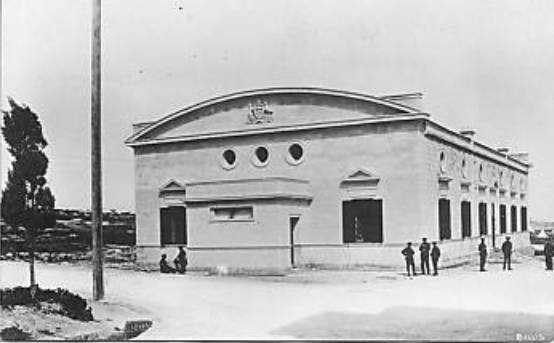
After a voyage from Gallipoli of around a week, each hospital ship was met by groups of Maltese women who worked in shifts to greet and comfort the men with sweets, cigarettes and drinks.  A large sewing party provided pyjamas, shirts, socks and scarves for the patients.   The women did all they could to create a homelike environment for those convalescing, with tea parties, excursions and concerts.  Others also recognised the importance of entertainment to lift morale and the Australia Hall was built as a venue to provide entertainment for the New Zealand and Australian soldiers.

Australia Hall, Malta

Australia Hall, Malta

Little seems to have been written about Malta’s contribution to the ANZAC effort, but it seems unquestionable that many more New Zealanders and Australians would have died but for the efforts of the Maltese people.   I  do hope that in the many books, documentaries and articles on Gallipoli the centenary has spawned there are some that give Malta the credit she deserves.

An episode on Malta was recently screened by the BBC in a series of documentaries about the First World War hosted by Dr Kevin Fong.  See a clip from it here.

We will remember them

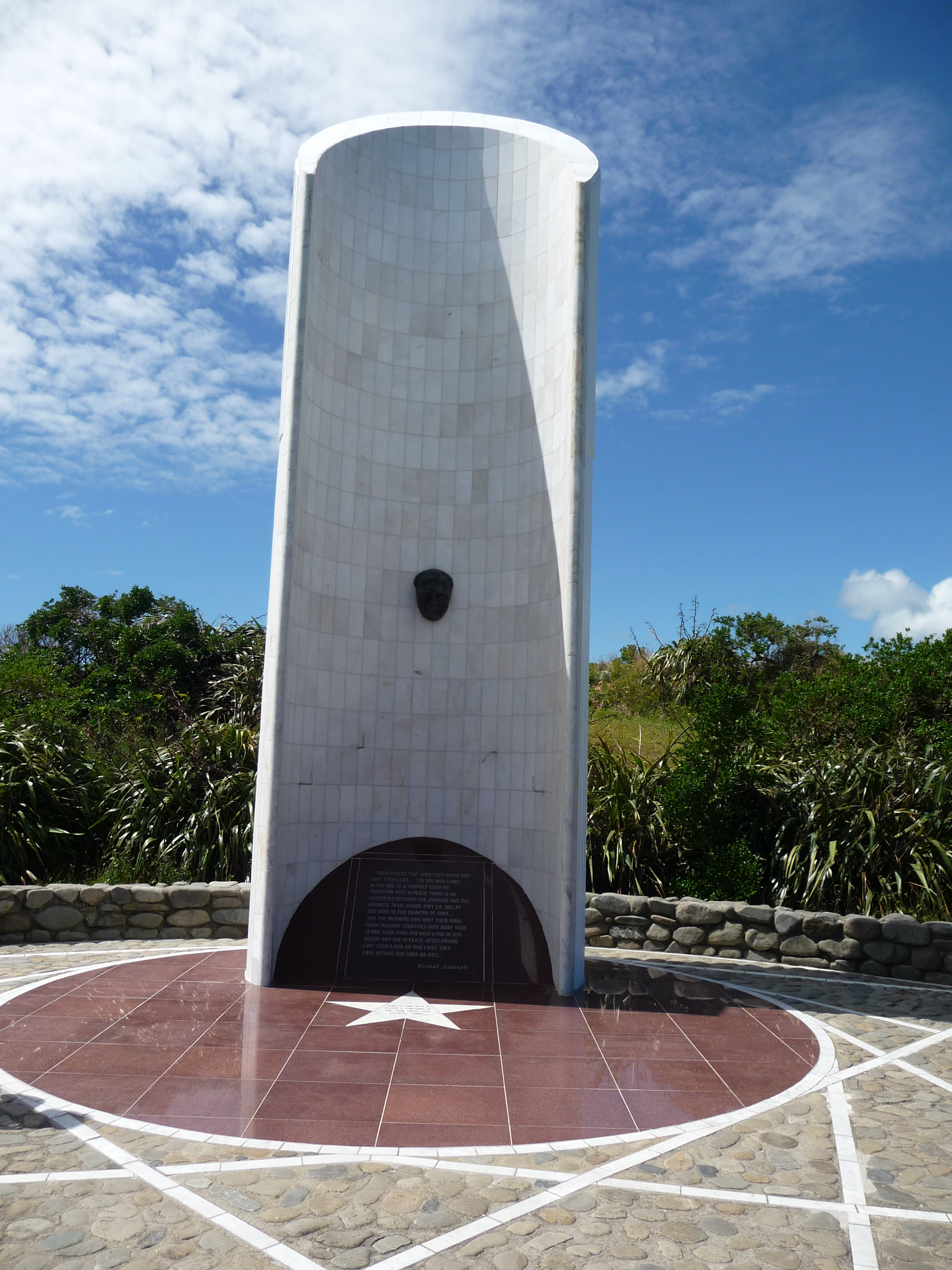
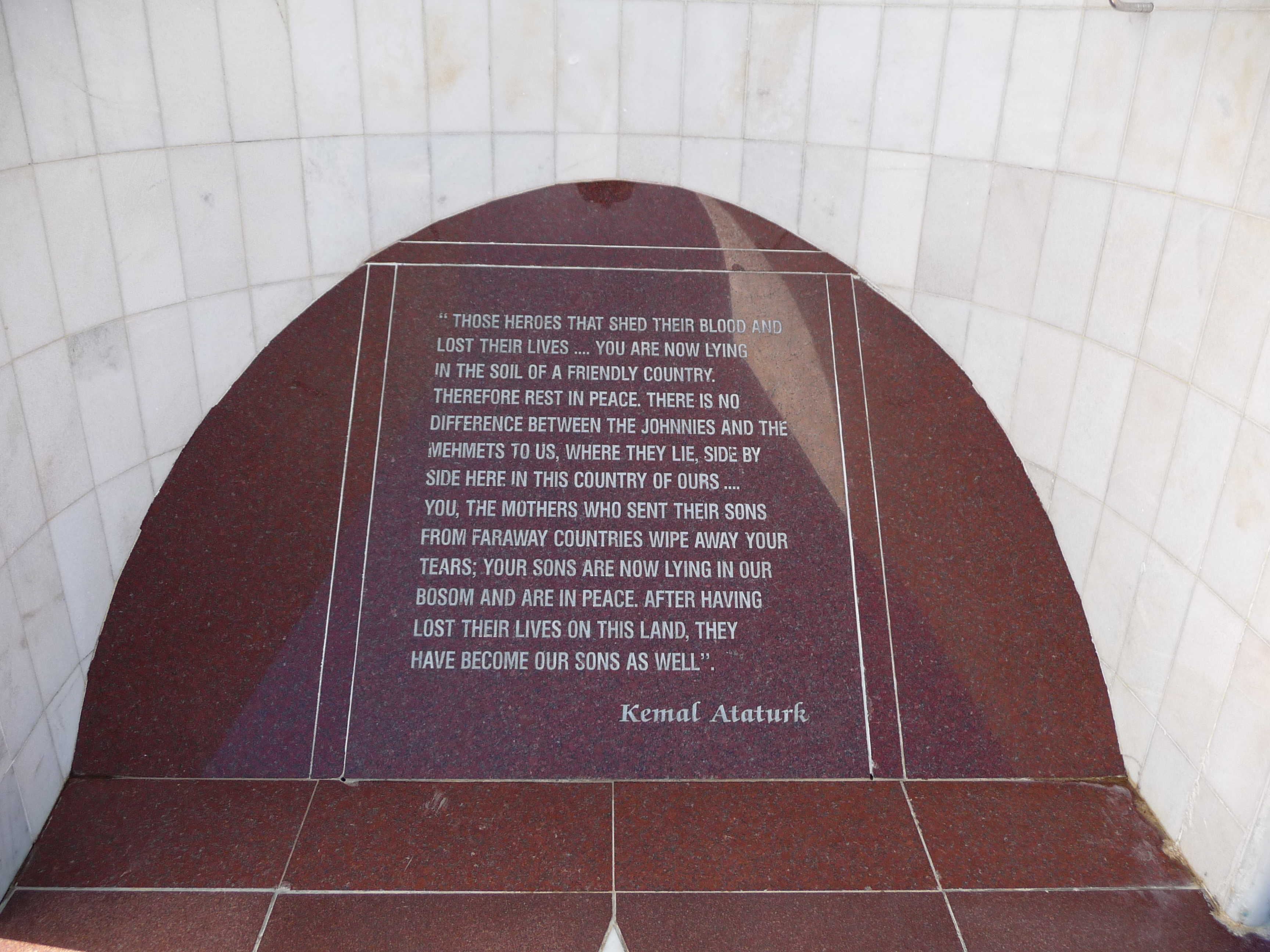
Ataturk memorial, Wellington

Ataturk memorial, Wellington

I went to the Ataturk Memorial recently.  It wasn’t in Salonica where Ataturk was born.   It wasn’t at Ankara which Ataturk created as Turkey’s capital in place of Istanbul.  It wasn’t on the cliffs of Gallipoli where Ataturk led the Turkish forces to victory against the Allies in the First World War.  The memorial I visited is high on the southern peninsula of Wellington harbour, far away from Turkey in a country Ataturk never visited.

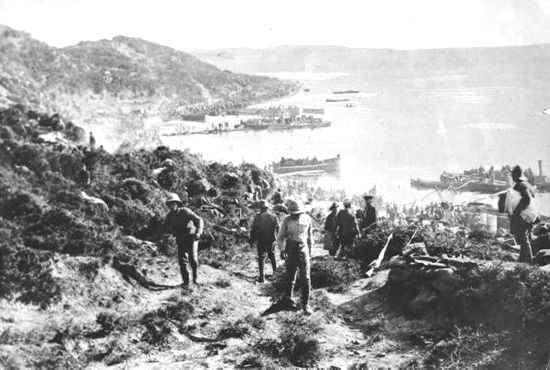
New Zealand and Australian forces landing at Gallipoli

New Zealand and Australian forces landing at Gallipoli

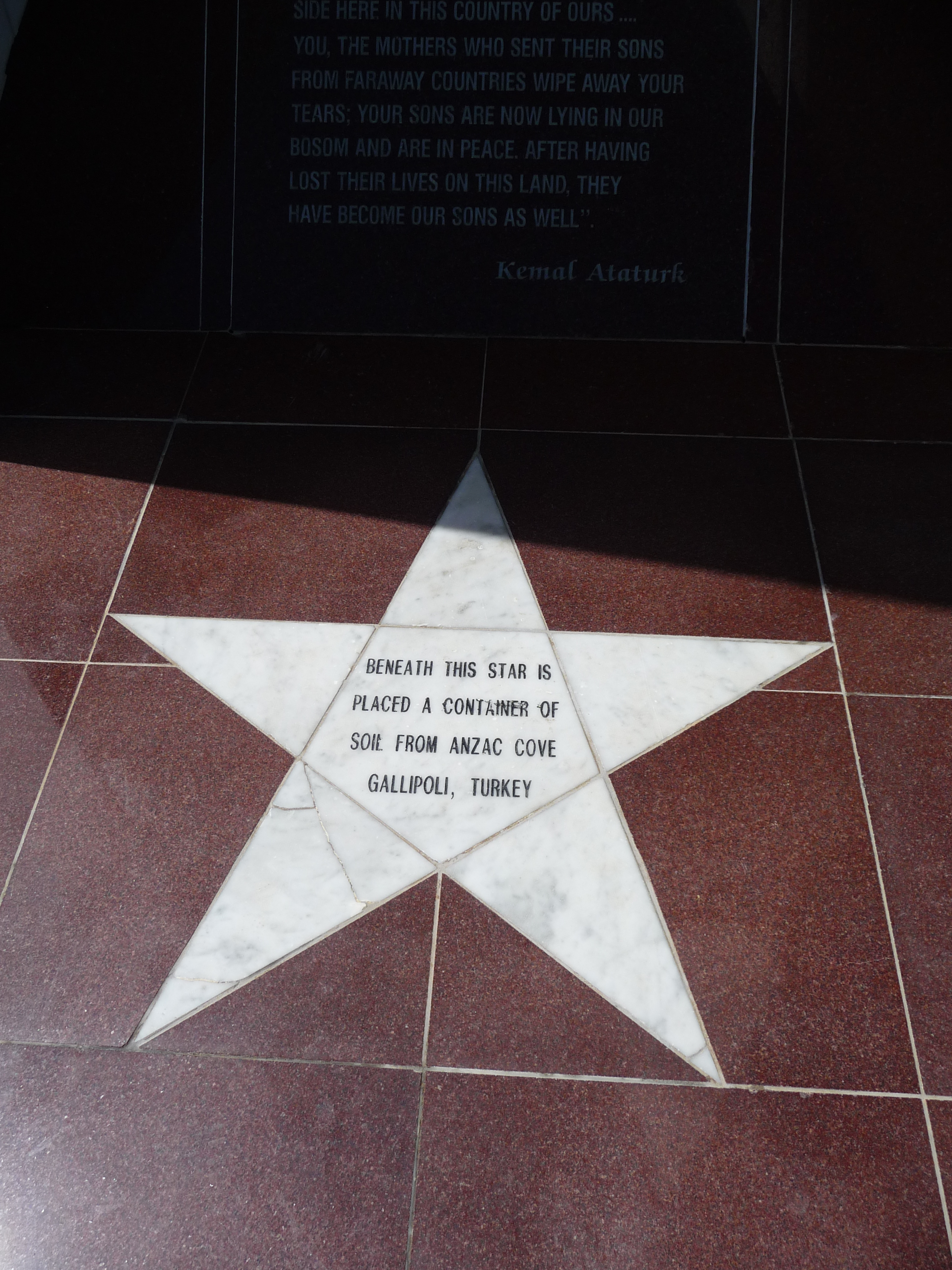
The wording on the memorial, written by Ataturk in 1934, is the same as on the memorial at Anzac Cove.

Those heroes who shed their blood and lost their lives, you are now lying in the soil of a  friendly country.  Therefore rest in peace. There is no difference between the Johnnies and the Mehmets to us where they lie side by side in this country of ours. You, the mothers who sent their sons from far away countries wipe away your tears, your sons are now lying in our  bosoms and are in peace. After having lost their lives on this land they become our sons as well.

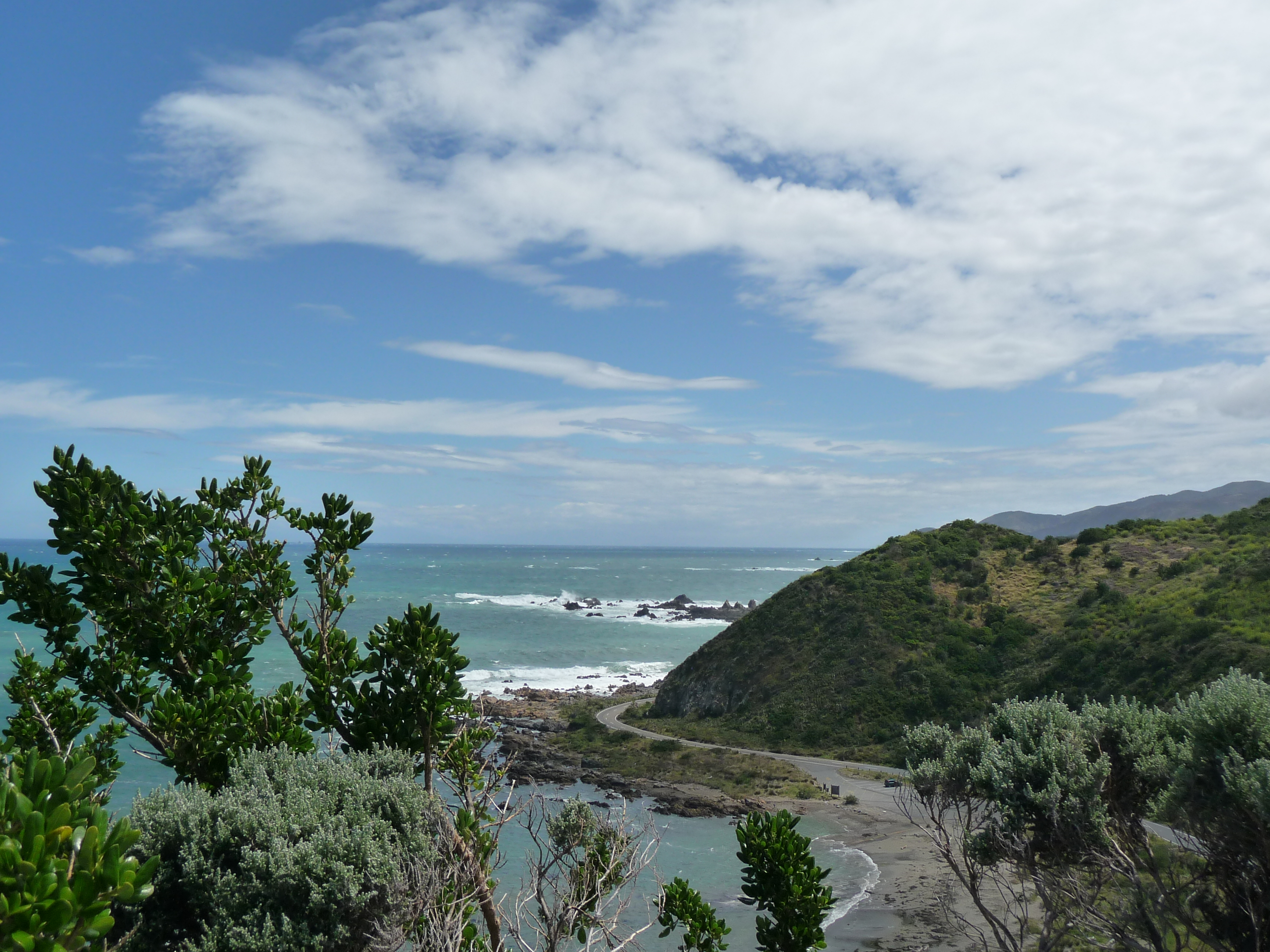
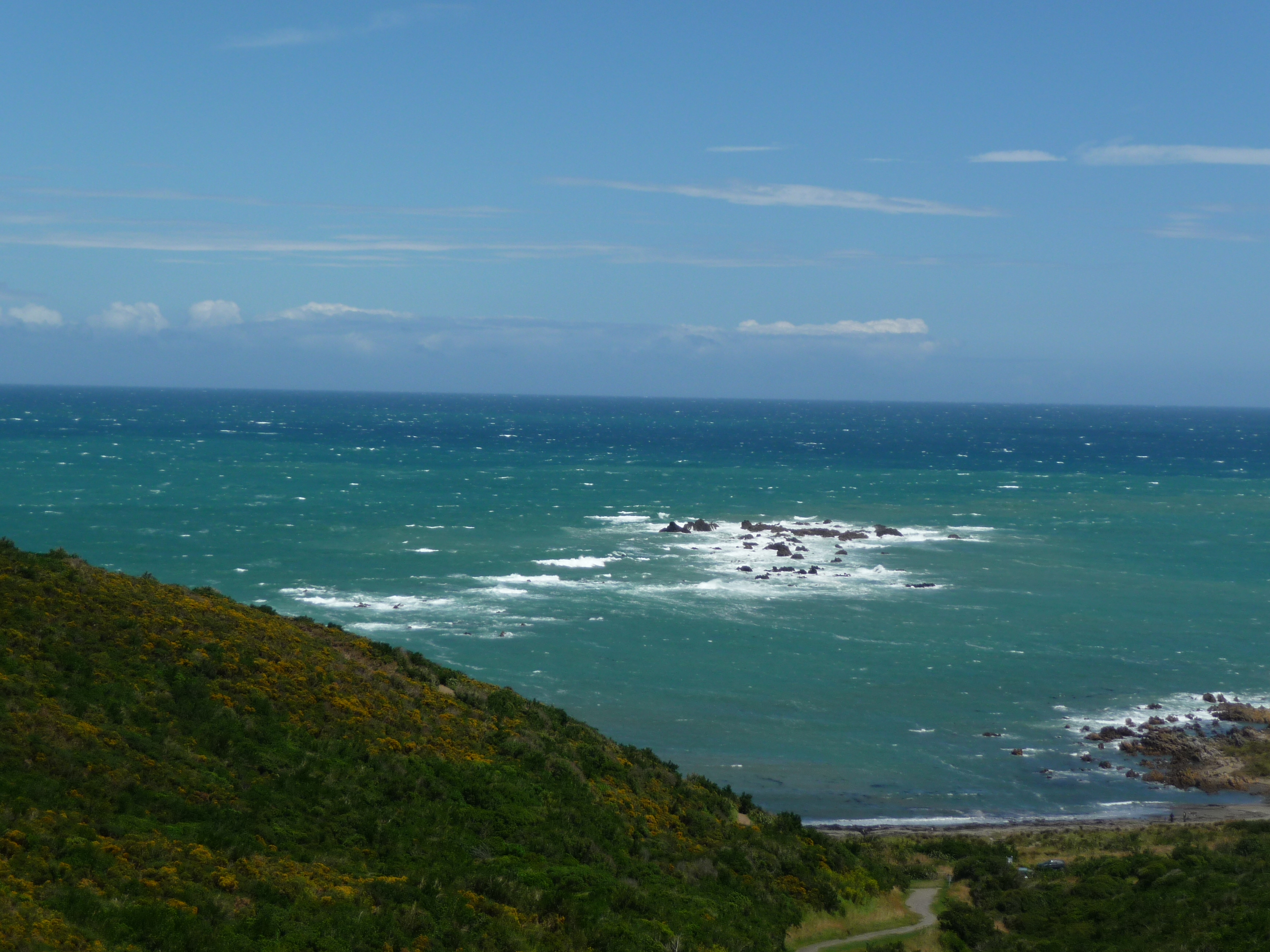
Looking out from Ataturk memorial 2

I’ve never been to Gallipoli but understand the location for the memorial was chosen because the beaches of the peninsular are similar.  Gallipoli is a place I’d like to visit one day but not with hordes of other New Zealanders and Australians there to celebrate ANZAC day.  I’d like to be there at a quieter time so I could think, imagine and try to comprehend what it must have been like to have fought in that pointless campaign.  What was it like to be sent so many thousands of miles away to somewhere so completely foreign?  How do you cope with constant rain, mud, rats, disillusionment, despair and fear?  How do you feel when you see your friends diseased, wounded or dying?

Looking out from Ataturk memorial 1

For most New Zealanders Gallipoli is the campaign most closely associated with New Zealand’s role in the First World War and for many years we’ve been told it was here the forging of our national identity began.   Perhaps it was, but we shouldn’t forget New Zealanders also fought on the Western Front, where 12,500 of them died.   Two thousand died on the Somme alone, only 700 less than at Gallopoli, and in total New Zealand lost around 16,000 men in the First World War.

Star with soil from Anzac Cove, Ataturk memorial

The day I visited the Ataturk Memorial was bright and clear.  The sea looked clean and blue and the coastline rugged, much as I imagine Anzac Cove.  I stood and read the words Ataturk had written, looked out around me and I did remember them.

Plaque on Ataturk memorial