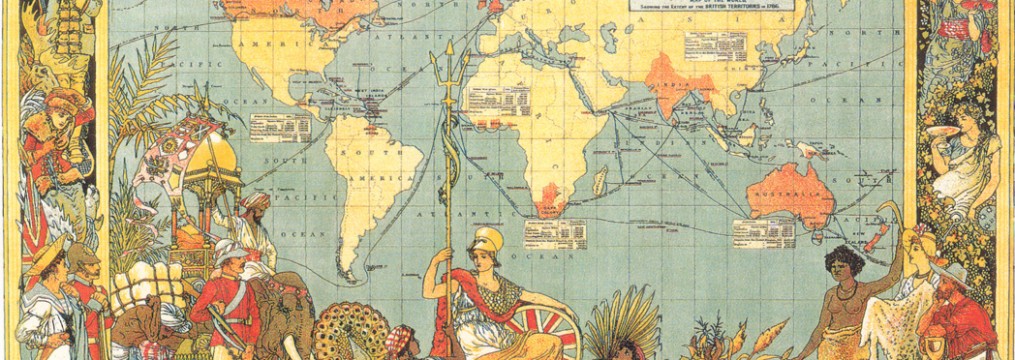
Today, 26 January, is Australia Day, commemorating the arrival of the First Fleet of British ships in 1788. It’s hard to comprehend the vastness of Australia but a trip on the Indian Pacific is a good way to start.
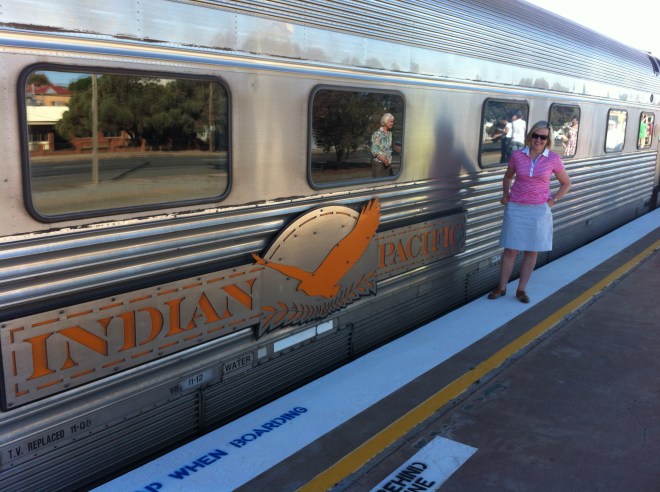
From Sydney to Perth on the Indian Pacific
“I don’t think I could eat our national emblem,” Lisa comments as I lift my fork to my mouth. I pause, think for a while and then pop my piece of kangaroo steak in. It has a delicious smokiness to it. As I chew I think briefly of the unfortunate kangaroo the train hit during the night. Earlier that day, while rattling across the endlessly flat landscape, there’d been an announcement explaining the huge thump which had woken me, and conveying the disturbing information that our brakes have been damaged. Hopefully that’s not as bad as it sounds.
It’s the second day in our journey from Sydney to Perth in the sleek silver lines of the Indian Pacific; a journey which will take us three days and nights across this vast continent. As we speed along and the solitude of the Australian landscape is reinforced kilometre by kilometre, the sense of adventure heightens. OK this isn’t breaking new ground, roughing it or high thrills adventure, but nonetheless being on this train emits a whiff of Hercule Poirot and an echo of a bygone way of travel. “Won’t it be boring?” ask friends. Quite the contrary.
After leaving the greenness of Sydney and the Blue Mountains we enter the typical Australian bush of gum trees and barrenness seeming to stretch forever. The lush green of Adelaide follows and then the redness of the Nullarbor Plain. We go to sleep one night and wake up the next morning to an outlook which is completely unchanged. The extent and barrenness of the Nullarbor (which in Latin means no trees) is awe inspiring.
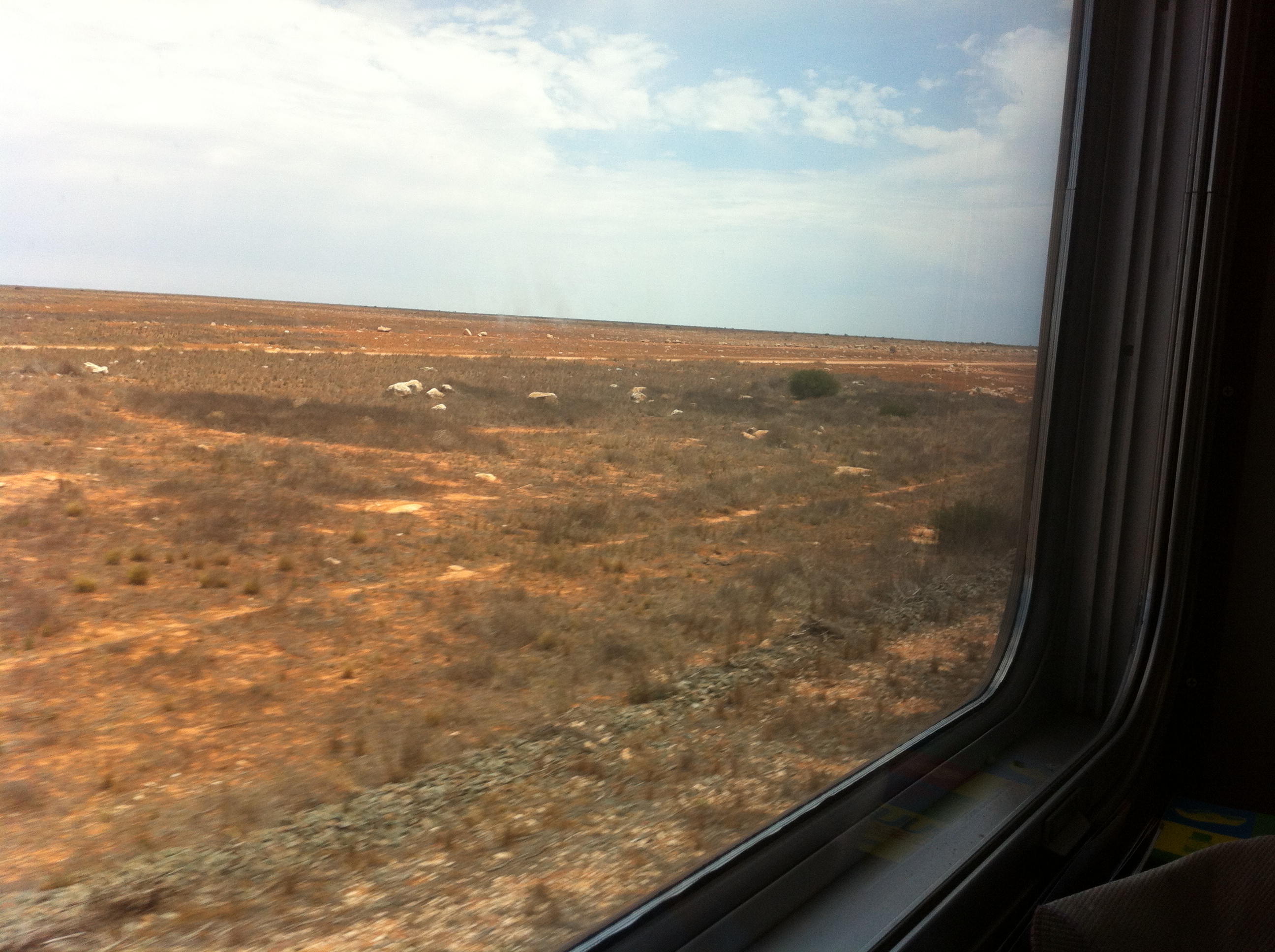
Nullarbor Plain from the Indian Pacific
Throughout the journey we see lots of kangaroos hopping along. A line of 12 camels ambling across the Nullarbor disrupts breakfast one morning and dingos stand and watch as the train rolls by. A group of emus look flustered and harassed as they rush past. Sitting, looking out the window, far from being monotonous, has a hypnotic effect and you never know what you might see.
Stops along the way are a fascinating glimpse into the variety of Australian ways of life. Broken Hill is Australia’s oldest mining town and still dominated by the mining industry. We have half a day in nervous little Adelaide, trying to assert itself against its grander sisters Sydney and Melbourne and admire its Victorian buildings and Englishness. Tiny Cook in the heart of the Nullarbor, (population 4) has a feeling of total isolation and a temperature of 30 degrees when we are there at 9.00am. We arrive in Kalgoorlie in the evening, forego the tour and wander around this beautiful old gold town with its wide, tree lined streets and impressive Victorian buildings. We select one of the many two-storied verandahed hotels for a drink and sit watching the world go by before heading back to the train.
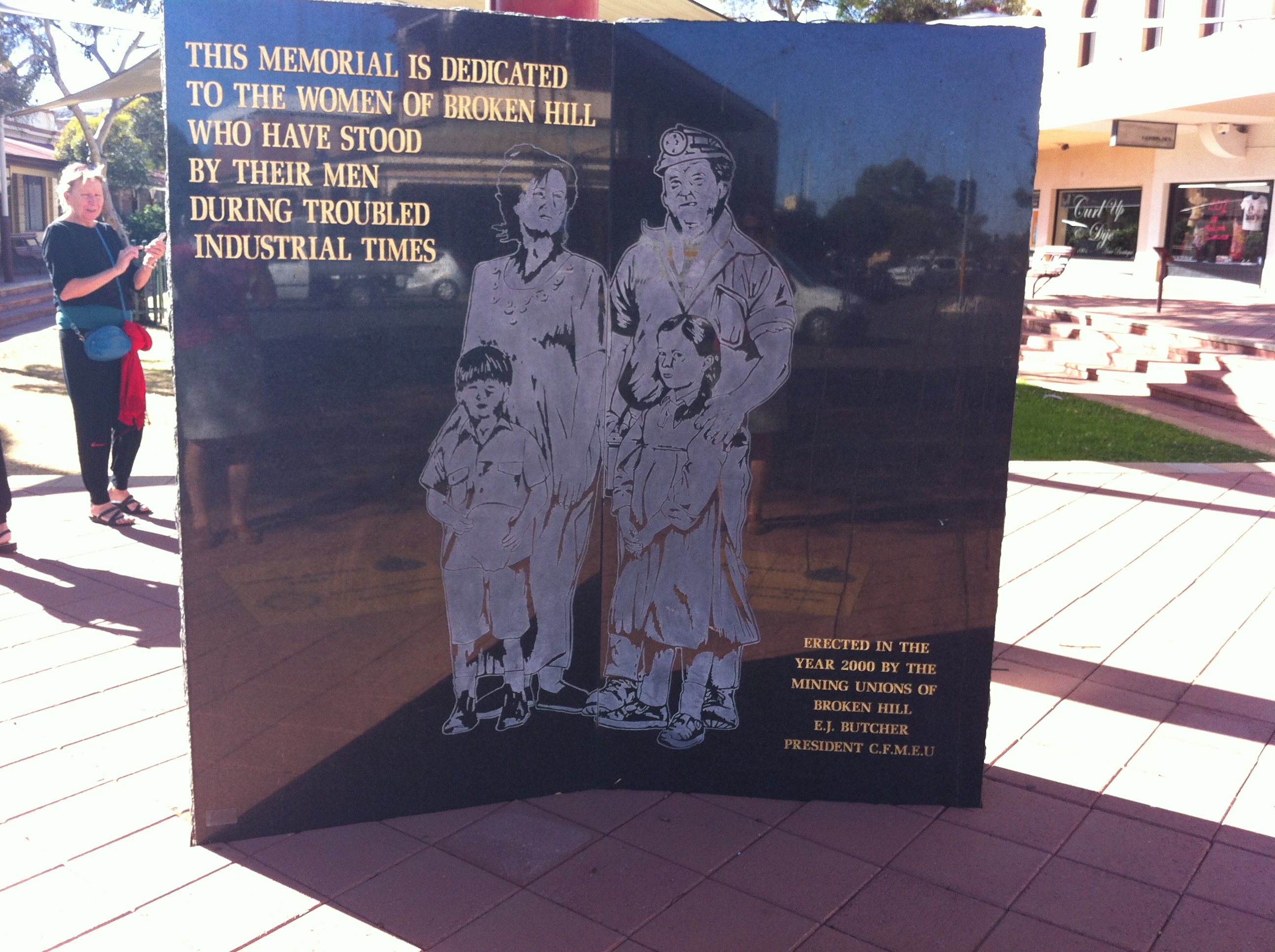
Broken Hill, NSW
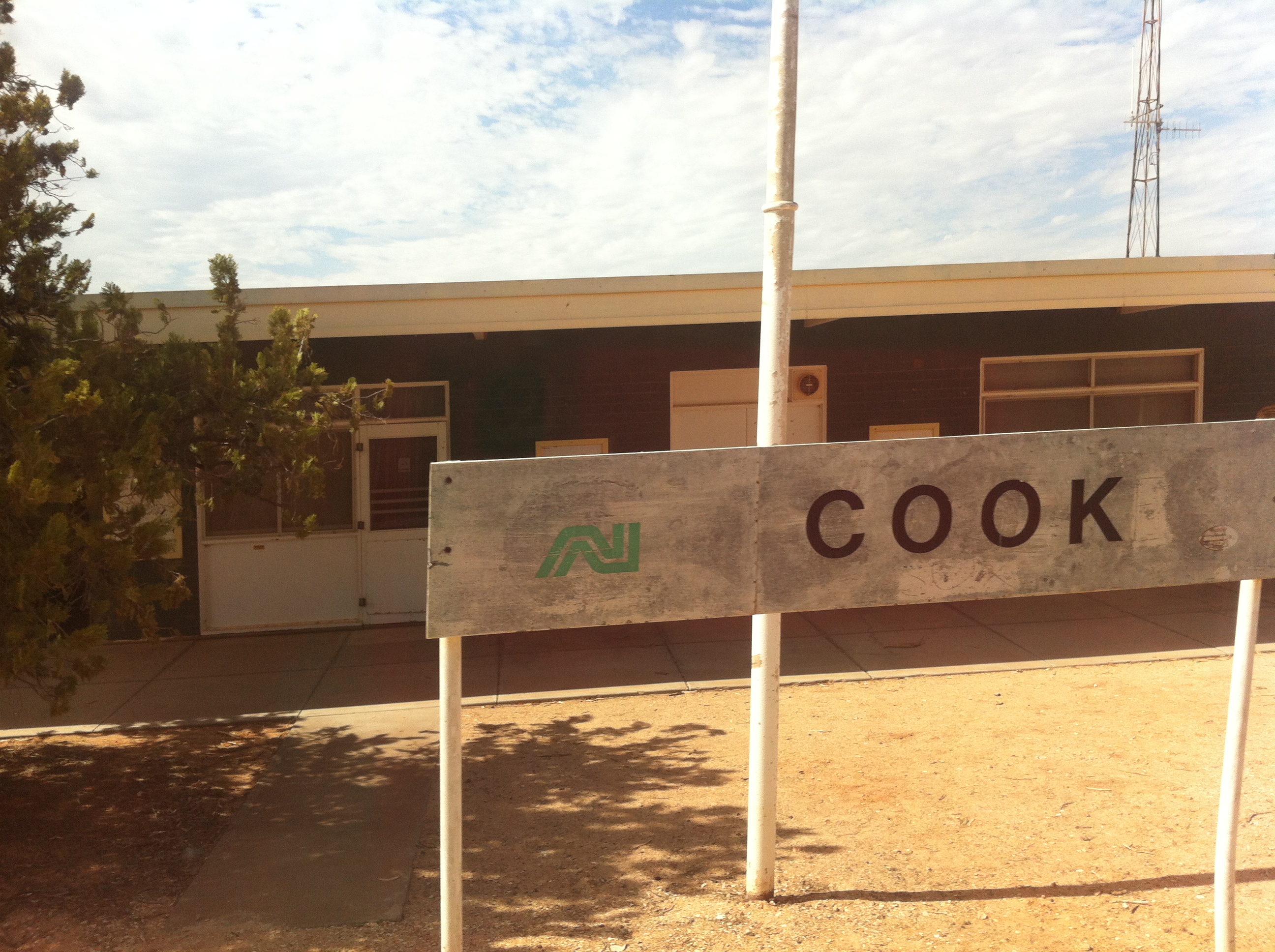
Cook, Nullarbor Plain
Life on the train is a little world unto itself and we soon settle into its rituals. A wake up morning cup of tea starts the day, then a shower. Breakfast is a rolling meal, but lunch and dinner are booked. It’s nice to have a drink beforehand and there’s plenty of time to enjoy it.
We enjoy meeting our fellow passengers as much as seeing the country. Most in our area of the train are older Australians and it’s refreshing to see people out enjoying their own, very spectacular, backyard. Our dining guests change daily and they are as varied as the landscape. Mark and Brenda are retired academics from Perth. Mark has a botched knee operation so is confined to a wheelchair much to the disappointment of Brenda who has been looking forward to a retirement of travel. She, Mark and their two children have a ‘country competition’ and she is falling behind the goal of visiting as many as her age.
Lisa and Brendan from South Australia are a complete contrast. Very garrulous Lisa refers to Australia as ‘our land’ and mining as ‘raping our land’ which I find a bit alarming. This is their big trip around Australia before heading off overseas – once they’ve got passports. In contrast to Brenda, Lisa’s never had one.
As we leave the Nullarbor and head towards Perth the landscape changes again and suburbia and greenery are intermingled. Our carriage pulls into Perth railway station and we feel a real sense of having travelled and arrived. But more than that, after three days on the Indian Pacific we have a greater appreciation for this enormous country and all that inhabit her, including her national emblem.
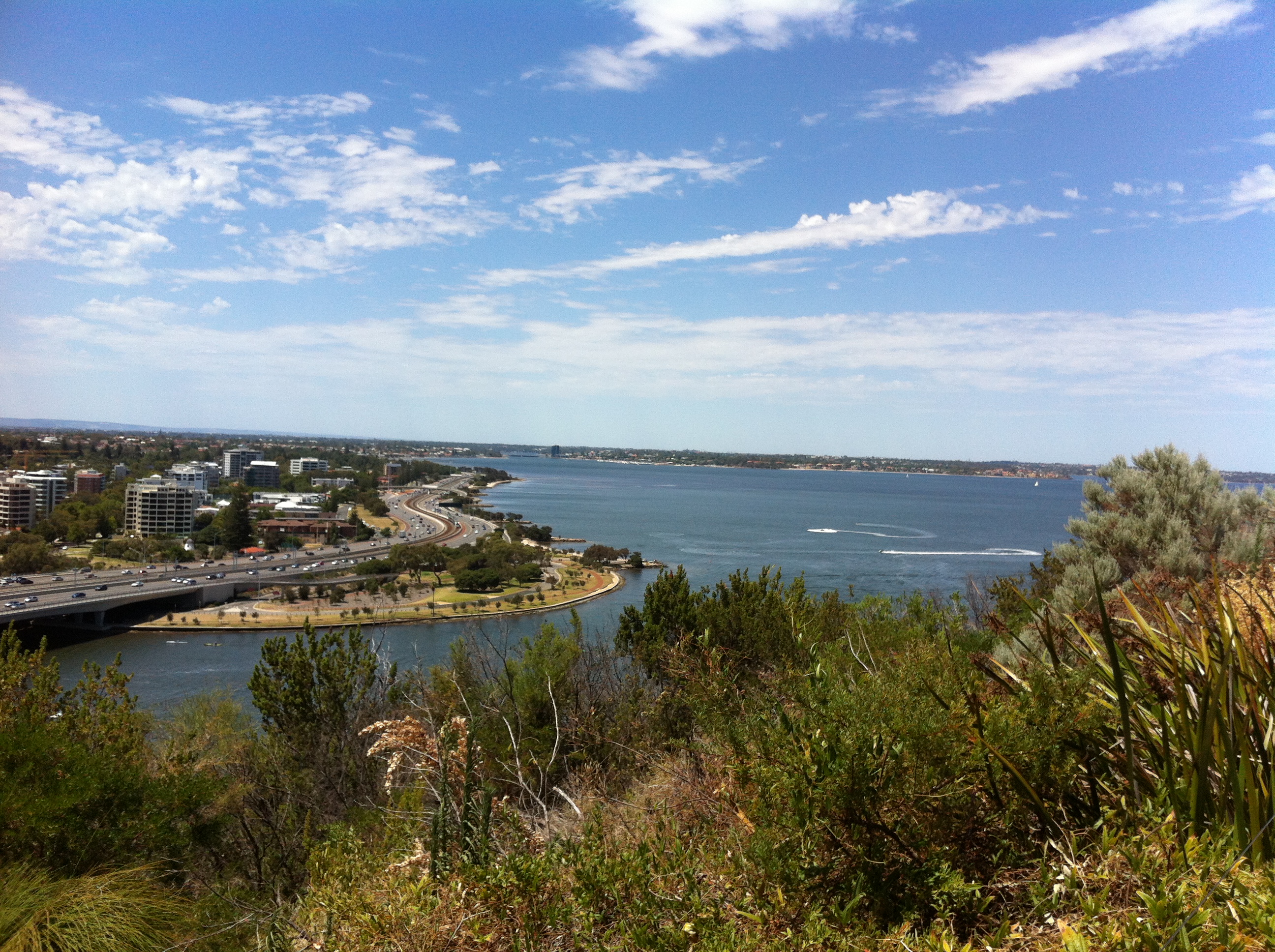
Perth, the end of the line
 The Wandering Historian